FOREIGNER EMPLOYMENT
Vietnamese Toast Chants and Drinking Party Etiquette: A Complete Guide, Including Welcome-Party Considerations
In workplaces where opportunities to join welcome parties and year-end gatherings with Vietnamese colleagues are increasing, people may feel unsure how to run a drinking party. Vietnam has its own drinking culture and toasting customs that differ from Japan’s, and inviting someone to a Japanese-style banquet without knowing them can lead to unexpected misunderstandings. To close the distance through a drinking party, it is important to show consideration based on an understanding of the other person’s cultural background. This article explains the basics of Vietnamese drinking culture and the key points of consideration to keep in mind at workplace banquets.
Vietnamese Drinking-Party Culture ①: Basics of Drinking Culture and Decisive Differences from Japan
To understand Vietnamese drinking parties, you first need to know how this country’s drinking culture took shape. There is some overlap with Japan, but many fundamental differences also exist.
Beer consumption ranks among Asia’s highest
Vietnam is known as a country with very high beer consumption even within Southeast Asia, and it ranks near the top worldwide as well. Streets are lined with many roadside beer shops called “bia hoi,” and the sight of colleagues and friends drinking draft beer after work is an everyday one. For that reason, many Vietnamese men are comfortable with alcohol, and relatively few are said to feel resistance to drinking parties themselves. A major difference, however, is that the mainstream style is casual drinking on the street or at simple tables, rather than spending long hours in an izakaya as in Japan. Vietnamese food culture overall is also covered in detail in the article “Vietnamese Food Culture Overview.”
Beer with ice is the Vietnamese norm
In Japan it is common to chill beer thoroughly and drink it as is, but in Vietnam the standard way is to put ice in the glass and pour beer over it. In Vietnam’s tropical climate, this habit can be seen as practical wisdom for keeping beer cold once it has warmed. So if a Vietnamese employee asks for ice at a Japanese drinking party, there is no need to be surprised. In fact, preparing ice in advance is reassuring.
A male-centered drinking-party culture remains strong
Vietnamese drinking parties traditionally tend to function strongly as social occasions among men. Especially among Vietnamese people from rural areas, many are not used to a culture in which women actively join drinking gatherings. Of course, among younger generations in cities, cases of men and women enjoying drinking parties together are also increasing. Even so, when inviting a Vietnamese woman employee to a drinking party, it is important to carefully confirm her own wishes.
Vietnamese Drinking-Party Culture ②: The Toast Etiquette Behind “Mot hai ba, yo”
The most distinctive feature of Vietnamese drinking parties is their unique toasting culture. Because the rules and atmosphere differ from Japan’s “kanpai,” knowing them in advance will help you avoid confusion.
The toast chant is “Mot hai ba, yo”
The Vietnamese toast chant is “Mot hai ba, vo” (Mot hai ba, yo), which literally means “1, 2, 3, let’s drink.” At a drinking party, someone calls out this chant and everyone clinks glasses—that is the Vietnamese style. In the south it is pronounced “vo” (yo) and in the north “do” (zo); the meaning is the same. Remembering it can open conversation with Vietnamese employees. For basic Vietnamese phrases useful at work, see also the article “20 Essential Vietnamese Phrases.”
After a toast, emptying the glass is good manners
In Japan it is not unusual to take only a sip after a toast and set the glass down, but Vietnamese toasts have a rule of “emptying the glass.” This is called “tram phan tram” in Vietnamese (cham phan cham; formal spelling: tram phan tram = 100 percent) and is regarded as an act that shows respect and friendship toward the other person. So if you do not empty your glass when toasting with a Vietnamese person, they may feel a little disappointed. That said, if you are not strong with alcohol there is no need to force yourself; telling them in advance that you would like to drink little by little should be fine.
Toasting does not end with a single round
At Japanese drinking parties it is common to toast once at the start and then drink at each person’s own pace. Vietnamese drinking parties, by contrast, have a culture of repeating toasts many times. Whenever someone at the table calls the chant, everyone responds, so glasses tend to be clinked again and again throughout the gathering. In addition, one-on-one toasts are not uncommon. This expresses a wish to deepen the relationship, so responding with a smile when you are approached will be appreciated.
Vietnamese Drinking-Party Culture ③: Points of Consideration When Inviting Vietnamese Colleagues to a Japanese Drinking Party
When inviting Vietnamese employees to a Japanese-style drinking party, consideration based on differences in culture, religion, and physical constitution is essential. A little care can create an atmosphere in which they can take part with peace of mind.
State clearly in their native language that “participation is optional”
In Japanese workplaces, joining a drinking party can feel like an unspoken obligation, but Vietnamese employees may find it hard to read that atmosphere. So when sending an invitation, adding in Vietnamese that “participation is free” is reassuring. For example, simply adding the line “Tham gia tu nguyen” (tam gia tu nguyen = participation is voluntary) can greatly reduce psychological pressure. When there is a language barrier, guidance in the person’s native language is an effective way to convey a welcoming attitude.
Be aware of reasons people cannot drink due to religion or constitution
Many Vietnamese people are Buddhist, but a certain number are also Catholic. It is wise to keep in mind that some people refrain from drinking for religious reasons. Others cannot tolerate alcohol physically, so it is important not to judge solely by the general image that “Vietnamese people like alcohol.” Checking in advance with a survey or similar whether people drink will make the day run more smoothly.
Always provide non-alcoholic and soft-drink options
So that people who do not drink alcohol do not feel out of place, we recommend preparing a generous selection of non-alcoholic beer and soft drinks. In Vietnam, tea and fruit juice are drunk daily, so having these drinks alone makes choices easier. When the organizer takes the lead and says, “It’s fine if you don’t drink alcohol,” the atmosphere often softens considerably.
Vietnamese Drinking-Party Culture ④: Vietnamese-Style Hospitality for Successful Welcome and Farewell Parties
If you are going to hold a drinking party for Vietnamese employees, why not incorporate hospitality that aligns with their culture? A small touch can clearly convey a genuine welcome.
Just one bottle of Vietnamese beer conveys how serious the welcome is
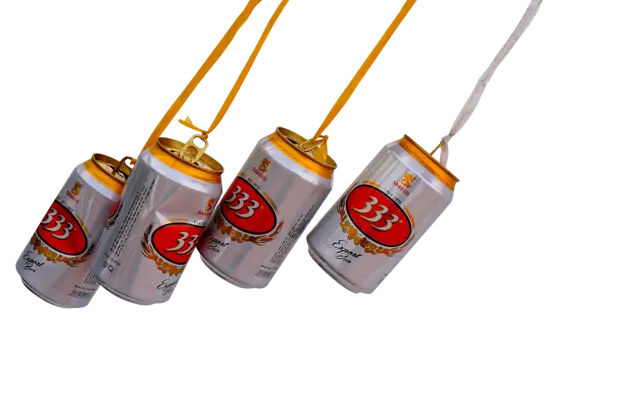
Representative Vietnamese beer brands include “333” (ba ba ba), “Saigon Beer,” and “Bia Ha Noi.” These are often available at imported-food stores and online shops, so preparing even one bottle for a welcome party can leave a strong impression. Choosing beer by hometown is even more effective: people from the south tend to appreciate “333” or “Saigon Beer,” and those from the north “Bia Ha Noi.” This kind of understated care is a first step toward trust. For everyday ways of relating to Vietnamese employees, see also the article “How to Interact with Vietnamese Employees.”
Have all Japanese colleagues practice the toast chant in advance
If all Japanese employees open the drinking party by saying “Mot hai ba, yo” in unison, Vietnamese colleagues may be greatly surprised—and moved. Even if the pronunciation is a bit awkward, the very attitude of respecting the other culture becomes a message of welcome. Organizers are therefore encouraged to ask participants to practice the chant beforehand. Sharing audio of the pronunciation on the internal chat, for example, is enough preparation.
Say “thank you” the day after the drinking party
In Vietnamese culture there is a custom of expressing gratitude again later to people with whom one has shared a meal or drinks. Simply saying “I had a great time yesterday” the day after the party will bring you much closer to Vietnamese employees. If possible, sending a message in Vietnamese with “Cam on” (cam on = thank you) is also effective. In other words, a drinking party is not complete on the day itself; it is important to treat follow-up the next day as part of one continuous communication opportunity.
Summary
Vietnamese drinking-party culture has many features that differ from Japan’s, such as bold toast chants and the habit of clinking glasses again and again. At its root, however, is the desire to deepen bonds by drinking together—something it shares with Japanese drinking-party culture.
When welcoming Vietnamese employees at a workplace drinking party, we recommend showing consideration for their culture and circumstances while actively incorporating Vietnamese toasting customs. The words “Mot hai ba, yo” may become a catalyst for workplace unity that crosses language and cultural barriers. Drinking parties where mutual cultures are respected will become a foundation for trust in day-to-day work.
Vietnamese Toast Etiquette at a Glance|Final Check Before the Party
Here is a concise recap of the Vietnamese toasting and drinking-party culture covered above, so organizers and guests can recall the essentials on the day. First, remember the toast chant “Mot hai ba, vo” (Mot hai ba, yo = 1, 2, 3, let’s drink). Pronunciation splits into “vo” (yo) in the south and “do” (zo) in the north, so matching the hometown of the Vietnamese employees you invite makes the welcome feel stronger.
Next, keep toast “frequency” and “drinking style” in mind. At Vietnamese drinking parties, toasting does not end with one round at the start; glasses are clinked many times whenever someone at the table calls the chant, and one-on-one toasts are not uncommon. Emptying the glass each time—“tram phan tram” (cham phan cham = 100 percent)—expresses respect and friendship, but if you are not strong with alcohol you need not force yourself; saying in advance that you want to drink little by little is not rude. Drinking beer with ice is also standard in Vietnam, so preparing ice at the banquet table in advance is reassuring.
When welcoming Vietnamese employees to a workplace banquet, whether you show consideration greatly affects the impression. On the invitation, add Vietnamese “Tham gia tu nguyen” (tam gia tu nguyen = participation is voluntary), and always prepare non-alcoholic beer, soft drinks, tea, and fruit juice for people who refrain from alcohol for religious or physical reasons. At a welcome party, even one bottle of Vietnamese beer such as “333,” “Saigon Beer,” or “Bia Ha Noi” conveys how serious the welcome is.
And do not forget that toasting culture is not mere formality but an expression of the wish to deepen bonds by drinking together. Treating the whole sequence as one communication—having all Japanese colleagues practice the chant, and saying “Cam on” (cam on = thank you) the day after—helps build workplace unity that crosses language and cultural barriers.
 Written by
Share this article


