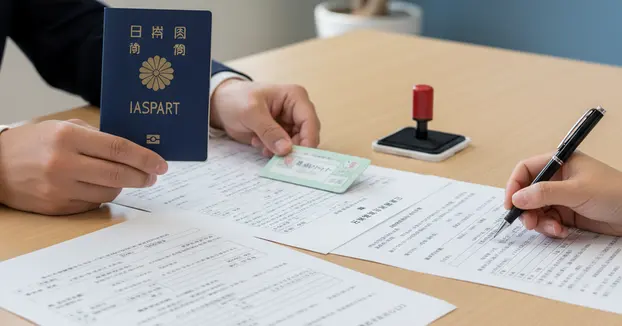
Complete Guide to Hiring Foreign Workers [2026 Edition] | Status of Residence, Hiring Procedures, Costs, and Key Points Explained
Many company representatives who want to hire foreign nationals are unsure which status of residence is required and how complex the application process will be.
A Ministry of Health, Labour and Welfare survey shows that the number of foreign workers stood at approximately 2.04 million as of the end of October 2023, a record high. Amid ongoing severe labor shortages, hiring foreign workers is becoming an established, practical option across a wide range of industries, including manufacturing, nursing care, construction, and food service.
This article systematically explains the types of work-eligible statuses of residence, the hiring process, cost estimates, legal points to note, and keys to successful hiring for HR professionals and business owners considering foreign hiring for the first time. Although it may seem complex, the process can proceed smoothly if you follow the correct steps.
The Current State of Foreign Hiring: Severe Labor Shortages and Growing Use of International Talent
Japan’s labor market faces a structural challenge: a sharp decline in the working-age population driven by a falling birthrate and aging society. In certain industries—such as nursing care, construction, agriculture, and accommodation—it has become the norm that domestic workers alone cannot fill required staffing levels.
According to the Ministry of Health, Labour and Welfare, the number of establishments employing foreign workers reached 318,775 as of the end of October 2023, up about 8% year on year. The number of foreign nationals holding Specified Skilled Worker status stood at 249,636 as of the end of June 2024, spreading rapidly in the five years since the system was established in 2019.
Main Industries Where Foreign Hiring Is Advancing
- Nursing care and welfare: Rapid expansion of international talent use amid chronic labor shortages driven by aging
- Manufacturing: The Specified Skilled Worker system makes it possible to secure ready-to-work talent
- Construction: Long-term employment is increasing, including transitions from Technical Intern Training
- Food service and accommodation: The share of foreign workers in the service sector is rising year by year
- Agriculture: International talent has become essential for both seasonal and year-round employment
When considering foreign hiring, understanding the current state of accepting foreign workers makes it easier to organize industry-wide trends and your company’s position.
Types of Statuses of Residence You Can Hire Under and How to Choose
For a foreign national to work in Japan, a status of residence that matches the occupation and job duties is required. With many types of status of residence, it is easy to feel lost—but because the applicable status is determined by the role you are hiring for, confirming this first is the most efficient approach.
Comparison of Major Work-Related Statuses of Residence
Specified Skilled Worker (i)
- Main eligible duties: On-site work in the 16 designated industrial fields
- Period of stay (maximum): Up to 5 years in total
- Family accompaniment: Not permitted
- Job change: Permitted (same industry)
Specified Skilled Worker (ii)
- Main eligible duties: Designated industrial fields (11 fields)
- Period of stay (maximum): No upper limit (renewable)
- Family accompaniment: Permitted
- Job change: Permitted
Engineer/Specialist in Humanities/International Services
- Main eligible duties: Professional roles such as IT, accounting, and translation
- Period of stay (maximum): Up to 5 years
- Family accompaniment: Permitted
- Job change: Permitted
Highly Skilled Professional (i)
- Main eligible duties: Highly skilled professionals under the points-based system
- Period of stay (maximum): Up to 5 years
- Family accompaniment: Permitted
- Job change: Conditional
Skilled Labor
- Main eligible duties: Skilled work such as foreign cuisine and welding
- Period of stay (maximum): Up to 5 years
- Family accompaniment: Permitted
- Job change: Conditional
By Occupation: Which Status of Residence to Choose
The choice of status of residence is determined by the combination of the role you are hiring for and the applicant’s education, work history, and experience.
- On-site and service roles in the 16 designated industrial fields can use “Specified Skilled Worker”
- IT engineers, accounting, sales, interpreting, and other white-collar roles typically use “Engineer/Specialist in Humanities/International Services”
- Highly Skilled Professional is points-based; meeting the requirements brings preferential treatment such as relaxed permanent residence requirements
- Hiring international students for part-time work requires permission to engage in activity other than that permitted under the status of residence (within 28 hours per week)
For details on industries covered by Specified Skilled Worker, see the list of Specified Skilled Worker eligible occupations. For an overview of statuses of residence overall, also see the list of types of status of residence.
Foreign Hiring Procedures and Flow: 7 Steps
Foreign hiring procedures add a process that Japanese hiring does not: confirming and applying for a status of residence. When a change of status of residence is required, it often takes one to three months from offer to start of employment, so it is important to allow ample time in your schedule.
Step 1: Confirm Hiring Requirements and the Applicable Status of Residence
Clarify the occupation and job duties you want to fill and identify the corresponding status of residence. Because the scope of permitted work differs by status of residence, always confirm this before creating the job posting.
Step 2: Recruitment and Job Posting
Recruit candidates through Hello Work, job sites specializing in foreign talent, staffing agencies, SNS, and similar channels. Using a staffing agency strong in foreign hiring can smooth pre-checks of status of residence and matching.
Step 3: Document Screening and Status of Residence Check
In parallel with screening resumes and CVs, check the current status of residence, expiration date, and permitted scope of work activities on the residence card. When hiring international students who hold “permission to engage in activity other than that permitted under the status of residence,” note the work limit of within 28 hours per week.
Step 4: Interview and Hiring Decision
Comprehensively evaluate job skills, Japanese language ability (N4 equivalent or higher is a guideline for Specified Skilled Worker), work motivation, and workplace adaptability. At the interview, carefully explain working conditions, job duties, and the workplace environment to prevent gaps in mutual understanding.
Step 5: Offer and Written Disclosure of Employment Conditions
After the offer, issue a notice of employment conditions. Written disclosure of working conditions under the Labor Standards Act is also mandatory for foreign workers. Clearly state wages, working hours, days off, grounds for resignation, and related items.
Step 6: Application for or Change of Status of Residence
If the current status of residence does not cover the role, apply to the Immigration Services Agency of Japan. When inviting someone from overseas, an application for a Certificate of Eligibility is required, and approval usually takes one to three months. Incomplete application documents can extend the timeline further, so engaging a gyoseishoshi (administrative scrivener) is also a valid option.
Step 7: Onboarding and Building an Acceptance Framework
After joining, support is needed for the municipal move-in notification, social insurance enrollment, and opening a bank account. Notification of the employment status of foreign nationals to Hello Work (by the 10th of the following month) is a legal obligation, so be sure to complete it.
For a more detailed explanation of the hiring process, also see a thorough guide to the foreign hiring process.
Estimated Costs of Hiring Foreign Workers
It is important to understand costs unique to foreign hiring in advance and build them into your budget plan.
Summary by Type of Cost
Status of Residence Change Application Fee
- Estimated amount: 4,000 yen (Certificate of Eligibility is free)
- When it arises: At application
Agency Fees for a Gyoseishoshi (Administrative Scrivener)
- Estimated amount: About 30,000–100,000 yen
- When it arises: When preparing documents
Success Fee for a Staffing Agency
- Estimated amount: 20–35% of annual salary
- When it arises: Only when an offer is accepted
Outsourcing Fees to a Registered Support Organization
- Estimated amount: 15,000–30,000 yen per month
- When it arises: When hiring under Specified Skilled Worker (i)
Costs of status of residence applications
Application fees to the Immigration Services Agency of Japan are 4,000 yen for permission to change status of residence, and applications for a Certificate of Eligibility are free. However, if you engage a gyoseishoshi (administrative scrivener) to prepare the documents, the typical agency fee ranges from about 30,000 to 100,000 yen.
Fees to recruitment agencies
When you use a recruitment agency, a success fee of about 20–35% of annual salary is common upon a successful hire. Because no fee is charged until a hire is completed, the initial investment at the start of recruiting is zero.
YourBright’s foreign talent recruitment service is a fully success-based model with zero upfront and operating fees. From a database of more than 170,000 international talent profiles, we introduce job-ready candidates matched to your industry and requirements.
Fees for outsourcing to a Registered Support Organization
When hiring a foreign national under Specified Skilled Worker (i), the accepting company is required to prepare and implement a support plan. The typical cost of outsourcing this work to a Registered Support Organization is about 15,000 to 30,000 yen per month. When in-house handling is difficult, outsourcing to a specialist organization is effective for both compliance and retention.
Legal points in hiring foreign workers: understand duties and penalties correctly
Hiring foreign workers adds legal requirements beyond those for hiring Japanese nationals. Review the items that can create serious risk for the company if overlooked.
Checklist to confirm before and after hiring
- [ ] Confirmed the type of status of residence, expiration date, and work eligibility on the residence card
- [ ] Confirmed that the status of residence matches the job to be filled
- [ ] Issued a written notice of working conditions
- [ ] Set wages at or above the regional minimum wage
- [ ] Plan to file the foreign national employment status notification with Hello Work by the 10th of the following month
- [ ] For Specified Skilled Worker (i), systems are in place to prepare and implement a support plan
Duty to check status of residence and the crime of promoting illegal employment
At hiring, it is essential to check the residence card and understand the type of status of residence, expiration date, and whether work is permitted. If you employ a foreign national without a valid status of residence, or assign work outside the scope of permitted activities, the employer may be subject to the crime of promoting illegal employment (imprisonment of up to 3 years or a fine of up to 3 million yen). Claiming you “did not know” does not exempt you from liability.
Duty to notify foreign national employment status
When you hire or separate a foreign worker, notification to Hello Work is required. For employees covered by employment insurance, enter nationality and related information on the acquisition/loss of qualification notification; for those not covered by employment insurance, submit the Foreign National Employment Status Notification form. The deadline is the 10th of the following month, and failure to notify may result in a fine of up to 300,000 yen.
Principle of equal treatment
Foreign workers must also be given working conditions equivalent to those of Japanese nationals. Unreasonable wage gaps or limits on promotion opportunities based on nationality violate the Labor Standards Act. Setting wages below the regional minimum wage is also strictly prohibited.
Obligations specific to Specified Skilled Worker: preparing and implementing a support plan
Accepting organizations that hire foreign nationals under Specified Skilled Worker (i) are obligated to prepare and implement a support plan prescribed by the Immigration Services Agency of Japan. Support includes pre-arrival guidance, living orientation, regular interviews, and various consultation services. When proper implementation is not feasible in-house, outsourcing to a Registered Support Organization is permitted.
Three points for successful foreign worker hiring
1. Prioritize hiring international talent already in Japan
Bringing candidates from overseas takes time and cost for visa acquisition and travel preparation. International talent already in Japan with work experience typically have a certain level of Japanese ability and workplace cultural adaptation, which can significantly shorten the lead time from hire to start of employment.
2. Use a Registered Support Organization to secure compliance
Accepting Specified Skilled Worker foreign nationals involves wide-ranging statutory support duties. By outsourcing to a Registered Support Organization, you can externalize complex procedures while achieving both legal compliance and retention of international talent. Companies new to foreign hiring in particular should actively use specialist support.
3. Invest in post-hire retention support
Do not stop at hiring: post-hire living support, follow-up in the employee’s native language, and regular interviews directly affect retention. As explained in Advantages and disadvantages of hiring foreign workers, investment in retention support lowers early turnover risk and, over the long term, helps reduce hiring costs.
Frequently asked questions (FAQ)
Q. Can we hire international students as full-time employees?
Yes. However, international students face work restrictions while enrolled, so after graduation they must change to a work-related status of residence such as Engineer/Specialist in Humanities/International Services. It is advisable to begin recruiting while graduation is expected and, after an offer, schedule the status of residence change application. Because a change application is not accepted until after graduation, allow ample time when setting the employment start date.
Q. How should we check the residence card?
At the interview or after an offer, take copies of both sides of the residence card and confirm the type of status of residence, period of stay, and any work restrictions. If authenticity is unclear, you can check online via the residence card number validity inquiry service of the Immigration Services Agency of Japan. We recommend storing the copies with the hiring documents.
Q. Is it a problem to have foreign workers work overtime?
If the work falls within the scope of the status of residence, they may work overtime in the same way as Japanese nationals. However, the Labor Standards Act caps on overtime (45 hours per month and 360 hours per year) also apply to foreign nationals. The obligation to pay premium wages (overtime pay) likewise applies as it does for Japanese nationals, so there is no difference from a compliance standpoint.
Q. How long does foreign worker hiring take?
If no change of status of residence is needed (the candidate already holds a work-eligible status), hiring can take roughly the same time as hiring a Japanese national. When a change or Certificate of Eligibility is required, permission usually takes one to three months from application. Recruiting from overseas also requires travel preparation time, so early planning is important.
Q. May we set different pay for foreign and Japanese employees?
No. Unreasonable wage gaps based on nationality violate the Labor Standards Act. Differences based on reasonable factors such as job content, responsibilities, and years of experience are acceptable, but setting lower pay solely because someone is a foreign national is not permitted.
Summary: preparation and systems are the key to successful foreign hiring
Here is a recap of the foreign hiring points covered in this article.
- Checking status of residence is the first step: Identify in advance a status of residence that matches the role, and thoroughly check the residence card
- Procedures take one to three months: Build hiring schedules that allow for status of residence change lead time
- Costs can be minimized with a success-fee model: Using a recruitment agency lets you start hiring with zero initial cost
- Compliance with legal duties is essential: Residence card checks, Hello Work notification, and equal treatment are indispensable
- Post-hire support drives retention: Using a Registered Support Organization and native-language support systems is effective
With the right knowledge and systems, foreign hiring is not difficult. Start by consulting YourBright’s specialist staff. From a database of more than 170,000 international talent profiles, we introduce job-ready candidates matched to your industry and requirements. Upfront and operating fees are zero, and no payment is due until an offer is made.
Free consultation is available here. Feel free to contact us. We also accept calls at 03-6908-6143 (hours: 9:00–18:00).
Also review the 2027 system transition
The institutional environment for foreign hiring will change significantly with the shift from Technical Intern Training to Employment for Skill Development (effective 2027). For the impact on your company and what to prepare, start with the Employment for Skill Development Program special page.
 Written by

ヤマシタハヤト
Share this article


