ACCEPTANCE & EDUCATION
Vietnamese Employees Suddenly Blow Up? Emotional Expression Differences and How to Respond at Work
Many managers have been startled when a Vietnamese employee’s expression suddenly changed after being corrected. What looks like an abrupt outburst often hides cultural friction that Japanese colleagues may have built up without realizing it. This article explains the cultural background behind Vietnamese employees’ emotional expression, concrete approaches to giving criticism and praise, and recovery tactics after you have angered someone.
Vietnamese Emotional Expression ①: Why It Looks Like They “Suddenly Blow Up”
When a Vietnamese employee appears to explode in anger out of nowhere, many Japanese managers feel at a loss. That reaction has cultural reasons, however, and deeper understanding makes appropriate responses possible.
Anger Explodes After Accumulated Wounds to Face
In Vietnamese society, face (mentsu) underpins human relationships. Japan also values face, but in Vietnam its importance is said to be even greater. As a result, when experiences that wound face pile up, emotions can surface all at once at a certain point.
Even when Japanese eyes see a “sudden blow-up,” it is not uncommon for the person to be reacting only after enduring the situation many times. Repeated public criticism or having their ability denied in front of colleagues accumulates until they hit a limit and emotion erupts. In other words, an explosion of anger is better understood not as “sudden,” but as the result of dissatisfaction that built up out of sight. The concept of face and basic Vietnamese national character are also covered in detail in the article “What Are the Characteristics of Vietnamese People?”
A Fundamental Difference: “Reading the Air” Culture vs. “Speaking Up” Culture
In Japan, sensing others’ feelings and acting accordingly is considered a virtue. In Vietnam, by contrast, expressing emotion with a degree of frankness is common, and both joy and anger tend to be shown relatively clearly. Without understanding this difference, Vietnamese employees’ emotional expression may look “over the top” or “aggressive.”
That does not mean Vietnamese people always wear their emotions on their sleeve. At work they often endure a great deal, and dissatisfaction can swell while Japanese colleagues assume “there is no problem.” So rather than taking surface calm as reassurance, it is important to check in regularly on how the person actually feels.
Treat It as “Protest,” Not Merely “Anger”
Whether you frame a Vietnamese employee’s open emotion as mere “anger” or as “protest” greatly changes what you do next. In Vietnamese culture, speaking up against unfair treatment is seen as a legitimate way to protect one’s dignity.
So rather than simply trying to suppress the anger, carefully listen to “what felt unpleasant” and “where they felt unfairness.” That does not mean bending workplace rules, but receiving the other person’s feelings and then explaining your position builds trust.
Vietnamese Emotional Expression ②: How to Criticize and Praise to Prevent Emotional Trouble
With that cultural background in mind, let us look concretely at how to criticize and how to praise. Basics of interaction premised on consideration for face are explained in detail in “How to Interact with Vietnamese Employees | Workplace Manners and Communication Skills”—please read that as well.
When Criticizing: The Three Principles of One-on-One, Facts, and Future Focus
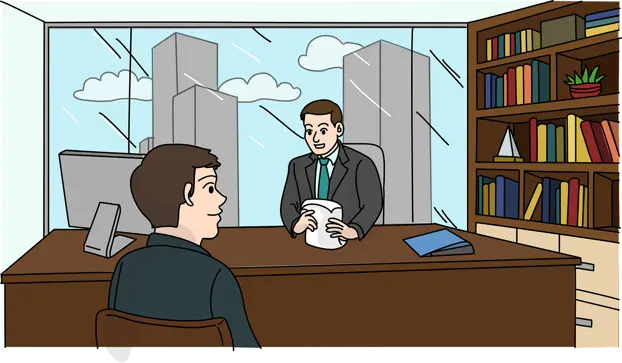
There are three principles to keep in mind when criticizing a Vietnamese employee. First, always create a one-on-one setting. Next, communicate based on facts, not emotion. And speak in a future-focused way about what to do going forward, rather than blaming past mistakes.
For example, “Why did you make a mistake like this?” tends to corner the other person. Simply changing to “There was an error in this part of the work this time. Next time, following this procedure should make it accurate” can greatly change how it is received.
When Praising: Be Specific and Do It in Front of Others
Criticism needs a private setting, but praise is more effective in front of others. In Vietnam, being recognized before peers brings great joy. Also, concrete praise such as “This set of documents was finished two days early and accurately” lands better than abstract lines like “You’re working hard.”
Timing of praise also matters. Praising right after results appear helps the person feel the link between their actions and evaluation. Of course, you also need to consider overall team balance so excessive praise does not create a sense of unfairness among other employees.
Do Not Use “Why” in a Blaming Tone
Questions common in Japanese workplaces—“Why did you do that?” or “Why couldn’t you do it?”—put heavy pressure on Vietnamese employees. Japanese “why” is often used to find root causes, but to Vietnamese ears it can sound like the accusation “You’re at fault.”
So when you want to confirm causes, questions that stay close to their situation—“What was difficult?” or “Where did you get stuck?”—work better. Simply changing the phrasing often lets the other person explain without becoming defensive. For serious mistakes involving safety, however, you still need to confirm the facts with a firm attitude. Background on why Vietnamese employees may not apologize is covered in detail in “Countries That Don’t Apologize Ranking | Differences in Apology Culture Worldwide and How to Work Well with Vietnamese People.”
Vietnamese Emotional Expression ③: How to Recover After You Have Angered Someone
No matter how careful you are, cultural differences can lead you to hurt someone unintentionally. What matters is how you repair the relationship after a problem arises.
Apology Rule: Fast, Private, and Specific
If you have wounded a Vietnamese employee’s face, recovery speed is extremely important. The longer time passes, the more distrust hardens and the harder repair becomes. Apologies should also always be private. Apologizing in public for something that hurt them in public can instead bring back the embarrassment of that moment.
In addition, “I’m sorry” alone is often not enough. Stating specifically what was wrong and showing how you will improve—“At the recent meeting, pointing things out in front of everyone showed a lack of consideration. Going forward I will communicate one-on-one”—conveys sincerity. In Vietnam, whether subsequent behavior changes tends to matter more than the apology words themselves.
Family Topics and Small Talk Are the Strongest Repair Materials
Vietnamese people hold family bonds in very high regard. In relationship repair, showing concern for their family or making everyday small talk is effective. Stepping away from work talk and relating as people helps the other person feel, “This person sees me as a human being.”
On the other hand, rushing repair with overly familiar behavior can backfire. Start by closing distance through daily greetings and brief small talk, and gradually rebuild the relationship while watching their reactions. Vietnamese people tend to show strong loyalty once they trust someone, so careful recovery can well lead to a deeper trust relationship than before.
Summary
Many situations where a Vietnamese employee seems to “suddenly blow up” result from insufficient consideration for face and accumulated cultural friction. Avoiding public reprimands and giving one-on-one, fact-based, future-focused guidance is the foundation for preventing workplace trouble. If you do hurt someone, apologize early and privately, then repair the relationship through everyday small talk. Understanding differences in emotional expression and building communication that respects each other’s cultures will make trust with Vietnamese employees stronger.
 Written by
Share this article


