CULTURE & LIVING ABROAD
Gift Taboos to Absolutely Avoid with Vietnamese Colleagues | Carefully Selected Gifts They Will Truly Appreciate
Quick answer: What gifts should you avoid giving Vietnamese people?
Handkerchiefs, shoes, umbrellas, and sharp objects are sometimes avoided because they evoke parting or cutting ties. Taboos also vary by region and individual, so for workplace gifts it is safer to discreetly check the recipient’s preferences and choose practical items or gifts they can select themselves.
Have you ever given a gift to Vietnamese staff at work to express your appreciation? It is surprisingly common for a well-intentioned gift to be considered “unlucky” in the recipient’s culture. Vietnam has many gift-giving taboos that do not exist in Japan, and giving the wrong item without knowing can leave the other person uncomfortable. Below, we introduce taboos to avoid when giving presents to Vietnamese people, along with recommended gifts that are truly appreciated.
Gift taboo ① for Vietnamese people: Items that are rude to give
Vietnam’s gift culture has a long history, and word sounds and feng shui thinking deeply influence gift selection. First, let’s look at representative items that are taboo to give at all.
Handkerchiefs, shoes, and umbrellas mean “parting”
In Japan, handkerchiefs, shoes, and umbrellas are all practical staples that people are happy to receive, but in Vietnam they are considered among the most typical gift taboos. A handkerchief is called “khăn” in Vietnamese and has long been seen as unlucky because it shares the same sound as “hardship.” Vietnam also has the proverb “Khăn chia áo lìa” (part with a handkerchief, separate with clothing), so it helps to remember that handkerchiefs are widely recognized as a symbol of farewell.
Shoes are another item to avoid. The Vietnamese word for shoes, “hài,” sounds similar to “sigh” or “lament,” and shoes are said to symbolize pushing the other person away. Umbrellas (ô dù), meanwhile, sound close to words meaning “to separate” or “to scatter,” so they are also considered unsuitable as gifts. It may surprise Japanese people, but these three can be treated as the gifts most worth avoiding in Vietnam.
Sharp objects, clocks, and candles are unlucky
Knives, scissors, and other sharp objects symbolize “cutting a relationship” in feng shui thinking, so they are taboo as gifts. Clocks evoke “aging” or “death,” a view said to be shared with Chinese cultural spheres. White candles are used at funerals in Vietnam, so giving them as a present is considered highly rude.
Many people in Vietnam are said not to belong to a particular organized religion, but folk beliefs and feng shui still strongly influence daily life. It is safer to assume these taboos are widely shared regardless of religion.
Mugs and gloves can evoke “parting”
It may seem surprising, but mugs also require caution. Fragile mugs are said to symbolize the “fragility of love,” and another reason is that the Vietnamese word for cup, “ly,” can evoke “chia ly” (separation). Gloves are said to imply the “end of love” and tend to be avoided especially as gifts to someone of the opposite sex. These items matter not only in romantic contexts but also in workplace gift situations.
A gift box wrapped in warm colors such as red or pink
Gift taboo ② for Vietnamese people: Wrapping, numbers, and how you give
Beyond what is inside the gift, Vietnam has its own manners for wrapping colors, numbers, and how gifts are handed over. Even a well-chosen present can fall flat if the way you give it is wrong, so it helps to check these points as well.
Black and white wrapping paper evokes funerals
In Vietnam, the combination of black and white is associated with mourning, so it is better not to use these two colors for gift wrapping. When wrapping a gift, warm colors such as red, yellow, and pink are recommended. Red symbolizes good fortune and yellow prosperity, and both are widely favored in Vietnam as auspicious colors. For more on Vietnamese color preferences, see also “What colors do Vietnamese people like? Explained by gender.”
The numbers “4” and “13” are considered unlucky
In Japan, “4” is sometimes avoided because it evokes “death,” and the same is true in Vietnam. The Vietnamese word for four, “tứ,” is homophonous with “death,” so four is considered unlucky as a gift quantity. Thirteen is also recognized as an unlucky number, so when giving set products it is best to avoid packs of four or thirteen.
Even numbers, on the other hand, are considered auspicious, and numbers such as 2, 6, and 8 tend to be preferred. When giving assortments of sweets and similar gifts, choosing with these numbers in mind is likely to be appreciated.
Give with both hands, and do not open the gift on the spot
In Vietnam, gifts are given with both hands, and the recipient also accepts them with both hands. Handing something over with only the left hand is considered rude. You may also encounter the recipient declining once or twice; this is usually humility rather than refusal. For that reason, if the other person declines once, it can help to offer the gift again.
In addition, in Vietnam it is common not to open a present on the spot and to open it later. In Japan, opening a gift immediately to show delight is sometimes considered good manners, but receiving it modestly is the Vietnamese style. Simply knowing this difference can spare you confusion about the other person’s reaction.
Gift taboo ③ for Vietnamese people: Recommended gifts by occasion
Now that we have covered the taboos, let’s look at presents Vietnamese people actually appreciate. The right gift differs by occasion, so we organize recommendations by scene.
For workplace welcome parties, farewell parties, and birthdays, practical items are the right choice
When giving gifts to Vietnamese staff at work, high-quality practical items such as Japanese stationery or skincare products tend to be appreciated. Japanese sweets in particular are a reliable gift, and distinctly Japanese flavors such as matcha KitKats are very popular.
A bright, colorful bouquet
That said, giving something too expensive can backfire. In Vietnamese culture, a high-priced gift can place a psychological burden on the recipient, so it is better to stay in a price range that simply conveys your feelings. When choosing food gifts, also note that there are foods Vietnamese people may dislike. For details, see “Don’t serve these! 4 Japanese foods Vietnamese people often dislike.”
For Tet and Women’s Day, bouquets and fruit are standard
Around Tet, Vietnam’s Lunar New Year, it is common to give alcoholic beverages or fresh fruit. According to Statista survey data from 2021, alcoholic beverages are the most frequently chosen Tet gifts, followed by fresh fruit.
Vietnam also has two women’s days—Vietnamese Women’s Day on October 20 and International Women’s Day on March 8—and a rooted culture of giving bouquets to women. In Vietnam, larger and more lavish bouquets are said to be more appreciated, but chrysanthemums and yellow flowers should be avoided because they evoke funerals. For details on Women’s Day, see “What kind of day is Vietnamese Women’s Day? What gifts are a good fit?.”
Brand goods and accessories are popular with both men and women
When giving to Vietnamese people you know well, brand cosmetics and accessories are appreciated by both men and women. Japanese cosmetics brands in particular are highly regarded in Vietnam, and skincare products are popular gifts for women. Health foods and supplements can also resonate with Vietnamese people who value family.
Another custom worth knowing is giving cash inside a wallet. In Vietnam, wallets are welcome as gifts, but an empty wallet is considered a no-go. Putting even a small amount of money inside conveys the wish that “money will accumulate.”
Gift taboo ④ for Vietnamese people: Practical points when giving to international talent at work
From here, we explain practical points for HR and managers when giving presents to Vietnamese staff at work.
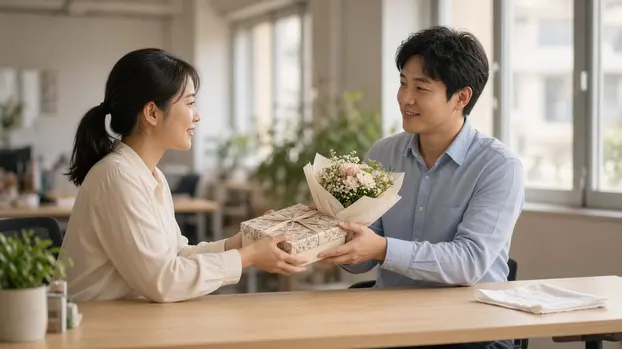
People exchanging gifts
Clearly separate company gifts from personal gifts
For workplace gifts, it is important to clearly separate gifts given by the company from those given personally. Company gifts should use fair items and price ranges for everyone so that no one is singled out for special treatment. Personal gifts, by contrast, are more appreciated when chosen to match the recipient’s preferences and your relationship.
In Vietnam, the 1st and 15th days of the lunar calendar are religious days of abstinence, and not a few people refrain from meat on those days. Depending on when you give a food gift, choosing something without meat is a thoughtful touch. For more on religion in Vietnam, see “Religion in Vietnam: Taboos, daily customs, and more explained.”
For technical intern trainees, distinctly Japanese practical items are well received
When giving gifts to technical intern trainees, items they can take home and show their families are especially well received. Sweets in distinctly Japanese packaging and Japanese stationery or daily goods can become conversation pieces not only for the recipient but also for their family. Vietnam has the proverb “Của ít lòng nhiều” (a small gift, a big heart), and there is a tendency to value whether feeling is put into the gift more than the amount of money.
Adding a short message in Vietnamese to the present is also effective. For a birthday, for example, a handwritten card saying “Chúc mừng sinh nhật” (Happy birthday) is likely to be appreciated. Fluent Vietnamese is not required at all; even a brief phrase conveys respect for the other person’s culture. If you are interested in communicating in Vietnamese, see also “What are the features of Vietnamese? Tips for communication explained.”
Summary
A multinational team smiling in a meeting
Gifts for Vietnamese people include many items that are fine in Japan but should be avoided—handkerchiefs, shoes, umbrellas, sharp objects, clocks, and more. Wrapping colors, numbers, and how you hand over a gift also have their own manners, so knowing them in advance can help prevent trouble. When in doubt, Japanese sweets or a bright bouquet are safe choices.
Of course, you do not need to master every taboo perfectly. What matters is the attitude of wanting to understand the other person’s culture, and that consideration will surely come across to Vietnamese staff as well. As the Vietnamese proverb “Của ít lòng nhiều” (a small gift, a big heart) says, a gift given with care reaches the recipient regardless of price. By understanding and respecting cultural differences, workplace trust will deepen further.
Related articles: Practical topics to check together
Please also review practical articles on related themes as needed.
Related hiring and workplace consideration guides
Points to confirm before choosing gifts for welcome or farewell parties
Gift preferences and items to avoid differ by region of origin, religion, generation, and personal outlook. Rather than assuming “Vietnamese people always avoid this,” the most reliable approach is to discreetly ask the person about foods they cannot eat, whether they drink alcohol, and what is easy for them to receive.
When giving from the workplace, also check fairness with employees in the same position and internal rules. Overly expensive items can create a burden to reciprocate, so practical goods that clearly convey the purpose, or consumables the person has confirmed they can accept, are safer choices.
- For food, confirm allergies, religious restrictions, disliked ingredients, and whether alcohol is acceptable in advance
- Do not decide from general explanations about colors, flowers, or quantities alone; check with the person or a knowledgeable colleague
- For expensive items or near-cash gifts, check internal rules and the psychological burden on the recipient
- Clarify the purpose—welcome, farewell, birth celebration, and so on—and do not force anyone to accept
What is a safe present for Vietnamese employees?
There is no single answer that works for everyone. Share the budget and purpose, and ask the person about foods they cannot eat and items they prefer to avoid. If you cannot check, shortlist items that are not too expensive and leave room to choose how they are used.
Do number and color taboos apply to everyone?
No. Reception differs by region, family, generation, and individual, so treat general cultural information only as a conversation cue and prioritize the person’s own wishes.
How should you check when preparing food or alcohol for a welcome party?
Confirm individually whether they can attend, what they cannot eat, and whether they drink alcohol, and prepare food and drinks that non-drinkers can also choose. Also avoid putting anyone on the spot to explain religion or physical constitution in public.
Also worth reading
Related article: Checking food culture differences with Vietnamese employees
Related article: Taboos to consider in Vietnamese workplaces
Related article: International talent placement services
Frequently asked questions about gifts for Vietnamese people
What gifts make Vietnamese people happy? Preferences vary by taste and generation, but at work, Japanese sweets, stationery, and local practical goods that are easy to take home and whose use is clear are easy choices. Confirm religion, food allergies, and personal preferences, or offer a gift they can choose. What farewell gift should you choose for a Vietnamese technical intern trainee? To avoid adding too much luggage for the return home, small light practical items, workplace photos or a message book, and gifts the person can choose are candidates. Sharp objects, shoes, handkerchiefs, and other items that easily evoke parting are safer to avoid when you do not know the person’s wishes. Do you need to split souvenirs by men and women? There is no need to decide by gender alone. Scent, color, food, and size differ by individual, so check everyday preferences and take-home constraints and let the person choose from several options to reduce mistakes.
Practical points hiring managers may want to check next
If you will use this article in hiring and retention settings, also review Cultural differences to know when hiring Vietnamese talent, Japanese communication with Vietnamese colleagues at work, and Family values among Vietnamese talent and their relationship to work. Together they make it easier to connect through to post-interview onboarding preparation.
For those considering hiring international talent
As a Registered Support Organization, YourBright provides international talent placement services centered on Specified Skilled Worker. Voices from companies that have actually accepted talent are available in our case studies, and materials useful for acceptance preparation can be found via document downloads.
 Written by

ヤマシタハヤト
Share this article


