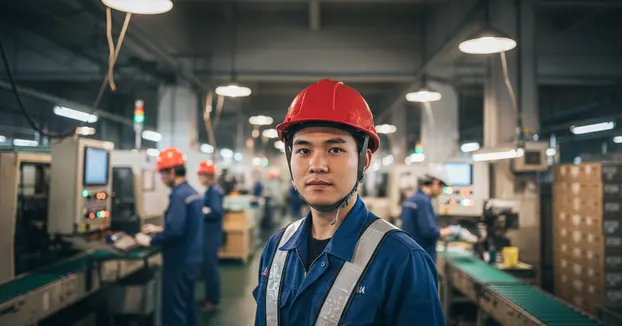
Educating Vietnamese Talent in Manufacturing | Practical On-Site Guide and Retention Checklist
As more companies accept Vietnamese talent on manufacturing floors, we often hear, “We hired them, but we are not training or coaching them effectively.” Firms prepare Japanese materials, set up OJT, and assign veteran employees as buddies—yet retention still fails to improve, and frontline managers burn out. In many cases the problem is not gaps in systems or procedures, but an incomplete bridge between Vietnam-specific culture and values and Japanese workplace culture. This article organizes a practical training and retention framework that HR and leadership can drive on the shop floor, together with key institutional checkpoints.
Why Vietnamese talent is gaining presence in manufacturing
As of 2025, Vietnamese nationals form the largest group among foreign workers in Japan, and their share of employment in manufacturing and processing remains especially high. Ministry of Health, Labour and Welfare “Employment Status of Foreign Nationals” notification statistics also show that Vietnamese talent is more concentrated in manufacturing and production-process occupations than other nationalities. Behind this are Vietnam’s large young population, a well-developed network of Japanese-language schools, and the maturation of the Specified Skilled Worker system working in combination.
In Specified Skilled Worker (i) fields such as “Manufacturing industries related to industrial products, industrial machinery, and electrical and electronic information” and “Food and beverage manufacturing,” the number of companies accepting Vietnamese talent has risen sharply. On theSpecified Skilled Worker system page published by the Immigration Services Agency of Japan, Vietnam consistently ranks among the top sending countries and is expected to remain a major source of manufacturing talent.
That said, there is a wide gap between “we hired them” and “they are productive on the floor.” Confirming and renewing status of residence and putting employment contracts in order are necessary premises, but they alone do not raise shop-floor productivity or retention. Successful education of Vietnamese talent in manufacturing requires an understanding of cultural background.
Common shop-floor concerns: five patterns where training and coaching stall
The following difficulties are raised repeatedly as common shop-floor concerns. They are not one-off issues, but structural patterns rooted in cultural background.
They said “I understand,” but the work is wrong. This is the most frequently reported concern. In Vietnam, saying “I don’t understand” or “I can’t do it” tends to be avoided out of consideration for superiors and the workplace. Especially right after joining, many people treat admitting a lack of understanding as impolite and answer “Yes, I understand” even when they do not.
You handed over a manual, but it was not read. Japanese reading and writing ability does not necessarily track with conversational ability. Even at JLPT N3, manufacturing manuals full of technical terms are difficult. Vietnam’s education environment also emphasizes oral transmission and learning by demonstration, so some people are less accustomed to document-centered communication.
Relationships with senior colleagues did not go well, and they resigned suddenly. Because Vietnamese culture tends to avoid bringing direct conflict to the surface, some people accumulate dissatisfaction and then resign abruptly. To managers it looks like “there was no warning,” but the person often has reasons that built up over a long period.
They cannot keep up with line speed changes. Process changes and sudden specification changes are routine on manufacturing floors. What Vietnamese talent often struggles with is irregular handling not covered in procedure sheets and change instructions given only orally. Without a visual way to show what changed, confusion easily arises.
Role division within the group is unclear, and sometimes no one moves. Situations of “someone else will do it” arise easily, yet people act proactively once responsibility boundaries are made clear. This reflects a mix of collectivist cultural background and a Vietnamese workplace view that values explicit role definition.
Why messages do not land: reading Vietnamese culture and values
Vietnamese society has strong Confucian hierarchical relations and a sense of belonging to family and group, and these are reflected directly in workplace culture. Without that understanding, training design never reaches the essence of “why it is not getting through.”
Hierarchy and the culture of “face” In Vietnam, respect for elders and superiors is embedded as a social norm, and stating “I don’t understand” in front of a superior is seen as damaging face. What matters on the manufacturing floor is deliberately designing a “safe place to say you don’t understand.” Effective approaches include regular one-on-one follow-up time and framing confirmation tests as “practice,” not “evaluation.”
Impact of public correction and reprimand Japanese manufacturing floors often have a culture of pointing things out on the spot when a line stops or a procedure is missed. For Vietnamese talent, however, public reprimand or negative feedback is a serious blow to face. It ranks high among events that can trigger resignation. Giving feedback privately and in a forward-looking form—“what to do next”—directly affects retention.
Lunar New Year (Tet) and the religious calendar Vietnam’s largest holiday is Tet (Lunar New Year), which falls around late January to early February each year. Requests for paid leave concentrate in this period of return and homecoming demand. Shift design and advance agreement on leave adjustments that anticipate this are essential to stable year-round floor operations. Some individuals may also request leave for monthly memorial days based on Buddhist observances.
Differences in learning style Vietnam’s education system tends to emphasize memorization and repetition. Familiarity with PBL (problem-based learning), in which people discover issues and think through solutions themselves, varies widely by individual. In manufacturing training, carefully completing a stage of “thoroughly repeating the correct procedure” first, then explaining “why that procedure,” makes applied skill easier to develop.
For workplace communication with Myanmar talent, this article is also useful.
Failure patterns and how to avoid them: training-design pitfalls that decide retention
Systematizing failure patterns and avoidance measures helps frontline staff respond in a reproducible way.
Failure pattern 1: Relying only on oral instructions in Japanese Some manufacturing workplaces still assume “watch and learn” or “they should understand from words alone.” Supporting materials in Vietnamese or English, illustrated and photo-based procedure sheets, and video manuals greatly improve retention. As an avoidance measure, standardize mother-tongue dual language or interpreter confirmation for critical safety instructions and process changes.
Failure pattern 2: Assuming they have “settled in” and leaving them alone After three to six months on the job, people often appear outwardly integrated. In reality, many are still carrying unresolved questions and relationship issues, which lead to turnover at six to twelve months. Build regular one-on-one meetings (at least monthly) into work rules as a system, and create ongoing opportunities to draw out honest concerns.
Failure pattern 3: Leaving people on simple tasks only, without showing a career path Vietnamese talent is highly motivated and places weight on “what I can become next.” Transparently showing promotion criteria and wage tables on the same basis as Japanese employees becomes a criterion for long-term retention. From workplaces with no clear outlook that effort will be rewarded, moves to better-paying employers accelerate.
Failure pattern 4: Ending life support “only before joining” Housing, bank account opening, and health insurance explanations are done around joining, but ongoing life support afterward often thins out. Continued foundation support after joining—hospital visits, government procedures, Japanese-learning opportunities—directly affects retention.
Points hiring managers often miss: the triangle of status of residence, Japanese ability, and life foundation
Points hiring managers often miss fall along three axes: systems, capability, and daily life.
Timing of status of residence checks and renewal management Specified Skilled Worker (i) is up to five years; Specified Skilled Worker (ii) allows period renewals. Notices of period-of-stay expiry, however, go to the individual, so companies easily overlook them. Status of residence confirmation with the Immigration Services Agency of Japan is needed not only at hiring but as an operation that sets ledger alerts from six months before renewal. Overstay risk also exposes the company to legal responsibility, so management systems are essential.
For details on status of residence, also see thearticle explaining status of residence for highly skilled foreign professionals.
The gap between “practical level” and “test level” Japanese ability Even JLPT N3 holders cannot necessarily read manufacturing technical terms, machine manuals, and safety-rule documents at a practical level. What interviews should check is not pass/fail on a test, but a practical check of “how much shop-floor terminology they understand while touring the plant.” Under theforeign employment measures framework promoted by the Ministry of Health, Labour and Welfare, post-employment Japanese-language education support is also made explicit as a company role.
Hello Work notifications and employment insurance procedures Notification of the employment status of foreign nationals to Hello Work is mandatory both when employment starts and when it ends. Missed notifications are especially likely when hiring multiple Vietnamese workers. Checklisting at join and leave timing is recommended. The latest text of related laws can be checked on e-Gov, souse e-Gov law search to confirm statutes on foreign employment.
How unstable living conditions affect floor performance Unstable housing, utilities, and commuting directly affect concentration and safe behavior on the floor. Beyond pre-joining housing support, systematizing ongoing life support—such as a consultation desk when moving or when share-house trouble arises—also connects to shop-floor safety management.
Diagram: pre-hire confirmation flow
We organize the flow from pre-hire through retention support by stage. Treat it as paired phases and check items so it is easy to manage visually.
Phase 1 “before the hiring decision” check items are as follows: confirm type and validity of status of residence; match the scope of work that may be performed (confirm fit with the specified industrial field for Specified Skilled Worker); run a practical Japanese-ability test; confirm whether a health checkup has been done; and confirm reasons for leaving the previous job.
Phase 2 “one month before joining” preparation should include: preparing a mother-tongue (Vietnamese) version of the employment contract; securing housing and explaining daily life before move-in (garbage rules, noise consideration, etc.); assisting with bank account opening and My Number acquisition; starting enrollment in health insurance and employees’ pension; and selecting an internal buddy and delivering advance cultural-understanding training.
In Phase 3 “day one through week one,” explaining in-plant safety rules with Vietnamese materials is the top priority. Then explain the emergency contact flow (including when Japanese is not understood), demonstrate and repeatedly confirm work procedures (do not rely on oral instruction alone), and introduce the internal consultation desk.
Phase 4 “one to three months” is the critical retention stretch. Conduct one-on-one meetings at least monthly, run job-understanding confirmation tests (framed as learning, not evaluation), encourage participation in Japanese training, give an initial career-path explanation, and inventory life-related anxieties.
Practical checklist: stage-by-stage HR management tools
We organize the practical checklist by stage. Sharing it among internal hiring and acceptance staff prevents person-dependent handling.
Pre-hire phase check items are as follows.
- Confirmed type and validity of status of residence on the residence card
- Confirmed under Immigration Services Agency of Japan criteria that the scope of work that may be performed matches the specified industrial field
- Prepared the employment contract in a Vietnamese version
- Confirmed practical Japanese ability using shop-floor terminology
- Confirmed reasons for leaving the previous job (to gauge job-hopping patterns)
- Conducted or scheduled a health checkup
Day-one through one-month phase check items are as follows.
- Completed enrollment procedures for employment insurance, health insurance, and employees’ pension
- Filed the foreign national employment status notification with Hello Work
- Delivered safety training with Vietnamese materials or with a bilingual staff member present
- Work procedure sheets include photos and diagrams, minimizing dependence on text
- Told the person the consultation desk contact name and how to reach them
- Checked life-related concerns (housing, health, commuting)
Three- to six-month phase check items are as follows.
- Continuing one-on-one meetings at least once a month
- Confirmed leave wishes around Tet (Lunar New Year) in advance and adjusted shifts
- Explained career path and promotion conditions
- Secured opportunities to join Japanese-language training
- Managed status of residence renewal timing on a ledger and set a six-month-prior alert
- Trained floor leaders on feedback methods that avoid cultural friction
Frequently asked questions (FAQ)
Q1. Can Vietnamese talent be hired in manufacturing under statuses of residence other than Specified Skilled Worker?
A. Under the Engineer/Specialist in Humanities/International Services visa, simple work on a production line is not permitted. For shop-floor manufacturing work, the main options are the Technical Intern Training program (a transition to the Employment for Skill Development Program is planned from 2027 onward) or Specified Skilled Worker. Always confirm the correspondence between status of residence and permitted duties on the official Immigration Services Agency of Japan pages and in e-Gov statute text.
Q2. Do we need an in-house interpreter who speaks Vietnamese?
A. Many companies manage without a resident interpreter by combining translation apps, Vietnamese manuals, and development of Vietnamese-speaking leader candidates. However, misunderstandings about safety rules, emergency response, and contract content can lead directly to life-safety and legal risk, so we strongly recommend ensuring specialist or bilingual staff involvement at least in those scenes.
Q3. How far should we accommodate requests to return home for Tet (Lunar New Year)?
A. Legally, annual paid leave is the same right as for Japanese employees and cannot be refused without reasonable grounds. If staffing on the manufacturing floor is a concern, best practice is to build Tet-period shift design into the annual plan from the start and confirm advance agreement with the individual in writing.
Q4. Is there an effective way to retain someone who has asked to resign?
A. By the time Vietnamese talent raises resignation, they have often already decided some time earlier. More fundamental than retention talks is building a system of regular meetings that draws out honest concerns before resignation intent surfaces. If resignation still happens, carefully explain implications for status of residence changes, return home, and the next job, and arrange an amicable exit process.
Q5. Are there external desks we can consult about educating Vietnamese talent in manufacturing?
A. Hello Work (Public Employment Security Offices) accepts consultations on foreign employment. Consulting external specialist agents on the practical design of acceptance support is also a valid option.
Conclusion: cultural understanding and institutional checks as twin wheels
Training and retention support for Vietnamese talent in manufacturing is not something that “ends when you hand over a manual.” Confucian hierarchy, attention to face, a learning style that favors demonstration over documents, and a calendar centered on Lunar New Year—only when these cultural contexts are taken into account does shop-floor training design work.
At the same time, neglecting institutional checks—status of residence renewal management, Hello Work notifications, and employment conditions set by the Ministry of Health, Labour and Welfare—lets legal risk spread across the company. Practicing both wheels—honoring the system while understanding culture—is the core of international talent management in manufacturing.
If you are responsible for diagnosing your company’s acceptance setup or designing support programs,contact the Foreign Talent Insights consultation desk. After hearing about conditions on your floor, we will propose practical next steps.
Related articles: practical topics to review together
Also review nearby practical articles as needed.
- Vietnamese Family Values and Work—A Practical Hiring Guide to Raise Workplace Retention
- Hiring Guide for Vietnamese Workers in Accommodation | Practical Points on Japanese Requirements, Cultural Considerations, and Retention Support
- Cultural Differences to Know When Hiring Vietnamese Talent | A Practical Guide to Improving Workplace Retention
 Written by

ヤマシタハヤト
Share this article


