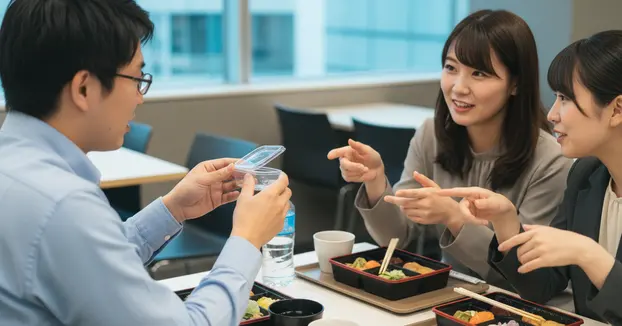
Conversation Starters for Lunch Breaks with Vietnamese Talent: A Practical Guide to Workplace Retention
Whether Vietnamese talent settles into the workplace often begins as early as the lunch break on day one. Breaks outside working hours are when the “foundation of human relationships” takes shape—something formal training and interviews rarely reveal. From the perspective of lunch-break conversation starters with Vietnamese talent at work, this is a key theme that affects post-hire retention, and one that HR and management should keep firmly in mind.
In many Japanese workplaces, people quietly eat lunch on their own. In Vietnam, by contrast, it is common to enjoy conversation while sharing a meal with colleagues or friends. If this cultural difference is left unaddressed, it can lead to concerns that someone is “not fitting in” or “becoming isolated.” This article explains concrete approaches to spark natural lunch-break conversations with Vietnamese talent and support workplace retention.
If you want to build foundational knowledge of Vietnamese culture and daily life, also see our basics of hiring foreign workers. For communication with talent of other nationalities, our article on workplace communication with Myanmar talent is also useful.
Lunch Breaks Are Critical for Workplace Communication with Vietnamese Talent
The cultural meaning of lunch
In Vietnam, lunch is not merely a time to refuel—it is an important social occasion for building relationships. Sharing a meal with family or colleagues deepens trust and a sense of solidarity. Information from JICA “Vietnam” also highlights the communal values and importance of human relationships in Vietnamese society, and mealtimes are one symbol of that.
If you see Vietnamese talent eating alone at a Japanese workplace, that is fine if it is their natural choice. In an environment where everyone goes their own way, however, they may feel they “want to join in but cannot.” Offering options for how to spend break time—without forcing anything—is the first step toward workplace retention.
“Informal trust” built during breaks
Communication during working hours tends to stay transactional—confirming instructions, reporting, and so on. In informal settings such as lunch breaks, personal hobbies, family stories, and hometown topics come up naturally. That informal dialogue is the foundation of “trust as people” at work.
When Vietnamese talent is still getting used to communicating in Japanese, they are often tense and focused during work, and breaks are a chance to unwind. Whether they have someone at work they can relax and talk with even a little during that time has a direct impact on their desire to stay.
Vietnamese Food Culture and How Lunch Breaks Are Spent
Features of Vietnamese lunch culture
Vietnamese lunches center on rice-flour dishes such as pho, bun (rice noodles), and com tam (broken rice), as well as vegetable-rich home cooking. Sharing several side dishes among several people is common, and the meal itself functions as a communication tool.
Japan Foundation “Vietnam” materials also touch on the diversity of Vietnamese culture and the importance of food in daily life, helping explain why mealtimes carry social meaning.
When Vietnamese talent brings a bento to a Japanese workplace, some are used to Japanese food while others still miss Vietnamese cuisine. Simply sharing light information about the company cafeteria or nearby restaurants—“what’s on the menu”—can be a natural conversation starter that shows interest in the other person.
Consideration that grows from knowing food preferences
When Vietnamese talent avoids certain ingredients, there may be religious or cultural reasons. Some people do not eat pork; others eat vegetarian dishes at certain times of year. Knowing each person’s stance on food makes it possible to show consideration when choosing the cafeteria or planning meals together.
That said, you should avoid making someone’s food preferences visible against their will. Accept what they like or avoid only to the extent they share it voluntarily, and record or share that information only with their consent.
Practical Approaches to Creating Lunch-Break Conversation Starters
A topic list for natural conversation
As lunch-break conversation starters with Vietnamese talent, the following topics tend to be relatively easy to enter and easy for the other person to answer.
- Hometown topics: Climate and food culture differ between northern and southern Vietnam. Asking “Where are you from?” often opens into differences between Hanoi and Ho Chi Minh City and similar topics.
- Impressions of Japanese food: Asking “What Japanese food have you come to like since arriving in Japan?” lets them speak naturally about their own experience.
- How they spend weekends: Hobbies and activities on days off are clues to their areas of interest.
- Talking about Vietnamese cuisine: Showing interest in Vietnamese food and asking “What dishes do you recommend?” lets them speak from the position of sharing their culture.
- Impressions of life in Japan: “Has anything surprised you since coming to Japan?” is a good entry point for sharing cultural differences.
These topics are not pushy and can be answered at the other person’s pace. The key is not to fire off several questions at once, but to develop one at a time while watching their response.
Benefits and timing of one-on-one conversation
In large group meals, Vietnamese talent may not keep up with the speed of Japanese and get fewer chances to speak. Creating one-on-one time at lunch lets them speak at their own pace and raises psychological safety.
Timing matters especially in the first one to two weeks after joining. Experiencing that “someone is interested in me” during this period makes workplace communication overall smoother afterward.
Common Frontline Concerns and Decision Criteria
Common concerns from the field
A frequent concern from company contacts is, “Our Vietnamese talent always looks at their phone alone at lunch, and it worries us.” That is not necessarily a problem, but knowing decision criteria to read the background helps you respond without hesitation.
Keeping the following points in mind as decision criteria raises the resolution of the situation.
- Whether the person is trying to talk to people around them but getting no response, or choosing time alone
- Whether communication during work is smooth and only break time is isolated, or there is little interaction during working hours as well
- Whether it is temporary right after joining, or continues even after some time has passed
Combining these criteria in observation helps you distinguish “a situation that is fine to watch” from “a situation where you want to engage more actively.”
How to observe and how to engage
When gathering judgment material, information from colleagues can help before you ask the person directly. Before asking them, “How have you been spending lunch lately?” simply checking with team members—“Do you get chances to talk with them during breaks?”—makes the situation easier to grasp.
The purpose of observation, however, is not to manage the person but to create an environment where they can work with peace of mind. The basic approach is “at the pace they want”; if they prefer time alone, there is no need to force them in.
Failure Patterns and How to Avoid Them
Common failure patterns
Here are several failure patterns seen in real workplaces around lunch-break communication with Vietnamese talent.
Failure pattern 1: One-sided rapid-fire questions Strong interest can lead to firing questions in quick succession in a short time. The other person may feel interrogated and clam up instead.
How to avoid it: Ask one question at a time. After hearing their answer, briefly share your own experience or impression so it becomes a dialogue. Responding with “I see—for me, …” creates a cycle of question → answer → sharing.
Failure pattern 2: One-sided imposition of Japanese culture Approaching with premises such as “In Japan, lunch breaks are spent this way” or “This is normal in Japanese workplaces” fails to convey respect for the other person’s culture.
How to avoid it: Offer options while showing respect for their culture: “In Japanese workplaces people sometimes spend breaks this way, but it’s fine to do what works for you.”
Failure pattern 3: Over-focusing on the language barrier and never speaking up Excessive concern that “Japanese may not get through well enough” can result in saying nothing at all for a long time.
How to avoid it: Even without perfect sentences, short words plus gestures can convey meaning. Speaking up itself sends the message “I’m interested in you.”
Failure pattern 4: Engaging only at lunch and nowhere else Focusing only on lunch conversation while neglecting communication during work makes lunch talk feel isolated and fails to build overall trust.
How to avoid it: Treat frequent check-ins during work, careful explanations of what needs confirming, and feedback opportunities as a set with lunch conversation.
Keeping cultural consideration from going too far
Consideration for other cultures matters, but excessive consideration can single people out and hinder natural relationships. Avoid assuming “they’re Vietnamese, so they must be like this.” Treat them as one employee while holding cultural background as knowledge—that is a healthy stance.
Points Hiring Managers Often Overlook
The limits of “watching how things go”
Many hiring managers respond with “Let’s see how things go at first after they join.” If that watch-and-wait period runs too long, however, there is a risk of noticing only after problems have worsened.
Points that are easy to overlook include the following.
- If the person is struggling but is not used to raising issues on their own, isolation can deepen without anyone noticing
- Colleagues may hold back because they feel “it’s hard to approach Vietnamese talent,” and managers may not notice
- Not only lunch breaks but small daily touchpoints—morning greetings, a word at the end of the day—may be insufficient
Preparation before hiring shapes retention
Before Vietnamese talent joins, sharing with team members “a few things it helps to know about cultural differences” makes post-hire communication smoother. Simply conveying points like the following in advance is effective.
- In Vietnam there is a culture of sharing meals, so eating together at lunch is often appreciated
- There is a tendency to answer questions clearly with “yes” or “no,” so even a simple “You’re fine” can be reassuring
- On name order: Vietnamese names follow a different order from Japanese (family name → middle name → given name), so it helps to confirm how the person prefers to be addressed
Share these as facts—not as “you must respond this way,” but as information that “understanding this makes it easier to close the distance with the other person.”
Diagram: Steps for Building Lunch-Break Communication
Below is a staged outline of building lunch-break communication after Vietnamese talent joins.
Step 1: Pre-hire preparation (up to one week before joining)
- Share basic information on Vietnamese culture with team members
- Check the lunch environment (cafeteria, break spaces, nearby shops)
- Set an opportunity to confirm the person’s food preferences and allergies
Step 2: Engagement on day one (first day)
- Explain where and how to use the lunch break
- Create a chance to eat one-on-one (confirm the person’s preference)
- Do not force conversation to continue; respect their pace
Step 3: Observation in the first one to two weeks
- Observe how lunch is spent (alone or interacting with colleagues)
- Collect feedback from colleagues
- Create openings to start a conversation when needed
Step 4: Review after one month on the job
- Check on workplace relationships in regular one-on-ones with the employee
- Understand the state of communication within the team
- Adjust how the team as a whole engages, as needed
By keeping these steps in mind, you can design a staged approach to engagement rather than simply “watching how things go.”
Practical checklist
- Have you shared basic cultural information with team members before the Vietnamese talent joins?
- Have you mapped the lunch-break environment (company cafeteria, break spaces, nearby restaurants) so you can guide the employee?
- Have you set up an opportunity, with the employee’s consent, to learn about their food preferences and allergies?
- Have you scheduled at least one one-on-one conversation within the first day to first week after joining?
- Are you observing how they spend lunch breaks and distinguishing, based on clear criteria, between situations to watch and situations to step in?
- Are you mindful of engagement during breaks in parallel with frequent check-ins during work hours?
- Have you set up a meeting one month after joining to check in with the employee about workplace relationships?
- Have you told team members to treat the person as an individual employee without imposing cultural assumptions?
- If talent of multiple nationalities is on staff, do you understand and distinguish each person’s cultural background?
FAQ
Q: What should I do if a Vietnamese employee always spends lunch breaks alone?
A: First, determine whether they are choosing alone time of their own will or simply lack an opening to connect. As criteria, check whether communication during work is going smoothly and how long it has been since they joined. While observing, try naturally starting a light conversation—such as “How was your weekend?”—and watch their response.
Q: Is it rude to ask about food preferences?
A: Food preferences are a natural topic when the person can talk about them of their own accord. Asking “Is there any Japanese food you’ve come to like since arriving in Japan?” is easier to answer and opens conversation more than “What do you like?” However, some people avoid certain ingredients for religious reasons, so rather than guessing at that background, it is important to take their words as they are.
Q: How should I speak to talent who cannot yet speak Japanese well enough?
A: Even without perfect Japanese, short words combined with gestures can convey meaning. Using a smartphone translation app as a support is also an option. What matters is that the attitude of “wanting to talk to you” comes across—the other person will sense that goodwill. Rather than forcing a long conversation, start with a short greeting and gradually expand based on their response.
Q: We also have talent of other nationalities. How can we avoid treating only Vietnamese talent specially?
A: Having cultural background as knowledge is different from treating people differently in your actions. The foundation should be treating every employee as an individual colleague, while also understanding each person’s cultural background. For example, by also deepening your cultural understanding of talent of other nationalities—as introduced in our article on workplace communication with Myanmar talent—you can maintain a fair approach to engagement.
Summary
Conversations with Vietnamese talent during lunch breaks are an important touchpoint that supports workplace retention. Review the following points.
- In Vietnam, lunch is a social occasion; understanding this culture is the first step in communication
- Start conversation openers with topics that are easy to answer, such as hometown, food, or life in Japan
- Setting up one-on-one engagement early after joining increases psychological safety
- Do more than “watch how things go”—engage in stages with clear judgment criteria
- Treat communication during work and engagement at lunch as a paired focus
- Rather than excessive cultural accommodation, treat them with respect as individual employees
Efforts to deepen understanding of Vietnamese talent’s cultural background and smooth workplace communication can also be applied to retention support for talent of other nationalities, not only Vietnamese talent. Continue deepening cross-cultural understanding while also referring to information from JICA “Vietnam” and the Japan Foundation “Vietnam”.
If you would like to learn more about the content of this article or consult on how to engage in a specific workplace setting, please contact us via Foreign Talent Insights inquiry.
(Article verified on: August 13, 2026)
Related articles: Practical topics to review together
Please also review practical articles on related themes as needed.
 Written by
Share this article


