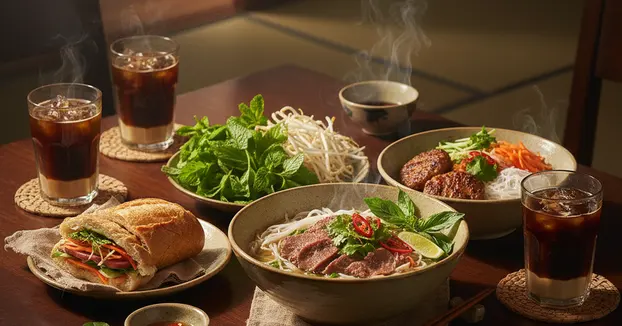
Vietnamese Cuisine and Food Culture: What to Know Before Working with Vietnamese Staff
As hiring of Vietnamese talent expands, understanding food culture has become a highly important theme for workplace communication. Many hiring managers likely wonder things like, “What kinds of food do they like?” “What restaurants should we choose for team meals?” and “Are there religious dietary restrictions?”
Vietnamese cuisine is growing more popular in Japan as well, but relatively few people have a systematic grasp of the background of its food culture or of regional differences. This article clearly explains practical knowledge for the workplace—from the basics of Vietnamese cuisine and food culture to points of consideration when dining with Vietnamese staff.
Basic Characteristics of Vietnamese Cuisine
The defining features of Vietnamese cuisine are the freshness of ingredients and the abundance of herbs. Cooking methods that use little oil and bring out the natural flavors of ingredients are central, and many dishes are overall quite healthy. That is also why the cuisine has drawn attention from health-conscious people in Japan.
Essential to any discussion of Vietnamese cuisine is the fish sauce known as nuoc mam. Made from fermented fish, this seasoning has a distinctive umami and aroma and forms the base of many dishes. Thinking of it as Vietnam’s equivalent of Japanese soy sauce may make it easier to picture. Nuoc cham—a dipping sauce made by adding sugar, lime, chili, and garlic to nuoc mam—is also indispensable in Vietnamese cooking.
Vietnamese dishes are also commonly finished with generous amounts of fresh herbs. Coriander, basil, mint, and other herbs are combined in different ways depending on the dish. Multiple herbs are always placed on the table, and the basic style is for each person to add them to taste while eating. This approach may feel familiar if you think of Japan’s culture of condiments and garnishes.
At the Vietnamese table, the basic style is also to share food together. Serving several side dishes on large platters and eating them together with family or friends has something in common with Japanese hot pot meals and the sharing style common at izakaya. The tendency for Vietnamese staff to naturally prefer sharing at team meals also comes from this cultural background.
Different Food Cultures in the North, Central Region, and South
Vietnam has a long, narrow territory running north to south, and distinct food cultures have developed in the north, central region, and south. Taste preferences can differ depending on a staff member’s home region, so knowing these differences is useful.
Northern Food Culture (Around Hanoi)
Northern cuisine is characterized overall by simple, delicate seasoning. Cooking that is neither too salty nor too sweet, and that draws out the natural umami of ingredients, is preferred. Because the region borders China, it has also been influenced by Chinese cuisine. Pho, which originated in Hanoi, is famous worldwide; northern pho is relatively simple and known for its clear broth. Heat is not especially strong, and milder flavors tend to be preferred.
Central Food Culture (Around Hue and Da Nang)
Because Hue, once the royal capital of Vietnam, is located in the central region, the traditions of court cuisine remain strong to this day. Dishes are wide-ranging, and careful attention is also paid to visual beauty. Compared with other regions, central cuisine also includes many spicier dishes and makes heavy use of chili. Representative dishes include bun bo Hue (a spicy beef noodle soup) and banh beo (small steamed rice cakes). Staff who like spicy food are often from the central region, so it is worth keeping that in mind.
Southern Food Culture (Around Ho Chi Minh City)
The south has a tropical climate and abundant agricultural produce, so its cuisine uses a wide variety of ingredients and generally favors sweeter seasoning. Dishes using sugar or coconut milk are also common, and the region has been influenced by Thai and Cambodian cuisine. Southern-origin dishes such as banh mi (Vietnamese-style baguette sandwiches) and banh xeo (Vietnamese-style crepes) are popular in Japan as well. Soups and noodle dishes often taste sweet too—so much so that people from the north sometimes feel southern food is “too sweet.”
Signature Vietnamese Dishes Worth Knowing
These dishes can also serve as conversation starters with Vietnamese staff, so it helps to know the classics.
Pho
Pho is Vietnam’s signature flat rice-noodle soup. Thinly sliced beef or chicken and plentiful herbs are added to a clear broth simmered for a long time from beef bones or chicken carcasses. It originally comes from Hanoi, but it is now loved throughout Vietnam. In Japan as well, it is almost always on the menu at Vietnamese restaurants and is a familiar dish.
Banh Mi
This sandwich fills a baguette—introduced during the French colonial period—with Vietnamese-style ingredients. Its distinctive combination of ham, pickled vegetables, coriander, chili, and more has made it popular worldwide. As an easy street food, it is commonly eaten for breakfast or lunch in Vietnam.
Fresh Spring Rolls (Goi Cuon)
These spring rolls wrap shrimp, pork, rice vermicelli, herbs, and other ingredients in rice paper and are eaten as is, without frying. Light and healthy, they are also very popular with Japanese people. They are eaten with nuoc cham or peanut sauce.
Bun
Bun is a round rice noodle different from pho and is used in many dishes. Variations are abundant, including bun bo (beef noodles) and bun rieu (crab noodle soup). Compared with pho, the noodles are a bit thicker and have a chewier texture.
Com Tam
This southern staple is made with broken rice (tam). Grilled pork, a fried egg, dressed pork skin, and other toppings are placed over the rice and eaten with a nuoc mam–based sauce. In Ho Chi Minh City it is eaten all day, from breakfast through dinner—essentially a national everyday dish.
Banh Xeo
This crepe-like dish is made by thinly cooking a batter of rice flour and turmeric and wrapping shrimp, pork, and bean sprouts inside. It is known for its crisp texture and rich herbal aroma, and the style of wrapping it in vegetables to eat is enjoyable as well.
Vietnamese Dining Manners and Table Culture
Vietnamese meals have their own manners and table culture. Knowing the basics will also help you understand the background behind staff behavior.
A chopstick culture: In Vietnam as well, chopsticks are used for everyday meals. Because there is much in common with Japan, tension at the table is less likely to arise. Depending on the dish, spoons or forks may also be used.
Respect for seniors and superiors: In Vietnam, respect for elders and people of higher status is important. At meals, people tend to wait for elders or supervisors to start eating first, and serving food to seniors is also considered good manners. You may find it similar to Japanese customs.
Lively conversation during meals: In Vietnam, talking while eating is completely natural. At workplace meals as well, people tend to take an active part in conversation.
Valuing eating together: In Vietnam, sharing meals with family and friends is culturally important. Being invited to a meal is received as a sign of welcome and closeness, so the invitation itself helps build relationships with staff.
A style of sharing dishes: Even when each person has an individual plate, the common style is for everyone to take from side dishes placed in the center of the table. Sharing at team meals feels natural to Vietnamese staff, so creating that kind of setting often helps the atmosphere relax.
Herbs and Ingredients Essential to Vietnamese Cuisine
The rich aroma of Vietnamese cuisine comes from the generous use of fresh herbs. Some are hard to find in ordinary Japanese supermarkets, but knowing about them can still open conversations with staff.
- Coriander (cilantro / rau mui): A staple herb indispensable to Vietnamese cooking. In recent years it has also become more common in Japanese supermarkets.
- Various basils: Native varieties different from Japanese sweet basil are used, such as Thai basil and lemon basil.
- Mint: Added to fresh spring rolls and soups for its fresh aroma.
- Houttuynia (rau diep ca): An herb similar to Japanese dokudami, with a distinctive aroma.
- Shallots (cu hanh): Fried in oil for toppings, or added raw to salads and noodles.
These herbs are familiar ingredients to Vietnamese staff, but some can be hard to obtain in Japan. Sharing information about nearby Asian grocery stores with staff can be appreciated as a thoughtful gesture.
Considerations to Keep in Mind When Dining with Vietnamese Staff
There are several important points to understand regarding meals with Vietnamese staff and food-culture considerations at work. Knowing them in advance helps prevent unnecessary trouble and supports good relationship-building.
Religious Dietary Restrictions
Religion and daily customs in Vietnam are explained in detail in a separate article, but keep the following points in mind for their impact on meals.
Many people in Vietnam practice Buddhism (said to be about 40–50% of the population), and devout Buddhists have a custom of eating vegetarian cuisine (chay) on the 1st and 15th days of the lunar calendar. On those days they avoid meat, fish, eggs, and dairy products and eat mainly vegetables, tofu, and mushrooms. Keeping this custom in mind when scheduling team meals conveys consideration.
Vietnam also has a small Muslim population (of Cham origin). Whether halal accommodation is needed is most reliably confirmed by asking the person directly in advance.
Spice Preferences Vary by Individual
Vietnamese cuisine is often imagined as spicy, but tolerance for heat differs greatly by home region. People from the central region are often used to spice, while those from the north tend to prefer milder flavors. At team meals, simply asking, “Is the spice level okay for you?” gives staff peace of mind.
Food Taboos and Disliked Foods
Japanese foods that Vietnamese people often dislike are also covered in detail in another article, but some ingredients require care at team meals. Some staff may dislike raw sashimi (seafood that has not been cooked) or foods with a strong fermented odor (strongly pungent cheeses and some fermented foods). Individual differences are large, however, so avoid assuming that “Vietnamese people dislike this” across the board; prioritize checking with the person.
Choosing Venues for Workplace Meals and Welcome Parties
How to choose foods Vietnamese people will enjoy is also introduced elsewhere, but for meals that include Vietnamese staff, venue choices that keep the following points in mind are appreciated.
- Restaurants with menus rich in vegetables and seafood
- Restaurants with flexible menus that can accommodate individual dietary restrictions
- Restaurants with vegetarian options (for meals after religious observances)
- Restaurants willing to discuss allergies and spice levels
Even among Japanese dishes, foods that highlight the natural flavors of ingredients—such as shabu-shabu, sushi, yakitori, and hot pot—tend to be well received by Vietnamese staff. Sharing a meal is also an opportunity to build trust, and consideration in these settings contributes to improving the everyday workplace environment.
Why Understanding Food Culture Helps Improve Workplace Retention
In hiring international talent, post-hire retention is a key management issue. One factor in whether Vietnamese staff stay at a workplace is whether they feel their culture is respected. Consideration for food culture is one concrete action that makes that respect tangible.
Meals are not merely about nutrition; they are deeply tied to culture, customs, and identity. Staff who feel their food culture is understood are more likely to feel a sense of belonging at work, which in turn helps lower turnover risk. Concrete actions companies can take are outlined below.
- Confirm dietary restrictions and preferences at onboarding: As part of health management, ask during onboarding orientation about allergies, religious dietary restrictions, and disliked foods.
- Communicate meal invitations carefully: Do not force participation, and share an overview of the menu in advance so staff have room to decide for themselves.
- Share information on nearby Asian restaurants: Knowing lunch options helps reduce day-to-day stress.
- Bring up Vietnamese cuisine in conversation: Questions such as “Do you eat pho often?” or “What’s your favorite dish?” naturally show interest in their culture.
Consideration for food culture does not require special systems; the accumulation of small everyday kindnesses helps improve retention. If you want a systematic understanding from hiring foreign staff through post-hire retention support, please also see our article explaining the steps and flow of hiring foreign nationals.
Conclusion
This article explained the characteristics of Vietnamese cuisine and food culture. Here are the key points.
- Vietnamese cuisine is a healthy food culture that values the natural umami of ingredients, making use of fresh herbs and fish sauce (nuoc mam)
- Taste tendencies differ across the north, central region, and south, and preferences vary by a staff member’s home region
- There are many globally known signature dishes, including pho, banh mi, and fresh spring rolls
- Religious dietary restrictions (such as Buddhist vegetarian customs) and spice preferences vary by individual, so it is important always to confirm with the person
- Consideration for food culture directly supports trust-building and higher workplace retention
For companies considering accepting Vietnamese talent, or those that already employ Vietnamese staff, learning about food culture is a reliable first step toward better communication. As a Registered Support Organization, YourBright provides end-to-end support—from hiring international talent from Vietnam and elsewhere through post-hire retention.
For inquiries about hiring international talent, please feel free to contact us via our inquiry form. Initial and operating fees are all ¥0, and no payment is required until an offer is made. For phone consultations, call 03-6908-6143 (hours: 9:00–18:00).
Practical Points to Confirm Before Moving Ahead with Hiring
After understanding culture, religion, and values, confirming hiring conditions and cost design early will also help things go smoothly.
When hiring under Specified Skilled Worker, check the hiring process and acceptance costs, and if you outsource support, also compare how to choose a Registered Support Organization.
 Written by

グエン・ハイ
Share this article


