ACCEPTANCE & EDUCATION
Vietnamese Food Culture Guide: Differences from Japan, Dining Manners, and Taboos
Many people think of pho or fresh spring rolls when they hear Vietnamese cuisine. Yet Vietnam’s food culture is a deep world rooted in region, religion, and history, with many points that seem similar to Japan but differ greatly. For staff at companies that accept Vietnamese talent, questions such as how to behave at the table and what to serve so guests will enjoy the meal never seem to end. This article therefore explains the overall picture of Vietnamese food culture in plain terms, with differences from Japan as the main axis.
Vietnamese food culture 1: Staples, seasoning, and regional differences
To understand Vietnamese food culture, the three pillars to grasp first are staples, seasoning, and regional differences. Although Vietnam shares a rice-based food culture with Japan, the substance is quite different.
Rice is the foundation, but how it is eaten differs from Japan
Like Japan, Vietnam is a country where rice is the staple food. How rice is eaten, however, differs greatly. In Japan it is common to serve steamed white rice in a bowl and eat it as is, whereas in Vietnam it is everyday practice to process rice into rice noodles such as pho (phở) and bun (bún).
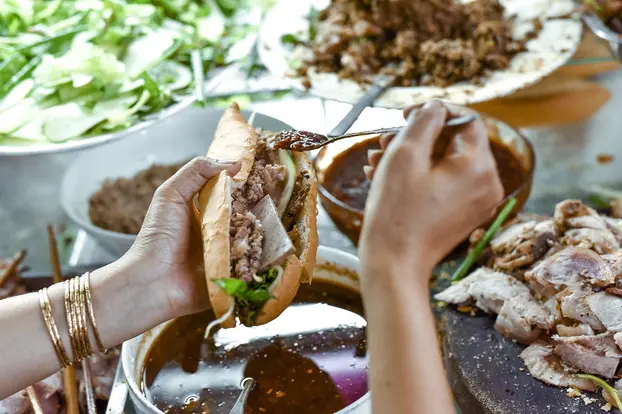
Under the influence of the French colonial period, the French-bread sandwich known as banh mi (bánh mì) is also widely popular. In other words, even within the same “rice culture,” a major feature of Vietnam is that rice is used in far more diverse ways than in Japan.
Vietnamese seasoning centers on “sweetness × fermentation”
Many people may picture bold, spicy flavors when they think of Southeast Asian cooking. Surprisingly, though, the basics of Vietnamese cuisine are the trio of nuoc mam (nước mắm, fish sauce), sugar, and lime. The Vietnamese style is to balance the fermented umami of nuoc mam with the sweetness of sugar and the acidity of lime.
In addition, several condiments are typically set out on the table, and each person adjusts the flavor to their own taste. As we also explain in detail in “4 Condiments Vietnamese People Love to Use,” many households keep chili sauce, ketchup, and similar items on hand, so freedom in seasoning is far greater than in Japan.
The character of the cuisine changes across the north, center, and south
Because Vietnam has a long north–south stretch of land, seasoning preferences differ greatly by region. Around Hanoi in the north, relatively light and delicate flavors are preferred, while Hue in the central region is known for spicier dishes that use a lot of chili. Around Ho Chi Minh City in the south, sweeter seasoning with more sugar is mainstream.
For that reason, when dining with Vietnamese people, knowing their home region makes it easier to anticipate taste preferences. Someone from the north may find a sweet dish unappealing, and it is not unusual for someone from the south to dislike food that is too spicy. For differences in character by region of origin among Vietnamese people, see also “What Are Vietnamese People Like? Personality and National Character by Region.”
Vietnamese food culture 2: Dining habits that surprise Japanese people
When Vietnamese and Japanese people eat together, moments of mutual surprise are not uncommon. Here we introduce differences in dining habits that Japanese people in particular should know.
Foods Vietnamese people like—and Japanese foods they often dislike
When hosting Vietnamese guests, the most important point to watch is tendencies in food likes and dislikes. As we explain in detail in “Don’t Serve These! Japanese Foods Many Vietnamese People Dislike,” many Vietnamese people tend to dislike raw egg, sashimi, natto, umeboshi, and similar items. Resistance to raw ingredients can be stronger than many Japanese people imagine.
On the other hand, as introduced in “What Do Vietnamese People Like? What to Serve When Treating Them,” thoroughly cooked dishes such as yakiniku, ramen, and okonomiyaki are highly popular. If you have a chance to treat Vietnamese colleagues or guests, we recommend choosing dishes that are well cooked through.
Ingredients unique to Vietnam that surprise Japanese people
A visit to a Vietnamese market often brings encounters with ingredients rarely seen in Japan. As covered in “Too Much for Japanese People!? 4 Unusual Vietnamese Foods,” items that can feel quite challenging for Japanese people—such as hot vit lon (hột vịt lộn), a fertilized duck egg nearing hatching, and dishes made with insects—are eaten as everyday food.
In addition, as introduced in “8 Unusual Fruits You Can Eat in Vietnam,” tropical fruits that are hard to obtain in Japan, such as dragon fruit and rambutan, are abundant. Knowing fruits that are familiar to Vietnamese people can also make a good conversation starter.
Buddhism and vegan meals are woven into daily life
Vietnam has a large Buddhist population, and the custom of eating vegan (plant-based) meals for religious reasons is part of everyday life. Many Buddhists eat vegan meals on the 1st and 15th days of the lunar calendar, and this practice is widely carried on by younger generations as well.
As we explain in detail in “Vegan and Vegetarian Eating Widespread in Buddhist Vietnam,” many vegan-only eateries can be found on Vietnamese streets. That said, not every Vietnamese person practices strict vegetarianism, so it is better to check individual habits.
Vietnamese food culture 3: Dining manners that can cause offense if you don’t know them
The dining table is one of the settings where cultural differences surface most easily. Manners that are taken for granted in Japan can be considered rude in Vietnam, so it is necessary to understand them in advance.
Chopstick use and serving from shared dishes follow the opposite logic from Japan
People in Vietnam also eat with chopsticks as in Japan, but there are several differences in manners. As we introduce in detail in “Vietnamese Dining Manners That Differ Completely from Japan,” for example, using one’s own chopsticks directly when taking food from shared platters is a perfectly natural act in Vietnam. In Japan, using serving chopsticks is considered proper manners, but in Vietnam using one’s own chopsticks for shared dishes is generally accepted.
It is also wise to watch behaviors Japanese people may do without thinking, such as not starting to eat before elders and not resting chopsticks across the top of a rice bowl during the meal.
Taboos at the table
The Vietnamese table has its own taboos that differ from Japan. Drinking soup by putting the bowl to one’s mouth is considered poor manners in Vietnam, so using a spoon is proper. Making loud noises while eating is also frowned upon, and Japan’s culture of slurping noodles is one point that can feel off-putting to Vietnamese people.
When dining with Vietnamese people, therefore, it is important to observe their reactions and respect differences in manners. Rather than imposing Japanese manners outright, knowing the differences and meeting halfway helps build good relationships.
Food prohibitions differ by religion
Besides Buddhism, Vietnam is a country where diverse religions such as Catholicism and Cao Dai coexist. As noted in “Religion in Vietnam: Taboos, Daily Customs, and More,” what must not be eaten and which ingredients should be avoided on certain days differ by religion.
For example, some Buddhists avoid meat on specific lunar-calendar days, and a certain number of Muslim Vietnamese people do not eat pork. When planning employee cafeteria menus or organizing meals, it is reassuring to check in advance whether there are religious dietary restrictions.
Vietnamese food culture 4: Practical points when dining with Vietnamese people
Building on the knowledge so far, here are practical points that help in real situations when dining with Vietnamese people. Staff at accepting organizations and those who work with Vietnamese colleagues are encouraged to use them as a reference.
Advance research on favorite foods matters most
If you have a chance to treat Vietnamese guests, researching their favorite foods in advance is more important than anything else. As introduced in “What Do Vietnamese People Like? What to Serve When Treating Them,” Japanese dishes that are popular with Vietnamese people show certain tendencies.
Even so, individual preferences vary greatly by home region and religious background, so asking the person directly whenever possible is the most reliable approach. Simply asking what they would like to eat conveys consideration and can make the meal a better opportunity for communication.
At drinking occasions, understand beer culture
Vietnam ranks among the world’s top countries for beer consumption. At banquets there is a custom of chanting “mot, hai, ba, yo” (một, hai, ba, dô—1, 2, 3, let’s drink!) before clinking glasses, and the number of toasts is far higher than in Japan.
As introduced in “What Kind of Beer Do Vietnamese People Like?,” for Vietnamese people beer also serves as a communication tool for deepening relationships. At drinking occasions, gestures such as refilling a glass as soon as it is empty and matching the other person’s pace are appreciated. At the same time, some people do not drink for religious reasons or physical constitution, so it is also important not to pressure anyone to drink.
Conclusion
Vietnamese food culture shares rice as a staple with Japan, yet in practice there are many differences in seasoning direction, dining manners, and eating habits rooted in religion. Judging these differences as “right or wrong” is not the point; understanding the cultural background and meeting each other halfway is the first step toward building good relationships.
If you want to learn more about each theme, also see related articles such as “4 Condiments Vietnamese People Love to Use,” “Don’t Serve These! Japanese Foods Many Vietnamese People Dislike,” and “Vietnamese Dining Manners That Differ Completely from Japan.” Enjoying differences in food while deepening mutual understanding should help create a better workplace environment.
 Written by
Share this article


