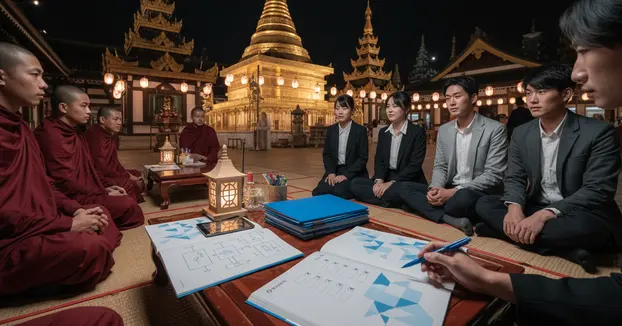
How Myanmar Talent Sees the Japanese: Workplace Culture and Practical Retention Tips
Hiring managers often ask, “We hired Myanmar talent, but we are not sure what we should be mindful of.” Myanmar people often have a distinctive impression of the Japanese, and understanding that impression is the first step toward building trust at work. This article organizes practical points—from cultural differences and day-to-day communication to event considerations and common failure patterns.
Myanmar is a country where Buddhists form the majority, and its culture places strong value on respect for elders and group harmony. Japanese workplace culture, by contrast, still relies heavily on “unspoken understanding” and “reading the air.” These differences often cause misalignment. Successful acceptance of Myanmar talent requires not only an understanding of the systems involved, but also a firm grasp of these cultural assumptions.
Cultural background and individual differences (a premise against nationality-based stereotypes)
Impressions of Japanese people commonly shared by Myanmar people include being “punctual,” “polite but hard to read,” and “rule-oriented.” These traits stand out when compared with Myanmar workplace culture, and they are also points that often confuse many Myanmar workers when they first arrive in Japan.
Theravada Buddhism has a strong influence in Myanmar, and most of the population is Buddhist, but there are also meaningful numbers of Christians, Muslims, and Hindus. Myanmar is a multiethnic nation of more than 135 ethnic groups—including the Bamar, Shan, and Karen—so daily customs and languages (Myanmar language as well as regional languages) can differ by region and ethnicity of origin.
What matters here is avoiding blanket assumptions such as “Myanmar people are X.” Values differ greatly by age, place of origin, religion, family structure, and years spent in Japan. The first judgment standard hiring managers should hold is to base dialogue on “the individual’s experience and values,” not on “nationality.” Holding cultural tendencies as knowledge while designing communication on the premise of individual differences becomes the foundation of retention support.
For day-to-day interaction with Myanmar talent, our article on workplace communication with Myanmar talent also covers concrete points such as how to address people by name—please refer to it as well.
Workplace scene guide: daily work, check-ins, and how to give instructions
How Japanese supervisors give instructions in daily work is often one of the first hurdles for Myanmar talent. In Japan, people are often expected to “hear one and understand ten,” and even when instructions are vague, they are expected to read the room and respond. In Myanmar workplace culture, clearer instructions and concrete step-by-step explanations are more common, so abstract directions more easily lead to misunderstanding and work errors.
In day-to-day check-ins, considerations like the following are effective:
- State the conclusion first, and make deadlines and priorities clear
- Show that clarifying questions are welcome, rather than expecting people to “just figure it out”
- When giving criticism, avoid language that rejects the person and focus on the behavior itself
- Avoid keigo and rapid Japanese; aim for plain Japanese (simple vocabulary and short sentences)
- Confirm understanding of instructions each time through repetition or brief notes
Many Myanmar workers also tend to show strong respect toward elders and supervisors, and may hesitate to express their true opinions. Repeatedly telling them from the supervisor’s side, “If anything is unclear, please ask without hesitation,” helps secure psychological safety. Conversely, calling someone out in front of a large group or scolding them emotionally can deeply wound their pride and become a trigger for resignation.
Workplace scene guide: welcome parties, events, and meal considerations
Welcome parties and internal events can help build relationships with Myanmar talent, but a lack of consideration can also backfire. On meals, because many people in Myanmar are Buddhist, some limit meat, and some avoid pork or beef for specific religious reasons. Muslim employees who need halal accommodation may also be included, so confirming with the individual in advance is the most reliable approach.
It is also important not to make uniform assumptions about drinking. Some people limit alcohol with Buddhist precepts in mind, while others enjoy Japan’s nomikai culture. Avoid imposing the idea that “being able to drink is proof of camaraderie”; prepare non-alcoholic options and create an atmosphere in which participation is not forced.
Myanmar has important occasions such as the water festival (Thingyan) and Independence Day. Thingyan in particular is a major festival corresponding to the Myanmar New Year; responding flexibly to paid leave or home-visit requests where possible helps build long-term trust. When scheduling internal events, it is also wise to take such religious and cultural calendars into account.
At welcome parties, showing interest by asking about the person’s home region or family is often appreciated. At the same time, be careful not to push too far into sensitive topics related to political conditions or religion.
Common questions from the field
Common field questions that hiring companies bring to YourBright include the following.
“Our Myanmar talent keeps apologizing and will not share what they really think” is an extremely common concern, influenced by a cultural background that strongly emphasizes the authority gradient with supervisors. To draw out the real difficulties behind surface-level apologies, it is effective to create regular one-on-one opportunities to ask individually, “Is anything troubling you?”
Another frequent question is, “They asked for time off for religious reasons, but we do not know how far we should allow it.” In such cases, confirming the individual circumstances within the scope of work rules and responding as flexibly as possible leads to a resolution both sides can accept. The Ministry of Health, Labour and Welfare’s page on measures for the employment of foreign nationals also presents guidance on proper employment management of foreign workers and can be used as a reference.
In addition, it is not uncommon to hear, “They should be able to handle a fair amount of Japanese, but work instructions are not getting through.” There is often a gap between Japanese-Language Proficiency Test (JLPT) level and actual understanding of the work, and in most cases specialized terms or company-specific abbreviations are the barrier.
Failure patterns and how to avoid them
When we organize failure patterns and avoidance measures in accepting international talent, common causes come into view.
The first failure pattern is assuming “they can speak Japanese, so it will be fine,” and delivering manuals and training in the same form used for Japanese employees. As an avoidance measure, prepare mother-tongue materials or plain-Japanese manuals at least for initial training.
The second is treating religious and cultural considerations as “special treatment” and failing to explain them to surrounding Japanese employees. This can create a sense of unfairness among other staff and worsen workplace relationships. The avoidance measure is to share the reasons for the considerations with all employees in advance and make “why we are responding this way” transparent.
The third pattern is not holding regular one-on-ones and only noticing the person’s dissatisfaction after problems have become serious. Myanmar talent often do not express dissatisfaction directly, so building short individual meetings about once a month into the system supports early detection and early response.
Fourth, the risk of legal violations due to insufficient confirmation of status of residence cannot be overlooked. Assigning work beyond the permitted scope of employment can also expose the company to penalties. It is essential to check the latest requirements on the Immigration Services Agency of Japan’s Specified Skilled Worker system page, clarify decision criteria, and design the scope of work accordingly.
Points hiring managers often overlook
Among points hiring managers often overlook, the first is the misconception that “Japanese level equals work comprehension.” Even if everyday conversation is fluent, specialized terms, keigo expressions, and industry-specific phrasing still need to be learned separately; judging only by conversational ability at the interview stage creates gaps after joining.
Next often overlooked are circumstances related to contact with family and remittances. Many Myanmar workers treat remittances to family in their home country as an important foundation of their livelihood, so careful explanation of the payroll cycle and how overtime pay is calculated is needed. If the contents of the pay slip are not understood, distrust can result.
Also easily overlooked in practice is that the scope of work a person may engage in differs by type of status of residence. Requirements differ by system—such as Specified Skilled Worker and Technical Intern Training—so it is necessary to confirm, while consulting Hello Work or a Registered Support Organization, that the employment contract content complies with the system. Using e-Gov Law Search also allows you to check the text of related labor laws.
Finally, consideration for religious prayer times and fasting periods (in the case of Muslim employees) also tends to drop off on busy sites. Building items on religion, meals, and events into a pre-hire hearing sheet helps prevent such oversights.
Practical checklist
When accepting Myanmar talent, use the following practical checklist.
- Have you asked the person before joining about religion, dietary restrictions, and important events?
- Do you give work instructions starting with the conclusion and confirm understanding through repetition in plain Japanese?
- Have you set individual one-on-ones about once a month as a system?
- Have you confirmed the scope of work permitted under the status of residence using Immigration Services Agency of Japan information?
- Have you explained pay slips and attendance systems in the person’s mother tongue or plain Japanese?
- Do you prepare non-alcoholic options and meal alternatives for welcome parties and events?
- Have you shared the reasons for considerations with surrounding Japanese employees so a sense of unfairness does not arise?
FAQ
Q. What impressions of Japanese people are especially common among Myanmar people? A. Common comments include being “punctual,” “rule-oriented,” and “polite but hard to read.” Continuous dialogue settings such as individual one-on-ones are effective for drawing out the true feelings behind surface-level politeness.
Q. How far should we accommodate leave requests for religious reasons? A. It is desirable to confirm individual circumstances within the scope of work rules and respond as flexibly as possible. Referring to resources such as the Ministry of Health, Labour and Welfare’s page on measures for the employment of foreign nationals and organizing internal decision criteria in advance helps keep responses consistent.
Q. Is there anything to watch for at welcome parties with Myanmar talent? A. Meat restrictions and drinking habits vary widely by individual, so confirming with the person in advance is basic. Avoid forced participation and excessive pressure to drink; preparing options helps build trust.
Q. Where can we look up status of residence requirements to check at hiring? A. You can check related laws on the Immigration Services Agency of Japan’s Specified Skilled Worker system page and via e-Gov Law Search. For unclear points, we recommend consulting Hello Work or a Registered Support Organization.
Conclusion: turning cultural understanding into hiring strength
Understanding how Myanmar people see the Japanese is not merely cross-cultural introduction; it is a practical issue that directly affects workplace retention and productivity. Dialogue premised on cultural background and individual differences, careful day-to-day communication, consideration for events and meals, and early issue detection through regular one-on-ones are the keys to healthy workplace relationships.
As a diagram of the pre-hire confirmation flow, sharing internally the sequence of hearing on religion, meals, and events; confirming status of residence; designing the scope of work; and building a post-acceptance one-on-one framework also helps prevent misalignment among hiring managers.
If you have concerns about building a system to accept international talent, please also see our basics of hiring foreign nationals article. For consultations on hiring and retaining international talent—from systems to practical response—please feel free to contact us via Foreign Talent Insights inquiry. We also accept phone consultations (03-6908-6143; hours 9:00–18:00).
Where to check official information
Systems, employment management, and official announcements by country are updated over time, so also check the following primary sources before and after publication.
Immigration Services Agency of Japan Specified Skilled Worker system page — check and cross-reference the latest systems, employment management, and official announcements.
Ministry of Health, Labour and Welfare page on measures for the employment of foreign nationals — check and cross-reference the latest systems, employment management, and official announcements.
e-Gov Law Search — check and cross-reference the latest systems, employment management, and official announcements.
Related articles: practical topics to review together
Please also review practical articles on related themes as needed.
 Written by
Share this article


