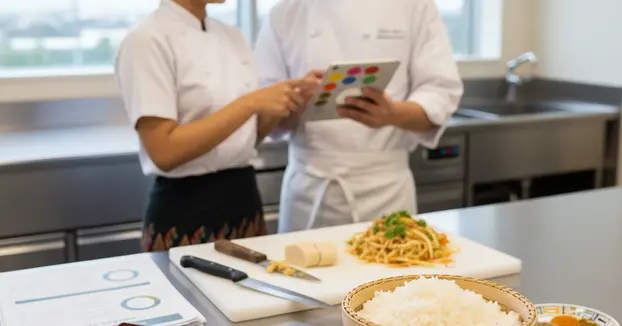
Myanmar Food and Culinary Culture Guide: Workplace Taboos and Practical Considerations
The number of foreign residents of Myanmar nationality has risen sharply in recent years. According to the Immigration Services Agency of Japan’s statistics on foreign residents, it exceeded 60,000 as of the end of 2023 and has continued to grow. As hiring of Myanmar talent expands across manufacturing, construction, nursing care, food service, and other industries, one of the first situations where accepting organizations often feel unsure is meals.
Company cafeteria menus, venue choices for welcome parties, and shared kitchen use at lunchtime—small considerations in these settings directly affect Myanmar staff members’ motivation to stay and work long term. At the same time, failing to understand religion-based dietary rules can turn well-intentioned hospitality into the opposite of what was intended.
This article systematically covers the basics of Myanmar meals and food culture, religion-specific dietary taboos, and practical workplace considerations you can apply right away. It is designed to help both company contacts considering hiring and HR professionals whose hires are already confirmed.
Basics of Myanmar cuisine: staples and cooking characteristics
At the center of Myanmar meals is rice. Unlike Japan’s short-grain rice, Myanmar uses long, slender long-grain (indica) rice. Indica rice has a fluffy, separate texture and is commonly eaten with curry or soups. Many households eat rice at all three meals of the day; bread and noodles play only a supporting role.
A major cooking characteristic is the generous use of oil. Myanmar curry is prepared very differently from Japanese curry. Large amounts of peanut oil or sunflower oil are used; onions, garlic, and ginger are sautéed for a long time before meat or vegetables are added and simmered. So much oil is used that it often floats on the surface of the finished dish, and Japanese staff seeing it for the first time may feel it looks “like deep-fried food.”
Another ingredient worth knowing is ngapi (Ngapi). It is a paste made by salting and fermenting fish or small shrimp and serves as a basic seasoning in Myanmar cooking, comparable to soy sauce or miso. It is rich in umami but has a distinctive fermented smell, and using it in a workplace shared kitchen or break room can sometimes cause friction with others. Clearly communicating “rules on strong-smelling foods on company premises” during onboarding orientation helps prevent mutual friction in advance.
In terms of seasoning, dishes are generally less spicy than Thai food and less complex in spices than Indian food. Turmeric, ginger, garlic, and onion form the base of cooking, with regional variation. The north (along the Chinese border) shows a strong Chinese influence, while southern coastal areas use more seafood.
Signature Myanmar dishes
Knowing representative dishes helps you understand Myanmar food culture and can also serve as conversation starters with staff.
List of representative dishes
Mohinga
- Overview: Thin rice-flour noodles served in a fish soup; often called Myanmar’s national dish
- Characteristics: The soup, made with lemongrass, ginger, banana stem, fish paste, and more, has a complex, deep flavor. It is often topped with boiled egg and fritters
- When it is eaten: Popular as breakfast and a street-stall staple; similar in role to Japan’s morning ramen culture
Lahpet Thoke
- Overview: A salad built around “lahpet,” tea leaves that have been fermented and pickled
- Characteristics: A uniquely Myanmar food culture, mixed with sesame, peanuts, dried shrimp, lime, garlic, and more. Eating tea leaves is a distinctive feature not found in other countries’ cuisines
- When it is eaten: Served as a snack or as hospitality for guests. Myanmar staff may also bring it to the workplace
Ohn No Khao Swe
- Overview: A coconut-milk-based curry soup with chicken and wheat noodles
- Characteristics: Mild and creamy. Diners adjust the flavor themselves with toppings such as lime, fried onions, and dried red chili
- When it is eaten: Widely eaten for lunch and dinner. A dish that tends to suit Japanese palates relatively well
Myanmar curry (Hin)
- Overview: Curry dishes made with pork, chicken, beef, seafood, and more, eaten with white rice
- Characteristics: Uses large amounts of oil and is typically served with several vegetable side dishes (thet thar). Sides are often boiled greens or legumes
- When it is eaten: The most common dish, eaten almost daily as the centerpiece of lunch and dinner
Religion-based dietary rules: accurately understanding faith-specific taboos
Myanmar is a religiously diverse country. According to the Ministry of Foreign Affairs’ basic data on Myanmar, the 2014 census showed a religious composition of 87.9% Theravada Buddhism, 6.2% Christianity, 4.3% Islam, and 0.5% Hinduism. Dietary rules differ greatly by faith, so confirming each staff member’s religion during post-hire orientation is the starting point for appropriate consideration.
As explained in Merits and demerits of hiring foreign workers, insufficient understanding of culture and religion directly leads to lower retention. Use the summary below to consider responses aligned with each staff member’s faith.
Dietary restrictions by faith
Theravada Buddhism (about 87.9%)
- Meat: In principle, pork, chicken, beef, and fish are eaten. Few ordinary lay believers observe precepts strictly, and meat-eating is widely common
- Beef: Some believers treat cattle as important animals and may avoid beef. It is not an absolute taboo, however, and individual differences are large
- Uposatha (observance days): On the four Buddhist observance days each month, devout believers may refrain from meat and alcohol. If someone says “I will not eat that today,” respond naturally without surprise
- Alcohol: The Five Precepts of Buddhism include a prohibition on alcohol, but in practice many believers do drink. Avoid pressuring anyone and respect individual wishes
- Note on monks: Monks observe a precept of not eating after noon, but this does not apply to ordinary lay believers (most workers)
Islam (about 4.3%)
- Halal certification: Pork and all foods containing pork-derived ingredients are taboo. Not only ingredients but also cookware and cooking processes must meet halal standards
- Hidden pork-derived ingredients: Ramen soup, dashi, sauces, and dressings may contain pork-derived ingredients, so caution is needed
- Alcohol: Completely prohibited. Also avoid serving dishes prepared with mirin or cooking sake
- Ramadan period: In the ninth month of the Islamic calendar (timing varies by year), believers abstain from food and drink from sunrise to sunset. For long hours or physically demanding work, put in place a system that allows advance consultation from a health-management perspective
Christianity (about 6.2%)
- Generally no dietary restrictions: In most cases there are no specific dietary restrictions
- Denomination differences: Some Catholics may refrain from meat on Fridays. However, many Myanmar Christians are Protestant, and practitioners of such customs are limited
- Individual confirmation recommended: Practices differ by depth of faith and denomination, so confirm individually as needed
Major Myanmar holidays and food customs
Festivals based on Myanmar’s own calendar are tied to distinctive foods and customs. By knowing the major holidays, accepting organizations can respond more accurately to home-visit requests and shift adjustments, and can also use that knowledge as material for communication that shows understanding of food culture.
Main holidays and their connection to food
Thingyan water festival
- Timing: Mid-April (3–5 days)
- Content: Myanmar’s national New Year celebration in which people splash water on one another to wash away the misfortunes of the old year
- Food: Rice-flour sweets called “mont” and dishes using fermented tea leaves are shared among family and neighbors. Giving sweet confections is also customary
- Impact on companies: A period when requests to return home concentrate. Early shift adjustments are needed in preparation for concentrated use of paid leave
Thadingyut Festival of Lights
- Timing: October (on the full-moon day of the Myanmar calendar)
- Content: A festival celebrating the Buddha’s return from the heavenly realm to earth. Candles and electric lights are lit in homes and temples
- Food: Black-rice pudding, sugar sweets, and oil-fried snacks are distributed to relatives and acquaintances. Staff may also bring and share sweets at the workplace
- Impact on companies: Sharing sweets at work is an expression of welcome and gratitude. Responding naturally as a recipient helps build good relationships
Tazaungdaing
- Timing: November (the full moon of the eighth month of the Myanmar calendar)
- Content: A major Festival of Lights alongside Thadingyut. Temples and public places are decorated with light, and events are held in various regions
- Food: Families customarily eat dumpling-like rice sweets called “mont lone yay paw” and bean dishes
- Impact on companies: Devout believers may strongly wish to visit temples, so put in place a system that encourages advance consultation when this overlaps with busy periods
Practical consideration points for the workplace and meal gatherings
Meal settings are important opportunities to build trust with Myanmar staff. Below we organize concrete responses you can practice in the company cafeteria, workplace lunch, and welcome parties.
Responses in the company cafeteria and at lunch
First, make confirming each staff member’s religion and dietary restrictions during onboarding orientation a standard procedure. If you have staff who practice Islam, you can respond by offering at least one halal-compliant menu item or contracting with an external halal-certified bento provider.
Clearly labeling company cafeteria menus for “whether pork is used” and “whether alcohol is included” is also effective. As an improvement you can implement without high initial cost, we recommend starting with better ingredient labeling.
Many staff who practice Theravada Buddhism eat both pork and beef, but they may avoid meat on uposatha days (about four times a month). Ideally, you should be able to provide alternative menus naturally when someone asks, “Fish or vegetables only today, please.”
Considerations at welcome parties and internal meal gatherings
When planning welcome/farewell parties or social gatherings, it is important to make it standard practice for the organizer to confirm Myanmar staff members’ religion and dietary restrictions in advance. Izakaya center on pork dishes and alcohol, so the environment can be hard for staff who practice Islam to join.
Choosing a halal-certified Middle Eastern, Indian, or Southeast Asian restaurant, or a Japanese restaurant with private rooms and flexible accommodation, makes it easier for everyone to participate. Planning meal and daily-life considerations after acceptance as one package from the stage of organizing the process for hiring foreign workers can greatly reduce post-joining trouble.
Not pressuring people to join drinking parties is a basic stance for building relationships with international talent, not only Myanmar nationals. Staff who force themselves to fit in because they “do not want to spoil the atmosphere” tend to accumulate workplace dissatisfaction over the long term.
Workplace communication through food
Conversely, actively bringing Myanmar staff members’ food culture into the workplace is also a communication opportunity. Creating chances to share Myanmar dishes at company events, or having staff introduce how to eat mohinga or tea-leaf salad, deepens mutual understanding with Japanese staff.
A workplace environment where cultures respect one another, rather than a one-sided expectation that people simply adapt to the Japanese workplace, directly improves retention. When building your framework for accepting international talent, position consideration for food culture as part of acceptance preparation.
Also, by documenting rules on bringing strong-smelling foods into shared kitchens or break rooms as rules for all staff—not only Myanmar staff—you can operate them fairly without them being perceived as targeting a specific nationality.
Summary
Correctly understanding Myanmar people’s meals and food culture directly supports better workplace environments and higher hiring retention. Here are the key points of this article.
- The staple food is long-grain rice (indica rice), and oil-rich curries and soups are central to everyday meals
- Ngapi (fermented seafood paste) is a basic seasoning but has a strong odor, so set workplace usage rules in advance
- Food rules differ by religion. Theravada Buddhists face relatively few restrictions, but halal accommodation is essential for Muslims
- Four monthly vegetarian days lead some Buddhists to avoid meat, so providing alternative menus is desirable
- Major festivals (Thingyan, Thadingyut, and others) bring food customs and requests to return home. Adjust shifts early
- Consideration in employee cafeterias and welcome parties is an effective way to build trust. Halal accommodation and a ban on pressuring people to drink alcohol are basic
If you would like to learn more about procedures for accepting Myanmar international talent or about building post-hire living support systems, you can consult YourBright free of charge via our contact form. From status of residence application support to native-language post-hire follow-up, we provide end-to-end assistance. Feel free to call us as well (03-6908-6143; hours 9:00–18:00).
 Written by

テット・ナイン
Share this article


