A Practical Guide to Understanding Myanmar Staff Buddhist Culture at Work: Keys to Retention and Building Trust
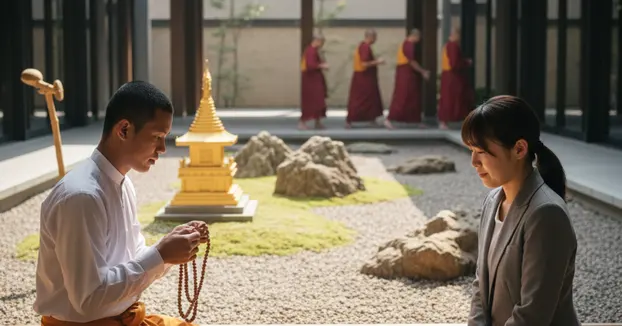
As hiring of Myanmar talent expands rapidly across manufacturing, nursing care, food service, and construction sites nationwide in Japan, more voices say that “cultural differences affect workplace communication more than expected.” At the core is Theravada Buddhism, practiced by roughly 88–90% of Myanmar’s population. For Myanmar people, Buddhism is not merely “weekend worship”; it is a cultural foundation that permeates codes of conduct, relationships, sense of time, and food choices. This article organizes the concrete points of contact with Buddhist culture that HR professionals and executives face in practice, and systematically provides practical knowledge to improve retention and the quality of workplace communication.
The place of Theravada Buddhism in Myanmar society
Theravada Buddhism is deeply rooted across mainland Southeast Asia, and Myanmar stands alongside Thailand, Cambodia, and Sri Lanka as a representative Buddhist country. Government statistics put Buddhists at 88–90% of the population, but this means more than a religious affiliation figure. In Myanmar, Buddhism is the core of cohesion for the nation, family, and community, and is built into how individuals design their lives.
A defining feature of Theravada Buddhism is its emphasis on individual practice and the accumulation of good deeds (merit: puñña in Pali; kusou in Burmese). Merit is accumulated through offering meals to monks (dana), joining alms rounds, cleaning temples, meditation practice, and more. These practices also take place on weekday early mornings and on important Buddhist days, so they can show up in pre-shift behavior and how people spend lunch breaks at work.
Even more important is the custom of “male temporary ordination experience.” In Myanmar, adult men are socially expected to experience ordination (pone) at least once in their lives. Short-term ordination (from a few days to several weeks) is a rite of passage into becoming a “full-fledged man,” and is positioned as the greatest opportunity for the whole family to accumulate merit. When a young male staff member asks to “enter short-term ordination starting next month,” this cultural and religious context is behind the request.
In the Theravada Buddhist worldview, the concepts of karma and rebirth influence everyday judgment. Because actions in this life are believed to affect the next, investing in good deeds is seen as a rational choice. Behavior that Japanese managers may experience as “Why spend so much time going to the temple?” is, for the person involved, the result of a highly rational life decision. This gap in perception is the first fork that creates workplace friction.
How Buddhist events and customs actually affect the workplace
Major Buddhist event calendar
Myanmar Buddhist events follow the lunar calendar (Burmese calendar), so Gregorian dates shift every year. Events HR should especially keep in mind are as follows.
- Thingyan (Water Festival / Myanmar New Year): Around five days in mid-April each year. Homecoming and events in Japan-based communities overlap, making this the busiest peak for paid leave requests.
- Waso (start of the rains retreat): An approximately three-month retreat period beginning around the full moon in July. Monks remain at temples for practice, and lay Buddhists also live more austerely. There is a custom of avoiding major family events such as weddings, so staff may become less inclined toward “personal celebrations” during this time.
- Thadingyut (end of the rains retreat): Full moon in October. Considered the most important period for accumulating merit after the retreat ends, more staff devote early mornings and weekends to temple offerings and service activities.
- Kasone full moon festival: Around May. Commemorating the Buddha’s birth, enlightenment, and parinirvana, water is offered to the Bodhi tree.
- Tabaung festival: Full moon around February–March. A lantern-lighting observance linked with homecoming and family gatherings.
Responding to observance days (Uposatha days)
In Theravada Buddhism, the days of the full moon, half moon, new moon, and crescent moon are Uposatha days, and devout Buddhists observe the Eight Precepts and refrain from eating after noon. This cycle comes around about four to five days a month. Simply knowing that this custom underlies behavior such as skipping lunch in the cafeteria, declining boxed meals during overtime, or avoiding meat on certain days can prevent unnecessary worry and misunderstanding.
Respect for monks and elders, and workplace relationships
In Myanmar culture, respect for elders and monks runs through society as a whole and is reflected in attitudes toward supervisors and seniors at work. At the same time, some staff feel uncomfortable receiving one-sided orders from a Japanese supervisor who is close in age or younger. A habit of carefully explaining “why that decision is being made” and “what effect is expected” when giving instructions greatly changes how quickly trust is built.
Common questions from the field
Among questions actually raised by HR at Japanese companies that have accepted Myanmar talent, those related to Buddhist culture are organized below in order of frequency.
“They suddenly said they want several weeks off to enter ordination. How should we respond?” Short-term ordination is often requested for family memorial rites or as an opportunity to accumulate merit. It is effective to clarify in advance at hiring, in work rules or the notice of working conditions, how special leave for religious events is handled. Outright refusal sharply raises turnover risk, so the best approach is to prepare options in the work rules that include applying paid leave or permitting unpaid leave.
“Leave requests concentrate around Thingyan and operations grind to a halt.” Thingyan is also an important period for Myanmar communities in Japan. When planning annual leave, build the Thingyan period in advance as a “peak request period” and design rotating shifts so business continuity can be maintained.
“They declined cafeteria meals. They say it is not an allergy, but we do not know why.” Some staff refrain from meals on Uposatha day afternoons or based on specific faith practices. Food choices are based on personal belief, and if there is no operational hindrance, respect is appropriate. To spare supervisors unnecessary worry that “they might be unwell,” we recommend sharing this custom as cultural background at onboarding.
“No matter how many times we check, they answer ‘yes,’ but often they have not actually understood.” A cultural background that treats refusal as “making the other person lose face” is at work; because saying “no” to a supervisor’s question feels rude, “yes” can mean “I am not sure.” Along with background on names and forms of address, see here for details on communication characteristics of Myanmar talent.
“Their Japanese is sufficient, yet they never speak up in meetings.” In Myanmar school culture, quietly listening before teachers and superiors is considered a virtue. Volunteering opinions in the presence of superiors is easily seen as “overstepping,” so rather than expecting comments in full-group meetings, using one-on-ones and small-group dialogue draws out their views more effectively.
Failure patterns and how to avoid them
Pattern 1: Treating religious leave as “selfishness” and triggering resignation
The most common failure is handling leave requests for ordination or Buddhist events as an attendance-management problem and rejecting them emotionally. Participation in religious and cultural events is deeply tied to personal identity; those who are refused interpret it as “this company does not respect me as a person” and rapidly lose a sense of belonging. For the basics of labor management in hiring foreign workers, please also see our foundational article on hiring foreign workers.
How to avoid it: Add provisions for a “special leave system for religious and cultural events” to the work rules and document the application process. Prepare multiple options such as applying paid leave, granting unpaid leave, and discussing shift changes.
Pattern 2: Taking “yes” as agreement, proceeding with work, and discovering a serious mistake
When confirming work instructions by asking “Is that okay?” and proceeding after a “yes,” trouble often arises because the person had not actually understood. In situations involving safety management, quality standards, or machine operation in particular, this can lead to critical outcomes.
How to avoid it: Instead of closed (yes/no) questions, confirm understanding by asking something like, “Could you explain the steps for this task once?” Preparing checklists and illustrated manuals and reducing reliance on verbal confirmation is effective.
Pattern 3: Not tracking the event calendar so peak seasons collide with festivals
Cases arise where production peaks or delivery crunches overlap with Thingyan or Thadingyut, leaving staff caught in the middle. When the conflict cannot be resolved, staff prioritize “choosing their religion,” raising the risk of unannounced absence or resignation.
How to avoid it: At the start of the fiscal year, obtain a Myanmar lunar calendar and revise staffing plans for peak event periods ahead of time. Set up a system to hear each person’s “must-attend events” and reflect them in shifts in advance.
Pattern 4: Lack of understanding of meditation or prayer space erodes trust
There have been cases where companies that flatly banned staff who asked to do short meditation in the early morning or at lunch—“we cannot have religious acts at work”—saw trust deteriorate rapidly.
How to avoid it: Respond flexibly to off-duty meditation or brief prayer after agreeing on place and time. Workplaces that already accommodate prayer rooms for Muslim employees can apply the same thinking; a religiously neutral stance raises psychological safety for all staff.
Points hiring managers often overlook
Buddhist values are not “private life outside work”
From a Japanese perspective, “religion is a private-life matter” is a common framing, but for Myanmar staff Buddhism is a value axis that runs through both private life and work. Sending a message with the nuance “please do not bring religion into the workplace” in hiring interviews or onboarding deeply wounds staff and strips psychological safety from day one. Designing systems on the premise that “Buddhist values are present” as cultural background is the first step.
Myanmar holidays shift every year on the lunar calendar
Major Buddhist events follow the Burmese calendar, so Gregorian dates differ year to year. If it feels like “there was no problem last year, but requests concentrated this year,” shifting event dates are one cause. We recommend building the habit of consulting calendars issued by Myanmar communities or the Embassy of Myanmar in Japan at the start of each fiscal year.
Ordination is not a “sudden request” but a foreseeable event
Short-term ordination is often decided months ahead after family discussion; in most cases the person “kept quiet until the last minute because it was hard to say.” Clearly telling people at hiring, “If you need religious or cultural leave, please consult us early,” and creating an atmosphere where consultation is easy secures time for operational adjustment.
Buddhist humility and lack of self-assertion are two sides of the same coin
In the Theravada practice view, “setting aside the ego” and “serving others” are virtues. At work this appears as “not asserting oneself” and “enduring without complaining.” Using regular one-on-ones and anonymous surveys so the organization can pick up dissatisfaction and concerns the person does not voice is key to improving retention. For support with retaining Myanmar talent, please consult YourBright.
Confirm alignment with Ministry of Health, Labour and Welfare guidelines
The Ministry of Health, Labour and Welfare’s “Guidelines for Improving Employment Management of Foreign Workers” set out employers’ duty of effort to develop employment environments that include consideration for foreign workers’ culture and customs. Treating people unfavorably because of how leave related to religious events is handled carries legal and ethical risk. Also regularly check Immigration Services Agency of Japan information on status of residence, and we recommend operating residence management and labor management as an integrated whole.
Diagram: Trust-building flow with Myanmar staff
We organize the practical flow from pre-hire through retention follow-up by stage. Taking each step in order can preventively reduce cultural friction.
Step 1|Pre-hire screening
- Openly confirm leave needs related to Buddhist events during the interview
- Ask (without pressure) about prior ordination experience and any future ordination plans
- Explain the types and conditions of special leave available after joining
- Share the company’s policy on observance days and food considerations in advance
Step 2|Onboarding orientation
- Explain work-rule provisions on leave for religious events in Burmese or easy Japanese
- Clearly state the policy on meal considerations for Uposatha days and fasting days
- Introduce a contact person for consultation (ideally a senior Myanmar staff member)
- Rather than only saying “please tell us if you have trouble,” commit to a regular one-on-one structure
Step 3|Reflecting into annual shifts and work plans
- Obtain the current year’s Myanmar lunar calendar and identify peak event periods
- Adjust staffing plans ahead of time around Thingyan (April) and Thadingyut (October)
- Design backup coverage for absences during event periods and share it with the whole team
Step 4|Day-to-day communication management
- Stop closed questions and switch to a confirmation method of “have them demonstrate or explain”
- Hold one-on-ones at least monthly and regularize opportunities for the person to put concerns into words
- Consciously create a workplace atmosphere where topics related to Buddhist events can be shared safely
Step 5|Periodic system review
- Every six months, review special leave usage and staff satisfaction
- Reflect feedback from Myanmar staff representatives into work-rule improvements
- Use a management calendar so status of residence renewal periods do not clash with event leave
Practical checklist
Pre-hire checks
- [ ] Have you prepared interview questions to confirm leave needs related to religious events?
- [ ] Is a special leave system (for religious and cultural events) clearly stated in the work rules?
- [ ] Is leave handling specifically described in the notice of working conditions?
- [ ] Are you ready to explain the company policy on dietary restrictions and accommodations?
Onboarding orientation
- [ ] Have you explained the company’s policy on Buddhist observances and fasting days to staff?
- [ ] Have you introduced the consultation contact person (preferably a senior Myanmar staff member)?
- [ ] Have you explained the work rules in Burmese or plain Japanese?
- [ ] Have you committed to staff on the structure and frequency of regular check-in meetings?
Annual Operations Planning
- [ ] Have you obtained and reviewed the Myanmar lunar calendar for the current year?
- [ ] Have you adjusted shift and staffing plans for the Thingyan and Thadingyut periods?
- [ ] Have you designed and shared a backup staffing plan for festival periods?
Day-to-Day Management
- [ ] Have you stopped using closed yes/no checks and switched to confirmation through demonstration and explanation?
- [ ] Are you continuing 1-on-1s or regular check-ins at least once a month?
- [ ] Have you decided on a policy for short meditation or worship in the early morning or during lunch breaks?
- [ ] Is understanding of dietary restrictions and fasting days shared across the workplace?
Retention Follow-Up
- [ ] Are you reviewing systems related to cultural accommodation every six months?
- [ ] Is there a forum where Myanmar staff can proactively share their views?
- [ ] Are you regularly checking that no unfair treatment based on religious belief is occurring?
Frequently Asked Questions (FAQ)
Q1. Do all Myanmar staff strictly observe Buddhist precepts?
The strength of religious observance varies by individual. Some staff from urban areas or with higher education may not strictly observe fasting days, while staff from rural areas often place strong importance on participating in festivals. The best approach is to confirm individual needs through pre-hire interviews, and avoid one-size-fits-all assumptions that “all Myanmar people are like this.”
Q2. Under the Labor Standards Act, how many days of leave for temporary ordination must employers grant?
Japan’s Labor Standards Act does not impose a mandatory obligation to grant leave for religious observances. However, the Ministry of Health, Labour and Welfare’s guidelines on the employment management of foreign workers recommend consideration for culture and customs, and stipulating the use of paid leave or permission for unpaid leave in work rules is effective for preventing turnover. In practice, treat this not as a legal duty but as an investment in retention.
Q3. Do Christian or Muslim Myanmar nationals also come to Japan?
Yes. Myanmar also has Christians (about 5–6%), mainly among the Karen and Kachin peoples, and Muslims (about 4%), including the Rohingya. At hiring, confirm religion on an individual basis and consider accommodations appropriate to each faith. Clearly explaining that the purpose is “to confirm the scope of accommodations the company can support” helps prevent misunderstandings about hiring discrimination.
Q4. Can you refuse paid leave requests made for Buddhist observances?
Under Article 39 of the Labor Standards Act, paid leave must in principle be granted at the time requested by the worker. Employers may exercise the right to change the timing when it would interfere with the normal operation of the business, but uniformly refusing leave for cultural or religious observances carries legal and ethical risks. A practical approach is to establish internal rules that encourage early applications and secure substitute staff before responding.
Q5. Should the company support participation in activities of the Myanmar community in Japan (temples, festivals, and the like)?
There is no legal obligation, but participation in community activities has been reported to have a positive effect on mental well-being and workplace retention. Indirect support—such as encouraging paid leave after learning festival dates in advance, and fostering an atmosphere where community event information can be shared at work—contributes to improved retention over the medium to long term.
Related Articles: Practical Topics Worth Reviewing Together
Please also review practical articles on related themes as needed.
- What Is Myanmar Traditional Dress (Longyi)? Types, Differences by Gender, Attire of 135 Ethnic Groups, and Cultural Considerations at Work
- What Is Myanmar Cuisine? Signature Dishes, Food Taboos, and Workplace Accommodation Points
- Guide to Myanmar Food and Food Culture | Taboos and Accommodation Points Useful at Work
 Written by

テット・ナイン
Share this article


