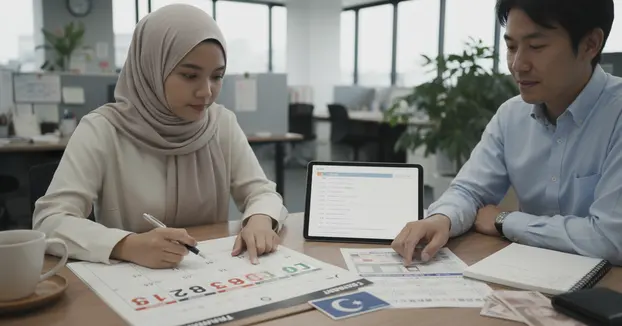
Indonesia Public Holidays List 2026 | System Check Guide for Hiring Managers
HR managers at companies hiring Indonesian talent increasingly ask for an Indonesia public holidays list and how to handle leave requests around religious observances. Indonesia has the world’s largest Muslim population, yet it is also a multi-religious country with many Christians, Hindus, and Buddhists, and its holiday system differs significantly from Japan’s.
This article organizes Indonesia’s public holidays list and explains the institutional criteria to keep in mind for hiring operations and shift management. For companies considering acceptance under statuses of residence such as Specified Skilled Worker, understanding the holiday calendar is the first step in retention support.
Basics of Indonesia’s public holiday system
Indonesia’s holidays consist of two types: “national public holidays (Hari Libur Nasional)” announced by the government each year, and “joint leave (Cuti Bersama),” which adds extra days off for government offices and companies.
National public holidays are statutory rest days and are guaranteed to workers as paid holidays. Cuti Bersama, by contrast, is additional leave set around major long holidays such as Lebaran (Idul Fitri) and is generally treated as using part of annual paid leave. This mechanism does not exist in Japan’s holiday system and is one point hiring managers often misunderstand.
Each year, the Indonesian government finalizes that year’s public holidays and Cuti Bersama dates through a joint decision of the Minister of Home Affairs, the Minister of Religious Affairs, and the minister responsible for civil servants (SKB 3 Menteri). Islamic observances follow the lunar calendar (Hijri calendar), so their dates typically move about 10 to 11 days earlier each year.
Indonesia public holidays list (2026 guide)
Below is Indonesia’s 2026 holiday calendar organized into confirmed and estimated dates. Holidays based on the lunar calendar (Idul Fitri, Idul Adha, Islamic New Year, the Prophet’s birthday, Waisak, Nyepi, and others) are not final until Indonesia’s Ministry of Religious Affairs (Kementerian Agama) officially announces them. The following are guide dates estimated from typical patterns; always make a final check against the official announcement.
- January 1: New Year’s Day (Tahun Baru Masehi)
- Around February 17: Lunar New Year (Tahun Baru Imlek) *holiday observed by Chinese Indonesians
- Mid-March: Nyepi (Hari Raya Nyepi, Hindu Saka New Year)
- Late March: Idul Fitri (end of fasting festival, commonly called Lebaran) *several days of Cuti Bersama are typically set around it
- Early April: Good Friday (Wafat Isa Almasih)
- May 1: May Day / Labor Day (Hari Buruh)
- Mid-May: Ascension of Jesus Christ (Kenaikan Isa Almasih)
- Late May to early June: Waisak (Hari Raya Waisak, Buddhist holiday)
- Late May to early June: Idul Adha (Festival of Sacrifice)
- June 1: Pancasila Day (Hari Lahir Pancasila)
- Mid-June: Islamic New Year (Tahun Baru Islam)
- August 17: Independence Day (Hari Kemerdekaan)
- Late August: Birthday of the Prophet Muhammad (Maulid Nabi Muhammad SAW)
- December 25: Christmas (Hari Natal)
Among these, Lebaran is the most important leave of the year for Indonesian talent. Many workers want to return home, and companies are often asked to accommodate about one week of consecutive leave or Cuti Bersama. As with Vietnam’s Lunar New Year (Tet), consideration for holidays that involve returning to the home country directly supports trust-building with international talent.
Diversity in the holiday calendar by religion
The main reason Indonesia’s public holidays list looks complex is that multiple religions are officially recognized domestically, and each religion’s holidays are incorporated as national public holidays.
Islamic holidays (Idul Fitri, Idul Adha, Islamic New Year, the Prophet’s birthday, and Isra Mi’raj) are treated as common rest days for the whole nation, but those who actually worship or return home are mainly Muslim workers. Christian Christmas and Good Friday, Hindu Nyepi, and Buddhist Waisak are likewise national public holidays, yet in practice they matter most to workers who follow those faiths.
A point hiring managers often overlook is that the religion Indonesian talent practice differs by home region. Many people from Bali are Hindu, and around Nyepi there is a custom of spending especially quiet time, so requests to avoid going out or working that day may arise. By contrast, much of Java and Sumatra is predominantly Muslim, and consideration for Lebaran becomes the top priority.
A blanket understanding that “Indonesian talent = Islam” can leave workplace consideration insufficient. Carefully confirming home province and religion at the hiring interview stage helps prevent later trouble.
How to handle holidays and adjust shifts at work
When Japanese companies accept Indonesian talent, they cannot simply map the public holidays list onto Japan’s holiday system. Within Japan’s statutory rest days and paid leave framework, companies need to decide in advance how to respond to Indonesian religious observances.
As concrete decision criteria, reviewing the following three points makes the process smoother.
First, share the premise that work in Japan is based on Japan’s Labor Standards Act and work rules, so Indonesian public holidays do not automatically become days off. Second, for high-priority observances such as Lebaran, operate planned grant of paid leave or priority slots for requested leave. Third, securing time for prayer (five daily prayers, Friday prayer, and so on) is a day-to-day consideration separate from holidays and can be addressed through flexible break times.
The Ministry of Health, Labour and Welfare’s foreign worker employment measures pages also note that labor management based on understanding of culture and religion is important for workplace retention of foreign workers. Holiday handling should be positioned as an extension of that approach.
Common questions from the field
HR managers at companies accepting Indonesian talent often raise questions such as the following.
A particularly common case is: “The employee requested two weeks of leave around Lebaran, and we cannot decide how far to approve it.” In the home country, consecutive leave of a week or more is common, so the issue becomes how to adjust within Japan’s paid leave framework.
There are also voices saying, “There is a request to take a longer lunch break every week for Friday prayer, but we are concerned about fairness with other employees.” Balancing religious consideration with workplace-wide operating rules is a challenge many companies face.
In addition, consultations such as “Work attitude changes during Ramadan (the fasting month), and we do not know how to support health management” are not uncommon. Because people refrain from food and drink during the day while fasting, physical jobs in particular may require adjustments to break-taking and work schedules.
Failure patterns and how to avoid them
Below are common failure patterns in holiday and religious accommodation for Indonesian talent, along with ways to avoid them.
In the pattern of skipping advance checks, companies do not confirm home region or religion at hiring, then after joining, Lebaran leave requests concentrate and staffing collapses. The avoidance measure is to share the holiday calendar at the interview stage and hear annual leave preferences early.
In the one-size-fits-all pattern, leave rules designed for other international talent are applied as-is, and consideration for Indonesia-specific religious observances is missing. Differences in workplace communication methods from workers of other nationalities, such as Myanmar talent, are also covered in articles on workplace communication with Myanmar talent; matters requiring consideration by nationality and religion need to be organized individually.
In the delayed information-update pattern, companies do not grasp that Islamic calendar-based holiday dates change every year and reuse the previous year’s calendar as-is. The avoidance measure is to regularly check official announcements from Indonesia’s Ministry of Religious Affairs and international talent-related information published by the Immigration Services Agency of Japan, and to share that year’s public holidays list internally at the start of the year.
Points hiring managers often overlook
One point hiring managers often overlook is that the nature of leave that can be taken differs by type of status of residence. Specified Skilled Worker and Technical Intern Training require management of paid leave under the employment contract, whereas statuses of residence that allow more flexible work styles, such as Highly Skilled Professional, also differ in discretion over leave. Differences by status of residence are also organized in detail in explanations of statuses of residence for highly skilled international talent.
Next, Cuti Bersama (joint leave) is not a statutory public holiday, and in the home country it is generally operated by using part of paid leave—another point that is easy to miss. Because work in Japan prioritizes Japanese work rules, the gap with the employee’s assumption that “it should be a day off in my home country” needs to be explained in advance.
Furthermore, consideration for religious observances is an issue common to hiring international talent under any status of residence, not only Specified Skilled Worker. When reviewing the overall flow of foreign hiring, we also recommend checking foundational articles on foreign hiring and building understanding of cultural background in from the recruitment stage.
Diagram: pre-hiring confirmation flow
Preparation to accept Indonesian talent is easier to put into practice when organized in a flow such as the following.
First, at the recruitment stage, confirm home region and whether the person practices a religion as optional items. Next, at the interview stage, hear preferred leave days and timing for important religious observances such as Lebaran. Then, at the post-offer preparation stage, reflect Indonesia’s public holidays list on the internal calendar and share it with shift planners and site managers. After joining, check satisfaction with holiday handling and whether prayer time is secured in quarterly meetings, and revise operations as needed. Documenting this series of steps as a “pre-hiring confirmation flow” in an internal manual helps maintain response quality even when staff change.
Practical checklist
- Have you confirmed home region and religion at the hiring interview?
- Have you shared that year’s finalized Indonesia public holidays list internally at the start of the year?
- Have you heard leave preferences around Lebaran early and reflected them in staffing?
- Have you put day-to-day religious accommodation rules, such as securing prayer time, into writing?
- Have you explained to the employee the difference between Cuti Bersama and Japan’s paid leave system?
- Do you understand differences in leave management by type of status of residence?
- Have you assigned someone to regularly check holiday information sources (such as Indonesia’s Ministry of Religious Affairs)?
Frequently asked questions (FAQ)
Q. About how many public holidays does Indonesia have? National public holidays number around 15 per year, with several additional days of Cuti Bersama (joint leave). Because holidays based on the Islamic calendar change date every year, the exact number of days differs by year.
Q. When is the Lebaran period? Idul Fitri (Lebaran) is based on the lunar calendar, so it moves about 10 to 11 days earlier each year. For 2026 it is estimated around late March, but the exact schedule must be confirmed in the official announcement from Indonesia’s Ministry of Religious Affairs.
Q. Must leave for religious observances always be approved? Under Japan’s Labor Standards Act, there is no obligation to treat Indonesian public holidays themselves as statutory rest days. That said, accommodating them through planned use of paid leave or priority slots for requested leave supports higher retention.
Q. Where can we check the latest holiday calendar information? In addition to the official website of Indonesia’s Ministry of Religious Affairs, foreign employment-related information published by the Immigration Services Agency of Japan and the Ministry of Health, Labour and Welfare is also useful. We recommend assigning an internal confirmation owner and reflecting the latest information at the start of each year.
Summary
Indonesia’s public holidays list has a complex structure incorporating multiple religions, including Islam, Christianity, Hinduism, and Buddhism. Lebaran in particular is the most important leave for many Indonesian talent, and advance leave hearings and shift adjustments are key to retention support.
Hiring managers need to establish site operating rules based on decision criteria such as confirming home region and religion, updating the holiday calendar annually, and understanding leave management differences by status of residence. Each step of holiday accommodation builds trust with international talent and supports long-term retention.
If you have concerns about hiring Indonesian talent or building an acceptance framework, feel free to contact Foreign Talent Insights. From system confirmation through post-joining retention support, we provide practical assistance (inquiries: 03-6908-6143, 9:00–18:00).
Where to check official information
Systems, employment management, and official announcements by country are updated over time, so also check the following primary sources before and after publication.
Indonesia’s Ministry of Religious Affairs (Kementerian Agama) — check and cross-reference the latest systems, employment management, and official announcements.
Ministry of Health, Labour and Welfare foreign worker employment measures page — check and cross-reference the latest systems, employment management, and official announcements.
Immigration Services Agency of Japan Specified Skilled Worker system page — check and cross-reference the latest systems, employment management, and official announcements.
Related articles: practical topics to review together
Also review practical articles on related themes as needed.
 Written by

ヤマシタハヤト
Share this article


