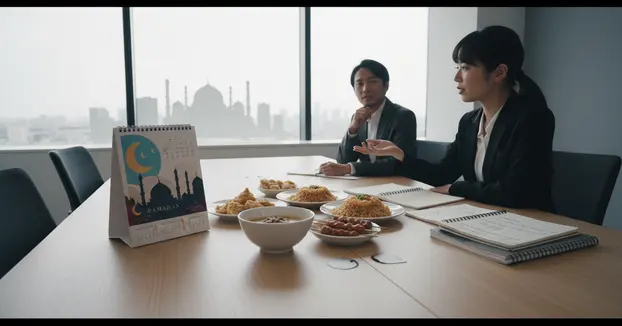
How to Give Feedback to Indonesian Talent: Cultural Context and Workplace Retention Support
Many managers struggle with how to deliver feedback in day-to-day work with Indonesian talent. Questions such as “How direct can I be?” and “When they go silent, do they not understand—or do they disagree?” are universal challenges also addressed in our foundational article on hiring foreign workers.
Indonesia is a multiethnic nation with the world’s largest Muslim population, and religion and everyday culture directly shape workplace communication. This article organizes how to give feedback to Indonesian talent from three angles—cultural background, practical steps, and retention support—and offers insights HR and leadership can put to use starting tomorrow.
Indonesian Cultural Background and Communication Traits
A Society That Values Diversity and “Harmony”
Indonesia is a multiethnic nation where more than 700 languages are spoken, and the national official language is Bahasa Indonesia. Values and communication styles differ across ethnic groups such as the Javanese, Sundanese, Batak, and Minangkabau. What many Indonesians share, however, is a strong regard for “harmony” (rukun). There is a strong tendency to avoid public conflict and to prioritize saving face for the other person, and this has a major impact on feedback situations.
Information on religion and culture in Indonesia is published by the Ministry of Religious Affairs of Indonesia (Kementerian Agama) and the Ministry of Culture of Indonesia (Kementerian Kebudayaan), and is useful for understanding Indonesian social values. Culture information from Indonesia’s Coordinating Ministry for Human Development and Cultural Affairs is also helpful for grasping the overall picture of cultural policy.
The Concept of “Malu” and Face
The Indonesian word “malu” is close to the Japanese sense of “shame” or “embarrassment,” but the nuance differs. Being pointed out in front of others can trigger “malu” and cause deep hurt. This is not mere introversion; it is a behavioral principle of “protecting one’s standing” within social relationships. Criticism from a superior in a public setting, in particular, can lead to a relationship rupture that is hard to repair.
When giving feedback, it is essential to understand this sense of “malu” and to convey points for improvement while preserving the other person’s dignity.
Indirect Communication and “Basa-basi”
In Indonesian interpersonal communication, there is a tendency to avoid direct refusal or rejection. Rather than saying “I can’t” or “no” outright, people use euphemistic expressions—a social lubricant known as “basa-basi” (polite small talk). For example, responses such as “I’ll check later” or “It may be difficult” to a request can effectively mean “I decline.”
Many situations in which Japanese managers feel “they won’t say things clearly” stem from this cultural difference. Conversely, for Indonesian talent, direct Japanese-style criticism can come across as aggressive.
Basic Stance When Delivering Feedback
Set Up a One-on-One Setting
Always give feedback one-on-one. Pointing out areas for improvement in front of multiple people can cause deep “malu” in Indonesian culture and damage trust. The first step is to deliver the message in a private room or meeting room where others cannot overhear.
Separate “Facts” from “Intent”
When giving feedback to Indonesian talent, it is effective to clearly separate “what you observed” from “what you want going forward.” For example, first state the fact—“There was a numerical error in yesterday’s report”—then follow with the expectation: “It would help if you could double-check before submitting next time.” Avoid comments on personality or attitude and focus on the behavior itself.
Insert Questions That Check Understanding
After a one-way explanation, asking “Do you understand?” often draws a culturally natural “yes.” Instead, ask “What do you think about how we should proceed from here?” and have the person restate it in their own words so you can gauge understanding more accurately. This is one of the judgment criteria recommended in this article.
Common On-the-Ground Concerns
The following cases are frequently raised as common on-the-ground concerns.
Case 1: “Even after I give a warning, their expression doesn’t change and there’s no reaction” In Indonesian culture, it is common to refrain from rebuttal or emotional display when receiving criticism from a superior. An unchanged expression may not mean lack of understanding; the person may be restraining themselves so as not to cause “malu.” Do not judge solely by the immediate reaction after feedback—evaluate based on later changes in behavior.
Case 2: “They seemed to agree, but their behavior doesn’t change” In Indonesian communication, people may answer “ya” (yes) to preserve harmony in the moment. This can be acknowledgment that they are listening rather than true agreement. Building real alignment requires two-way dialogue that also checks the other person’s situation and constraints.
Case 3: “Adjusting religious practices and work schedules” Many questions also arise about how to communicate accommodations for prayer times and work during Ramadan (the fasting month). Many Indonesian talent are Muslim and value praying five times a day. Asking about preferred prayer times in advance and leaving room for accommodation within the work schedule becomes a foundation for trust.
Failure Patterns and How to Avoid Them
Failure Pattern 1: Public Criticism at Morning Meetings or in Conferences
Example: After pointing out a work-procedure error in front of several people, the person’s attitude changed abruptly and subsequent communication decreased.
How to avoid it: Give feedback in individual meetings, and in public settings frame points as improvements for the whole group. Crafting the message so it does not single out a specific person helps avoid “malu.”
Failure Pattern 2: Using Direct Negative Expressions
Example: After saying “That’s wrong” or “That’s no good” directly, the other person fell silent.
How to avoid it: Before a negative statement, add words that acknowledge the other person’s intent or effort. Phrasing such as “I understand the direction of that idea. In this case, let’s try a different approach” preserves dignity while still setting direction.
Failure Pattern 3: Expecting Japanese-Style “Reading the Air”
Example: Implicit expectations that “they should understand without being told” led to no improvement and growing frustration on both sides.
How to avoid it: State the expected behavior in concrete words. Sharing explicit rules and procedures—“Please report by 9:00 a.m. every day” and “If anything is unclear, please ask without hesitation”—is a basic practice for running cross-cultural teams.
Failure Pattern 4: Insufficient Consideration During Ramadan
Example: Scheduling a long meeting that included lunch during Ramadan was taken as a lack of consideration for participants.
How to avoid it: Confirm the Ramadan period in advance and adjust by shifting meetings to the morning and avoiding concentrating heavy physical work in the afternoon. Most important is asking about the person’s preferences beforehand.
Points Hiring Managers Often Overlook
The following are points hiring managers often overlook.
Confirming Religious and Cultural Accommodations in Advance
Some cases skip confirming prayer times, dietary restrictions (halal), and holiday preferences (such as Friday prayers) at the interview stage. If accommodations are later seen as insufficient after hiring, early trust-building is affected. Create opportunities to hear the person’s preferences during interviews and pre-boarding orientation.
The Presence of Family and Community
In Indonesian culture, ties to family and local community run deep, and personal decisions can be influenced by family views. Family agreement may also factor into decisions about moving or changing jobs. When planning post-hire life support, keeping family—not only the individual—in view supports longer-term retention.
Language Barriers and “Acting as if They Understand”
When talent whose first language is Indonesian receive work instructions in Japanese, they may appear to understand on the surface while only partially grasping the content. Supplementing important instructions with documents or diagrams in addition to oral explanation, and making it routine for them to repeat back in their own words, helps catch gaps in understanding early.
Insufficient Follow-Up After Feedback
Do not stop after delivering feedback once. Checking in lightly a few days later—“How is that matter going?”—lets you confirm understanding and progress. For Indonesian talent, a superior’s ongoing attention is a source of reassurance and a sense of belonging.
Diagram: Pre-Hire Confirmation Flow
Below is a pre-hire confirmation flow—described in prose and bullet points—to smooth communication with Indonesian talent.
Step 1: Confirm cultural background
- Confirm ethnicity and region of origin (cultural differences exist among Javanese, Sundanese, Batak, and others)
- Confirm religion (Muslim, Christian, Hindu, etc.)
- Confirm language ability (levels of Indonesian, English, and Japanese)
Step 2: Adjust living and work conditions
- Confirm preferred prayer times
- Whether there are dietary restrictions (halal, etc.)
- Holiday preferences (weekends, religious holidays, etc.)
Step 3: Agree on communication methods
- How work instructions will be delivered (oral + written + diagrams)
- Frequency and timing of reports
- Clarify the contact point for questions and consultation
Step 4: Share the feedback approach internally
- Communicate the policy of avoiding criticism in public settings
- Schedule regular one-on-one meetings
- Put follow-up timing on the schedule
This flow shares common ground with the cross-cultural approach introduced in our article on workplace communication with Myanmar talent. Specific accommodations differ by country, but the basic structure—“advance confirmation → environment adjustment → policy sharing”—can be applied in many settings.
Practical Checklist
- Is feedback given in a one-on-one setting?
- Has the team shared a policy of avoiding individual criticism in public?
- Were preferences on prayer times and dietary restrictions (halal, etc.) confirmed before joining?
- Is the Ramadan period known, with room for accommodation in work schedules?
- Are work instructions supplemented with documents or diagrams, not only oral explanation?
- Is there a habit of reconfirming understanding in the other person’s own words?
- Is follow-up within a few days after feedback built into the process?
- Is there a life-support contact point that considers family and community?
- Are internal training and materials in place to deepen understanding of culture and religion?
Sustaining Feedback That Supports Workplace Retention
How to give feedback to Indonesian talent is not completed in a single conversation. The process of ongoing dialogue—understanding the other person’s cultural background and individual circumstances and deepening consideration—is itself at the core of retention support.
Information on workplace communication provided by the Ministry of Health, Labour and Welfare is also useful for building smooth relationships with international talent. Some regions also offer Hello Work consultation desks on creating multicultural workplaces, so using local social resources is another option. You can also access related information via the e-Gov administrative procedures portal and review local governments’ multicultural coexistence measures.
As noted in our explanation of status of residence for highly skilled foreign professionals, retention depends not only on the work environment but also heavily on the quality of everyday communication. Keep in mind that how you deliver feedback alone can change a person’s sense of belonging and motivation at work, and put these practices into use.
FAQ
Q: What are the most important points when giving feedback to Indonesian talent?
A: The three basics are delivering it one-on-one, preserving the other person’s dignity, and confirming understanding in their own words. Avoid public criticism and focus your message on behavior.
Q: How much workplace consideration is needed during Ramadan?
A: Start by confirming the Ramadan period in advance and asking the individual about their preferences. It is best to balance personal wishes and work needs through dialogue—for example, avoiding lunch meetings or scheduling strenuous tasks in the morning.
Q: What should you do when someone says “ya” (yes) but does not follow through?
A: Consider that “ya” may mean “I hear you” rather than agreement, and use two-way dialogue to build consensus. Also check the other person’s situation and constraints, and create a concrete action plan together to make follow-through more likely.
Q: Is it rude to ask directly about religion or culture?
A: If you ask with consideration, it can be received positively as evidence that you care. Ask openly—for example, “Is there anything we should be mindful of?”—and respect their answer.
Summary
How you give feedback to Indonesian talent rests on both cultural understanding and practical operations.
- Cultural understanding: Understand the concept of “malu,” indirect communication, and values that prioritize harmony
- Basic stance: Thoroughly use one-on-one settings, separate facts from intent, and confirm understanding bidirectionally
- Practical response: Systematize advance confirmation of religious considerations, awareness of the Ramadan period, and documentation of work instructions
- Ongoing dialogue: Do not stop at a single feedback session; build trust through follow-up
Improving cross-cultural communication is not completed overnight. However, as individual considerations accumulate, psychological safety and the retention environment across the workplace can change significantly. If you would like to discuss workplace development that supports Indonesian talent in more depth, please contact us via the Foreign Talent Insights inquiry.
Related articles: Practical topics to review together
Please also review practical articles on related themes as needed.
- Religion and Culture of Indonesian Talent | A Practical Workplace Guide for Hiring Managers
- A Thorough Guide to Indonesia’s Religious Composition | Practical Tips for Workplace Consideration and Retention Support
- How to Choose an Indonesian Recruitment Agency | A Practical Guide to System Checks and Retention Support
 Written by
Share this article


