ACCEPTANCE & EDUCATION
Explaining the Lump-Sum Withdrawal Payment That Specified Skilled Workers Will Also Need to Apply for in the Future
Foreign nationals who have paid into the Japanese pension system can, when returning to their home country, claim a refund of part of the pension contributions they paid—known as a lump-sum withdrawal payment—provided they meet certain conditions.
This article explains the procedures for claiming a lump-sum withdrawal payment.
Eligibility Requirements for Lump-Sum Withdrawal Payments
If, during a stay in Japan for work or other reasons, you were enrolled in the National Pension, Employees’ Pension Insurance, or a mutual aid association, and you lose your insured status and leave Japan, you may claim a lump-sum withdrawal payment when all of the following conditions 1 through 4 are met.
- You have not acquired Japanese nationality
- You were enrolled in the National Pension, Employees’ Pension Insurance, or a mutual aid association for at least six months
- You do not have an address in Japan
※Foreign nationals who submit a moving-out notification to their municipality and then leave Japan with re-entry permission or deemed re-entry permission may claim a lump-sum withdrawal payment. However, if they do not submit a moving-out notification, they are treated as National Pension insured persons until the re-entry permission expires, and therefore cannot claim a lump-sum withdrawal payment. You have not received pension benefits
4. You have not received pension benefits
Required Documents for the Procedure
- Lump-sum withdrawal payment claim form
- Copy of passport
- Documents proving that you do not have an address in Japan
- Documents showing the transfer account details and proving that the account belongs to the foreign national making the claim
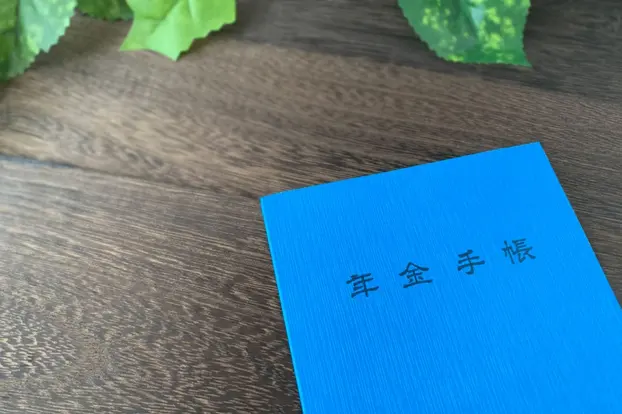
- National Pension handbook or other documents that confirm the basic pension number
※If you submitted a moving-out notification at a city hall or similar office before leaving Japan, the Japan Pension Service can confirm from the resident record deletion information that you do not have an address in Japan, so document 3 is not required.
Points to Note When Claiming a Lump-Sum Withdrawal Payment
〇 If you have 10 years (120 months) or more of pension enrollment—the period required to receive a pension in Japan—you may in the future receive a Japanese old-age pension from the pension service. However, if you receive a lump-sum withdrawal payment, the entire period before the claim is removed from your pension enrollment period.
〇 The upper limit used to calculate the payment amount was raised from 3 years (36 months) to 5 years (60 months) from 2021. The lump-sum withdrawal payment amount is calculated based on the amount paid into the pension system in Japan and the enrollment period, up to a maximum of five years. Even then, if the total enrollment period covered by National Pension contributions paid, or by Employees’ Pension Insurance and mutual aid associations, consists only of periods through March 2021, the upper limit remains three years.
※ If you plan to stay in Japan multiple times and pay into the pension system for a cumulative total of 37 months or more, and you wish to receive a lump-sum withdrawal payment corresponding to each period of payment and enrollment, you may need to file a claim each time you return home after a period of stay ends. For example, a person who completes Technical Intern Training (i) and (ii) over three years, returns home, and then undertakes training as a Technical Intern Training (iii) trainee can receive payments corresponding to each enrollment period by filing claims after completing Technical Intern Training (ii) and again after completing Technical Intern Training (iii).
〇 For foreign nationals enrolled in a pension system in a country that has a totalization agreement with Japan, it may be possible, if certain requirements are met, to totalize enrollment periods and receive pensions from both Japan and their home country. Even in that case, for a foreign national who has received a lump-sum withdrawal payment, the entire period before the claim is no longer treated as a pension enrollment period, so totalization is no longer possible.
〇 If a foreign national who is eligible to claim a lump-sum withdrawal payment dies without receiving it, the spouse, children, parents, grandchildren, grandparents, siblings, or other relatives within the third degree of kinship who shared the same livelihood with the claimant at the time of death may receive it instead. However, the foreign national must have submitted the claim form before death.
〇 Time required until receipt of the lump-sum withdrawal payment
It takes about three to four months from acceptance of the documents by the Japan Pension Service until receipt, and about one to two months from claim to receipt for the amount withheld as income tax.
〇 Currencies in which the lump-sum withdrawal payment can be received
If you designate a Japanese bank account as the transfer account, the payment is made in Japanese yen. If you designate an overseas bank account, the remittance is made in a designated currency.
Payments are mainly in U.S. dollars or euros. In most Asian countries that are common home countries of technical intern trainees, payment is made in U.S. dollars, and payment is made in U.S. dollars for China, South Korea, Vietnam, Malaysia, and Indonesia.
The exchange rate used for payment is based on the average exchange rate for the month in which payment is decided, and the payment amount is calculated on that basis. It is important to note that this is not the exchange rate at the time the claim form for the refund is submitted. Once payment is decided, the transfer is made via a major Japanese city bank.
Also, if you particularly wish to receive the lump-sum withdrawal payment in Japanese yen, you can receive it in yen by entering a bank account in Japan in the receiving account field on the claim form.
However, even in that case, note that the account must be in the claimant’s own name.
Refund of Income Tax Withheld on the Lump-Sum Withdrawal Payment
○ When a non-resident receives a lump-sum withdrawal payment from Employees’ Pension Insurance, income tax of 20.42% is imposed at the time of payment.
However, by later submitting to the tax office a document called the “Return for Refund by Elective Taxation on Retirement Income,” it is possible to claim a refund of the tax withheld at source. (Because National Pension lump-sum withdrawal payments are not subject to withholding at source, international students and others may not need this claim in some cases.)
○ The claim form for the refund must be submitted to the tax office with jurisdiction over the last address or place of residence in Japan. To submit the return and receive the refund, before returning home you must submit a “Notification of Tax Agent for Income Tax and Consumption Tax” to the tax office with jurisdiction over your final address or place of residence in Japan.
※A tax agent is a status that anyone with an address in Japan can hold.
※Even if you forget to submit the “Notification of Tax Agent for Income Tax and Consumption Tax” in Japan before returning home, you can still designate a tax agent by submitting it at the time of the refund claim. ○ Around the same time the lump-sum withdrawal payment is remitted by the Japan Pension Service, a “Notice of Decision on Lump-Sum Withdrawal Payment” is mailed to the claimant’s address in their home country. By sending the original to the tax agent for income tax and consumption tax, you can proceed with the income tax refund claim procedures.
Summary
With the start of the Specified Skilled Worker system, even foreign nationals who entered Japan as technical intern trainees can work in Japan for up to 10 years by using both systems. (If they transition to Specified Skilled Worker (ii), indefinite employment may be possible.)
The amount paid upon claiming a lump-sum withdrawal payment refund depends on the foreign national’s income, but it is not a small sum, so it is desirable to claim a refund for as long a period as possible. However, for example, a foreign national who transitions directly from technical intern trainee to Specified Skilled Worker may continue working in Japan even after exceeding the maximum five-year period for which a refund can be claimed.
In such cases, periods beyond five years cannot be claimed for refund, so if the person wishes to receive a lump-sum withdrawal payment, they must resign, complete moving-out procedures, and return home once. Also, foreign nationals who transition to Specified Skilled Worker (ii) can obtain a status of residence that allows indefinite employment, but if they wish to receive a lump-sum withdrawal payment, they need to keep the rules in mind.
 Written by

ヤマシタハヤト
Share this article


