VISAS & RESIDENCY
Basics of Status of Residence
First, most people probably do not understand the difference between status of residence and a visa.
For a foreign national to go to Japan, they first need permission to enter Japan. As those who travel abroad know, exit permission is stamped in the passport, and an entry permission stamp is affixed when entering a foreign country.
This entry permission is often a stamp in the passport, but is it the same when coming to Japan from abroad—for example, when people from the Philippines or Vietnam come to Japan?
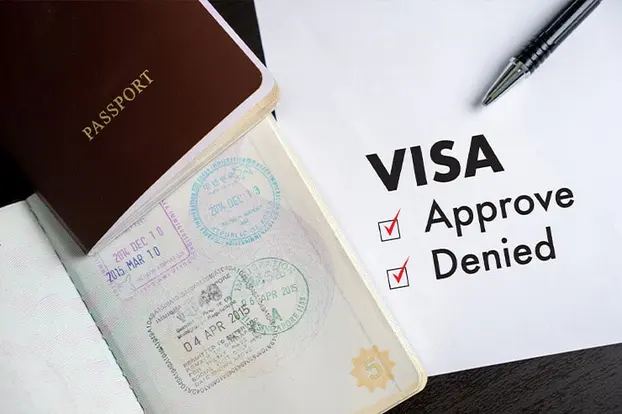
To come to Japan from the Philippines or Vietnam, Japan is not a visa-exempt country, so they must obtain a short-term visa to enter. In short, not only a passport but also entry permission is required to enter Japan. For purposes such as tourism or business meetings, a short-term visa that permits entry only for that purpose is needed. However, when Japanese nationals go to the Philippines or Vietnam, the application for this short-term visa is waived.
The term “visa-exempt country” may lead people to mistakenly think that a passport alone is enough to enter, but more precisely it means that, limited to short-term tourism, business meetings, and similar purposes that are not for work or study, there is no need to apply again for a visa as entry permission.
So it may be clearer to say “short-term visa-exempt country.” In fact, Japan is a visa-exempt country for 190 countries and regions around the world, and no visa application is required for short-term stays. As noted above, the Philippines and Vietnam are not visa-exempt for entry into Japan, but when, for example, an American comes to Japan, short-term visas are waived just as they are for Japanese nationals.
However, for study abroad or work, qualifications related to student status or various types of employment are required; these are called status of residence. I wrote “190 countries and regions,” and there are 196 countries in the world, but for example Taiwan is not yet recognized as a country, and although Hong Kong and Macau are part of China, they have separate governing authority, so a visa is required for entry (though that is not strictly accurate).
For that reason, while it is not the entire world, Japanese nationals can travel to most countries and regions without applying for a short-term visa. The validity period of this short-term visa is often 90 days, but this is not the case for all 190 countries and regions, so it should be checked. Thinking in terms of coming to Japan from abroad, entry permission is required to enter Japan, and for short-term stays for tourism, business meetings, and the like, that entry permission is called a visa (sasho), which is the original meaning of “visa.”
However, to stay in Japan for a long period to study or work, a reason for stay is required. If that reason is to attend a university or vocational school, it is Student; if for work, various work-related statuses of residence; or one may marry and become a spouse, become a Permanent Resident after living in Japan for a long time, or naturalize.
To study or work in Japan, these qualifications are required; they are called status of residence, and at present there are 29 types of status of residence. However, unless one naturalizes and becomes Japanese, one remains a foreign national, so if the passport expires one becomes an illegal overstayer. Both a visa (entry permission / sasho) and a status of residence are necessary for foreign nationals staying in Japan, so if the visa expires the status of residence is not permitted, and if the status of residence is not permitted the visa becomes invalid; thus visa and status of residence may be thought of as the same thing for the purpose of staying in Japan.
However, the visa (sasho) that is permission to enter Japan is under the jurisdiction of the Ministry of Foreign Affairs, while Japan’s status of residence is under the jurisdiction of the Ministry of Justice, so for example during the recent COVID-19 pandemic there were cases where status of residence was approved but entry permission was not granted. In short, this is a situation where a work qualification to work in Japan was obtained but entry permission was not granted. For foreign nationals who obtain a work qualification, a Certificate of Eligibility is issued, which is exchanged in Japan for a residence card. Because its validity period is three months, there was a possibility of not making it in time.
There was a possibility that the Ministry of Justice would approve the work qualification in Japan but the Ministry of Foreign Affairs, which manages entry, would not permit entry, and as a result the status of residence itself would become invalid.
During the recent COVID-19 pandemic, many foreign nationals who had come to Japan before a state of emergency was declared were unable to return home due to subsequent states of emergency and worldwide travel restrictions, and many Japanese nationals who had gone abroad were unable to return.
Because this was originally entry on a short-term visa for tourism or business meetings, once that period passed the short-term visa would expire and they would become illegal overstayers. In Japan it is possible to apply to extend a short-term visa, but that is not necessarily the case in other countries.
When a Certificate of Eligibility was issued but the visa as entry permission was not granted, the validity of the Certificate of Eligibility was extended up to six months, but it cannot be said that there is no possibility of further extension. Many Japanese companies invite or employ foreign nationals, and if a foreign national loses their status of residence they become an illegal overstayer and in some cases must return to their home country, so I hope companies will prepare to provide support to that extent when inviting or employing them.
 Written by

ヤマシタハヤト
Share this article


