FOREIGNER EMPLOYMENT
Basic Information About Nepal You Should Know Before Hiring Nepalese Talent
As of October 2020, according to the Ministry of Justice, the number of Nepalese nationals residing in Japan was 95,367. Following China, South Korea, and Vietnam, Nepal ranks sixth.
For employment from Nepal to Japan, many young people aim for Japan, starting with Nepalese international students who came under the 300,000 International Students Plan launched in 2008, as well as those seeking Technical Intern Training visas and Specified Skilled Worker visas. Amid travel restrictions during the COVID-19 pandemic, students studying at Japanese language schools in Nepal and Nepalese people who hope to go to Japan are currently waiting while preparing for entry into Japan.
With international hiring activity on the rise, nationality-based selection has become one factor in recruitment planning. Using the hiring of Nepalese talent as an example, this article introduces basic information about Nepal that employers should know in advance.
Basic Information About Nepal
●Country name: Federal Democratic Republic of Nepal
In 2008, the monarchy that had lasted 240 years was abolished, and the country transitioned to a federal republic.
●Population: 30,424,878
●Land area: 147,000 km² (about 1.8 times the size of Hokkaido)
●Capital: Kathmandu
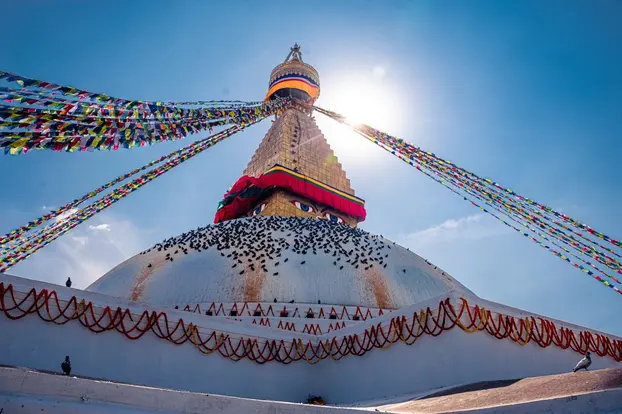
A city designated as a UNESCO World Cultural Heritage site. It is characterized by a landscape that mixes brick-built streetscapes strongly reflecting Newar culture, Hindu temples, and modern urban scenery.
Kathmandu, where urbanization has lagged, faces problems such as waste disposal, air pollution, noise, water issues, and traffic congestion due to rapid population growth. Because lifeline infrastructure is still not fully developed, various accidents and disruptions frequently occur in different areas.
●Official language / Language: Nepali / In addition to Nepali, each ethnic group speaks a different language.
At private schools in Nepal, English education is provided (subjects other than Nepali language classes are taught in English), so English proficiency rates are high. Even older Nepalese people can often communicate in English, reflecting strong social skills and English aptitude.
●Religion: Hinduism is mainstream, along with Buddhism, Christianity, Islam, and others
Religious ceremonies are held frequently throughout the year, and ordinary Nepalese people live while observing annual traditional events. Hindu worship practices vary by caste, ethnicity, region, household, and individual, and styles also differ depending on the deities worshiped.
●Multi-ethnic nation: A country where more than 100 ethnic groups coexist. Religious views, customs and culture, traditions, wedding and funeral practices, ways of living and working, and ways of thinking differ somewhat even among Nepalese people, depending on each ethnic group.
Indo-European groups (ethnic groups such as Bahun, Chhetri, and Kami)
Tibeto-Burman groups (ethnic groups such as Rai, Limbu, Tamang, Newar, Gurung, Magar, and Sherpa)
●Industry: Agriculture, trade, wholesale, transportation, telecommunications, and Himalayan tourism
●Currency: Nepalese rupee / NPR ※1 yen = 1.0739 rupees (rate as of September 15, 2021)
●GDP per capita: USD 1,084 (2020)
●Average monthly income: 20,400 NPR
Japan’s national average minimum wage is 930 yen per hour (2021). The wage gap between Nepal and Japan is one reason Nepalese people seek employment in Japan. Compared with other growing Asian economies, Nepal is a developing country with limited employment opportunities, so people tend to aim for Japan, which offers higher pay levels and good public safety.
●Prices: Prices are rising due to inflation. Inflation rate 4.20% (2021)
Prices for the same goods can differ between shops used by ordinary people and shops in tourist areas.
●Gap between rich and poor:
Household finances among ordinary Nepalese people show a large gap between high-income and low-income families, and lifestyles naturally differ as well. Life in Nepal involves considerable friction arising from the wealth gap, and the experience of being “overcharged” that overseas tourists encounter in Nepal is one form of Nepalese behavioral awareness stemming from the economic disparity between overseas countries and Nepal.
●International airport: Tribhuvan International Airport
Located about 6 km east of central Kathmandu; travel into the city is possible by bus or taxi.
Bus fares are 15–25 rupees per ride / about 1,000 rupees or more from the airport to a city hotel
The time difference with Japan is 3 hours 15 minutes (9:00 a.m. in Japan is 5:45 a.m. in Nepal)
●International dialing code: +977
●National flag: The only national flag in the world that is not rectangular. Its motifs are the Himalayan mountains and the moon and sun, in Nepal’s national color red and blue representing peace.
●Food: Dal bhat tarkari (a set of Nepalese rice / tarkari / meat or fish side dishes / dal soup / achar)
The rice is light and non-sticky. Tarkari is a spiced vegetable stew or stir-fried side dish. Meat and fish are side dishes seasoned with spices. Dal soup is a spiced lentil soup. Achar is mainly a spicy pickle of vegetables cooked with spices.
Two meals a day is typical.
●Seasons: Two seasons—the rainy season from June to September and the dry season from October to May.
Nepal lies between India and China. Its regional character is based on agriculture-centered living surrounded by the Himalayas, and the tourist season brings visitors to Nepal around the once-a-year major festivals of Dashain and Tihar (October–November), timed with the mountain season starting in October.
●Major tourist destinations: Kathmandu / Patan / Bhaktapur / Pokhara / Lumbini / Lukla / Nagarkot / Namche Bazaar / Khumjung / Chitwan / and others
●Public safety: Caution is needed regarding high tip demands from self-proclaimed guides in tourist areas, pickpocketing and theft on buses, trouble at budget lodgings, drug solicitation in entertainment districts, bandhs (general strikes), and similar issues.
●Internet environment: ADSL, cable TV internet, 3G, and high-speed WiMAX are widespread. Free Wi-Fi is available at public facilities, restaurants, and hotels.
Internet penetration in ordinary households is low, and during the COVID-19 pandemic most students could not take online classes because they lacked computers or internet access.
●Smartphones: The two mobile carriers are state-run Nepal Telecom and private Ncell
●Embassy of Japan in Nepal: P.O.Box No. 264 Panipokhari, Kathmandu, Nepal.
Summary
This article has explained basic information about Nepal.
When hiring foreign nationals as employees or part-time workers, knowing the basics about their home country can provide useful hints for employment management.
 Written by
Share this article


