CULTURE & LIVING ABROAD
Quiet Ways to Spend Winter: December in Nepal
After Dashain, the major once-a-year festival, ends, December in Nepal brings a return to quiet daily life, with no particularly large events on the calendar.
When December arrives, scenes that feel distinctly Nepali and signal the coming of winter come into view—quiet, comforting moments and a warm way of life focused on staying cozy.
Nepali life still retains a simple lifestyle attuned to the changing seasons, giving a sense of stepping back in time.
A Woolen Cap Is Essential
The sight of skilled Nepali women knitting woolen caps in their front yards is a winter scene that warms the heart.
A woolen cap is essential for Nepalis dealing with sensitivity to cold. Inside concrete homes, some people never take off their woolen caps—even indoors or when sleeping—to prevent headaches caused by the chill.
Winter temperatures in Nepal are higher than in Japan. Aside from the sharp chill in the morning and evening, daytime temperatures rise to around 20°C and feel warm. However, the difference between shade and sun is large and the cold can feel intense, so winter clothing suited to Nepal’s climate is needed.
Nepali Ingredients That Warm the Body
Many people in Nepal live without heating appliances and stay warm through clothing and food.
They make smart use of Nepali ingredients in warming drinks and dishes to support health through the winter.
There are many winter dishes that draw on Nepali food wisdom: curries made with root vegetables and tubers, spiced tea, cooking with ghee, and drinking homemade liquor.
Spices are staple ingredients in Nepali cooking, and Nepalis often add them even to the milk tea they drink every day. Spices have medicinal food benefits, and in winter people add them to dishes and drinks to raise their perceived body temperature.
Warming Up with Ghee
Ghee is an oil made by heating and filtering fermented butter.
Because ghee has a warming effect on the body, it is used as a winter food. There are many ways to use it, and a common habit is to pour melted ghee over freshly cooked rice or soup.
In this Hindu country, ghee is said to be a sacred food and is a household staple used as an offering in religious rituals.
Purifying the Body with Cold Water
Devout Nepalis bathe with water in the morning as a religious custom. Bathing signifies welcoming the start of the day in a pure state.
Bathing in the evening or at night is associated with what is done when someone has died, so people avoid taking a bath or shower after dark.
In December, morning temperatures drop sharply, but the morning custom of bathing continues as a daily routine.
Oil Massage While Basking in the Sun
Sunbathing is part of Nepalis’ winter daily routine.
Rather than warming up with heaters, there is a custom of relying on sunlight to loosen and relax the body.
People also give oil massages outdoors while sunbathing, then rest their bodies afterward, often combining it with a nap.
Oil massage is also used for babies and young children as part of health care and to help build strong bodies. Because Nepalis receive massages while bare-skinned during winter days from infancy, many grow up sturdy and healthy.
A Winter Tradition: Peanut Vendors
When peanut vendors come around calling “Badam! Badam!,” you feel that winter has begun.
Badam means peanuts, and in winter only they are sold piled high on mobile wagons. Badam is a popular snack among Nepalis; hand over 50 rupees and they wrap some up in newspaper for you.
Badam and mandarin oranges are the classic winter snacks, and spending time sunbathing while eating them is one of winter’s simple luxuries.
A Quiet Christmas in Nepal Too
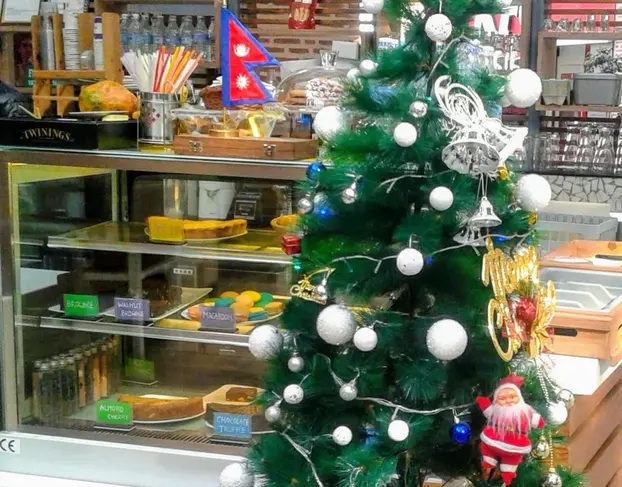
It may seem odd from a religious standpoint, but more people in Nepal celebrate Christmas than in the past.
In December, Christmas goods go on sale, large shopping malls put up big trees, Santa Claus makes appearances, and nights are brightened with lights—creating a cheerful atmosphere.
Christmas in Nepal does not sweep the whole country into a festive mood. Christmas songs do not drift in from afar, there is no custom of ordering Christmas cakes, and children do not look forward to presents by their pillows—yet somewhere, people are quietly enjoying Christmas. That is the feeling.
Snow in Kathmandu
Contrary to the image of the Himalayas, snow rarely falls in Nepal in winter. Looking back to December 2019, when snow fell in Kathmandu and nearby mountains turned pure white, I remember everyone excitedly taking photos with their smartphones.
For Nepalis, a snowy landscape is something very rare. They sent photos of the snow, posted them on Facebook, got excited talking about the snowfall, and seemed to thoroughly enjoy the unusual situation.
Summary
Unlike the bustle of Japan’s year-end and New Year season, December in Nepal has little going on in particular. People get through winter by finding ways to stay warm and enjoying small pleasures.
 Written by
Share this article


