CULTURE & LIVING ABROAD
What Happens When There's No Electricity? Life in Nepal
In Nepal, the lifelines needed for daily life are so unreliable that disappointing situations are an everyday occurrence.
Nepalis are used to this kind of disappointing life and are good at simply brushing past most troubles rather than confronting them head-on.
The big difference between Nepalis, who are used to power outages and electrical problems, and foreigners is how many times they have been disappointed and what they have experienced. To close that gap, foreigners gradually get used to Nepal by going through disappointment again and again.
Once you get used to trouble, you also learn to give up more quickly, and that habit becomes an essential skill for living in Nepal.
This time, we introduce everyday life around electricity in Nepal, where power outages and electrical problems are common. We share a messy, everyday slice of life that feels very Nepali.
When Outages Drag On, the Tools You Use Change
Nepal's power outage situation has improved considerably, and people can now live with electricity available almost all day. Back when outages lasted more than 10 hours every day, people divided their work into what they did when power was on and when it was off.
At the time, planned outage schedules were published regularly, but this being Nepal, they did not run according to the schedule.
When outages continue for more than 10 hours every day, convenient appliances such as refrigerators, washing machines, vacuum cleaners, PCs, chargers, electric heaters, fans, and electric cookers lose their value as conveniences, and unused appliances become mere ornaments.
Nepal's voltage is also unstable, so there are times when a vacuum cleaner cannot be used or a washing machine will not run. When unstable voltage continues for days, appliances have shorter lifespans and break quickly, and people feel less and less attracted to electric appliances.
Using a generator during outages is one option, but when outages are too frequent, the generator itself cannot keep up with charging, and generators cannot run high-power appliances such as vacuum cleaners, washing machines, and refrigerators, so you also need to be creative about how you use a generator.
When outages continue, the tools you choose for daily life also change, and items that work the same without electricity—brooms and rags, firewood and cooking stoves, washbasins, and gas-compatible products—become the tools you rely on.
Getting Used to Life Without Electricity
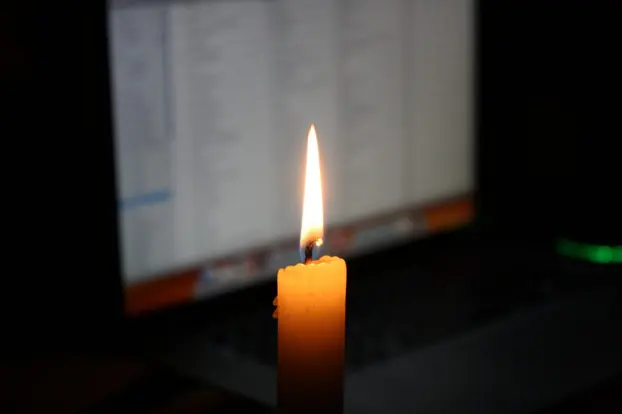
When a power outage hits after dark, the night view from the window becomes even darker. People get through the night with light from generators or candles. Candlelight is effective for creating atmosphere for a while, but it feels insufficient as everyday lighting.
Nighttime outages sometimes continue until morning without power returning, and on those days people eat a simple meal and go to bed early. In many Nepali homes, weak light bulbs are used for night lighting even normally, and some people are not comfortable with the glare of the sun or bright lighting in the first place.
In Nepal, where outages are common, a lifestyle without electric appliances and going to bed early at night fits better and leads to a less stressful life.
Power Outages and Gas Cylinder Shortages
Because Nepal depends on imports from India for daily necessities, frequent border blockades between Nepal and India can make gas cylinders needed for cooking and heating unavailable.
Normally, if you order a gas cylinder it can be delivered right away, but during shortages you may finally manage to buy one cylinder from a distant shop through an acquaintance's connections, or periods continue when you cannot get any at all.
Electric cooking stoves that sold like crazy when gas cylinders were unavailable also have the drawback of being unusable during power outages, so if you have neither gas cylinders nor electricity, you end up cooking with a traditional stove and firewood.
When the frustration of not having this or that, or having things you cannot use, continues, people fall back on older methods and return to a way of life that goes with the natural flow of things.
Wiring Work Is the Nepali Way…
Nepal's electrical situation is not great: wires short-circuit and explode, house wiring is a mess and causes malfunctions, breakers trip often, and problems arise when there is thunder.
Most electricians in Nepal do not have specialized skills, so people tend to hesitate even to call for work when electrical problems occur at home.
In Nepal, not only in the electrical field, people with specialized knowledge keep going overseas to work, making it very difficult to find skilled craftspeople among those who remain in the country.
Poor electrical work leads to many accidents from electric shock and explosions, and many Nepalis have low awareness of safety management and are careless even about matters that can cost lives.
Clean and Scary Electricity
Compared with the brightness of Kabukicho, the subdued brightness of electricity in Nepal has a certain charm. With frequent outages and relatively low nighttime power use, Nepal's nights still hold a nostalgic way of life aligned with the sun's cycle, where families spend time together with limited light.
Even thrifty nighttime habits change once a year during Tihar, the festival of lights, when people decorate house walls with illuminations to celebrate and enjoy a brighter night than usual.
The sparkle of illuminations, especially loved by children and women, frees people from outages and energy-saving mode and lifts their spirits, and Nepalis spend Tihar in a more elevated mood than usual.
The day before Tihar is peak season for electricians running from house to house to put up illuminations. That said, wiring work in Nepal is rather slapdash, and electricians themselves say they install them while getting mild electric shocks along the way.
In Closing
When things needed for daily life become unusable, people improvise or give up—there is much to learn from Nepali lifestyles.
In Nepal, where electricity is absent or constantly unstable, people develop the wisdom to live on very little power, and even with sudden outages they can go about life calmly, saying, "Well, it can't be helped."
Nepali life grows in an environment that builds self-sufficiency, fostering habits different from those of people in developed countries—what people call national character.
 Written by
Share this article


