CULTURE & LIVING ABROAD
Who Was Ho Chi Minh? Foundations for Understanding Vietnamese Culture and Workplace Conversation
Quick answer: Who was Ho Chi Minh?
A Vietnamese revolutionary and politician, and the “Father of the Nation” who led the revolution from French colonial rule through the Vietnam War. He served as the first President of the Democratic Republic of Vietnam and is still affectionately known as “Bac Ho” (Uncle Ho), commanding deep respect among the people.
What you will learn in this article
To help you answer common search questions quickly, this article organizes not only the basics but also points hiring managers should check in the workplace, plus links to related articles.
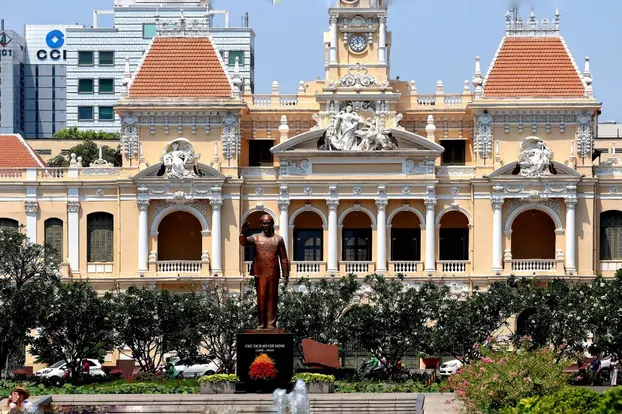
Ho Chi Minh is a figure of special importance to Vietnamese people. Ho Chi Minh City in southern Vietnam takes its name from him. As a central figure in the founding of modern Vietnam, he is regarded with respect and reverence.
For many Japanese people, he may be little more than a name briefly mentioned when studying the Vietnam War. For Vietnamese people, however, he is the founding parent of the present nation and a spiritual pillar. This article explains who Ho Chi Minh was, including how he is positioned in Vietnamese society.
Who was Ho Chi Minh? ①: Father of the Vietnamese nation
Ho Chi Minh was a Vietnamese revolutionary and politician. Because he led the revolution from the colonial era through the Vietnam War, he is called the “Father of the Nation.”
Born and raised in a poor household
Ho Chi Minh was born in 1890 in a village in Nghe An Province, Vietnam. Although his family was poor, his father was a Confucian scholar, and he was exposed to Chinese from an early age. Vietnam was then under French rule, and he also learned French. Using his language skills, he worked as a teacher and later spent more than 30 years traveling the world as a seafarer.
From seafarer to politician
As he traveled the world, he deepened his interest in social issues and politics and began his path as a politician. After long French rule, capitalist powers such as the United States gained influence in Vietnam. Ho Chi Minh resisted the dictatorships backed by those powers and sought to establish a socialist state. He prevailed in the long Vietnam War and became the first President of the Democratic Republic of Vietnam. Against this background, he is also affectionately called “Bac Ho” (Uncle Ho).
Who was Ho Chi Minh? ②: Portraits everywhere
For Japanese people, Ho Chi Minh is a historical figure, but for Vietnamese people he remains a spiritual pillar to this day. For that reason, portraits of Ho Chi Minh are displayed in many facilities across Vietnam.
A portrait of Ho Chi Minh is always at the front of schools
Walking through Vietnamese cities, schools most strongly convey Ho Chi Minh’s influence. At elementary schools, junior high schools, high schools, and universities, a large portrait of Ho Chi Minh is prominently displayed at the front of almost every school. It is placed outside rather than inside the building, positioned as if watching over the students. Lessons about Ho Chi Minh are mandatory in schools, and education treats him as a sacred “Father of the Nation.” As a result, even children under 10 have basic knowledge of Ho Chi Minh.
Slightly different positioning of Ho Chi Minh in the north and south
During the Vietnam War, the south—including places such as Ho Chi Minh City—was basically on Ho Chi Minh’s side. However, the north, where Hanoi is located, was the opposing camp backed by the United States. Because Vietnam was divided north and south through the war, education after the war thoroughly sacralized Ho Chi Minh as a “symbol of north–south reunification.” Even so, some people from the north do not feel especially strong attachment to Ho Chi Minh, and they may quietly confide as much. They would not, however, say so openly in front of other Vietnamese people.
Who was Ho Chi Minh? ③: The mausoleum is a sacred place of homage
Ho Chi Minh made old Saigon (present-day Ho Chi Minh City) the base of the independence movement. For some reason, however, the mausoleum housing his body is in Hanoi.
Ho Chi Minh’s “body” is preserved forever
The Ho Chi Minh Mausoleum was built on September 2, 1975, a date that coincides with National Day. The mausoleum is designed in the form of a lotus flower and is a grand structure built entirely of marble. Inside, Ho Chi Minh’s body is laid to rest in a glass case. It is said to be the real body, preserved permanently, though even among Vietnamese people opinion is split between “real” and “fake.”
Strict visiting rules at the Ho Chi Minh Mausoleum
The Ho Chi Minh Mausoleum is a sacred place for many Vietnamese people, and on September 2—the anniversary of Ho Chi Minh’s death—large numbers of visitors come from across Vietnam. It is also a tourist site for overseas travelers, but visits are not free-form. Photography inside the mausoleum is prohibited. Not only cameras but personal belongings are not allowed. Drinks are also banned even if unopened. Clothing that exposes much skin, as well as sunglasses and hats, is not permitted. The site is under strict Vietnamese military control, and breaking the rules can get you removed, so caution is required.
Summary
Vietnamese history education emphasizes legitimizing the present state, so it is true that the content is one-sided. In recent years, some Vietnamese people encounter other historical views through study abroad or information online, but they cannot say so openly. On Ho Chi Minh as well, people basically take the position of respecting him as the Father of the Nation. For that reason, even if you disagree with someone’s view, it is better to acknowledge it without debate.
About the author
Hikosuke
After working at a university for 10 years, he supported sales-channel expansion for regional small and medium-sized enterprises at a local company in Vietnam. He has experience guiding international students at the university and local staff in Vietnam, and has also been involved in Japanese-language education. He currently works as a writer.
Share this article
LINE
Common workplace concerns and failure patterns
In the field of support for accepting international talent, cases have been reported in which a lack of understanding of Ho Chi Minh or modern history triggers Vietnamese staff turnover or workplace trouble. Typical examples include handling paid-leave requests for Independence Day (September 2) in a purely formal way, historical topics surfacing and stirring conflict in teams that mix staff from the north and south, and treating hard-to-read reactions to a supervisor’s instructions as a coaching problem.
What to avoid is casually using political framing such as “He was a communist dictator, right?” or “Saigon is easier to understand.” When historical topics come up, lead with empathy—“Vietnam’s history runs deep”—and check whether the person wants to talk before going further. Rather than refusing September 2 paid-leave requests across the board with “special treatment is difficult,” hear about major cultural observances when building the annual shift plan and build them into the yearly calendar first; that way you can support leave while limiting impact on operations.
When staff bring up Ho Chi Minh and you answer “I don’t really know,” the disappointment can be greater than expected. On the other hand, many reports say that simply adding “You mean Bac Ho” or “I looked into it a little” closes the distance. More than the amount of knowledge, the attitude of taking an interest itself builds trust.
- As a rule, refrain from critical comments on politics and history at work, and focus on the person and cultural aspects
- Anticipate September 2 paid-leave requests through early-year listening and shift planning; do not refuse them across the board
- In teams that mix staff from the north and south, make team rules on historical and political topics explicit
- At hiring, record region of origin (north, central, or south) and confirm individually without stereotyping regional differences
Important Vietnamese commemorative days and workplace considerations
Including commemorative days related to Ho Chi Minh, knowing the periods Vietnamese staff in Japan feel most strongly about helps you anticipate peaks in leave requests. Tet (Lunar New Year) from late January to February is Vietnam’s largest cultural observance. In this period, when family bonds matter most, requests to return home concentrate, and the risk of turnover is highest in the year. Careful communication and confirmation of terms around Tet directly affect retention.
April 30, Liberation Day of the South / Reunification Day, is received very differently depending on region of origin, so casual workplace references should be avoided. May 19, Ho Chi Minh’s birthday, is marked with commemorative events at schools and companies in Vietnam; a simple word from a manager—“It’s Bac Ho’s birthday”—conveys interest and respect. September 2, Independence Day (National Day), when Ho Chi Minh declared independence, is the greatest national holiday and a time when paid-leave requests tend to concentrate, so always mark it when building the annual shift plan.
- Build Tet, Independence Day, and Ho Chi Minh’s birthday into the annual calendar as expected peaks for paid-leave requests
- Share a cultural-events calendar with staff in plain Japanese or their native language and encourage early applications
- Around September 2, May 19, and Tet, have mentors or managers check in with staff
- For days such as April 30, where reception differs, share an approach of avoiding workplace discussion
Practical checklist for acceptance and retention support
Cultural understanding around Ho Chi Minh does not become retention support if it remains knowledge alone. Setting confirmation items by phase—from hiring decision through the first three months after joining—builds a reproducible acceptance system that does not depend on individual managers’ skills. Right after the hiring decision, record region of origin and family composition, have HR learn the outline of the person and modern history, and create a cultural-events calendar to identify peak months for paid-leave requests.
In the pre-joining phase, deliver a brief cultural-consideration training for managers and mentors, and carefully explain paid-leave rules and application procedures in advance. After joining, use monthly or more frequent one-on-ones to catch cultural stress or workplace discomfort early, and also use anonymous surveys to surface the true feelings of staff who are reserved about speaking up. When individual support is needed, having a setup to connect people promptly with specialized organizations provides peace of mind.
- Right after hiring decision: Record region of origin and family composition, and create a cultural-events calendar
- Before joining: Deliver cultural-consideration training for managers and mentors, and explain paid-leave application rules
- Within three months after joining: In one-on-ones, confirm expectations and discomfort around cultural observances
- Retention support: Collect true feelings regularly via anonymous surveys, and connect to specialized organizations as needed
Related reading
Related article: Vietnam’s Tet (Lunar New Year) and leave considerations at work
Related article: Workplace communication when Vietnamese staff do not respond
Related article: Cultural differences to know when hiring Vietnamese talent
Related article: International talent placement services
Additional FAQs on Ho Chi Minh and workplace response
Here we gather questions that go beyond the person himself into “how to respond at work.” Please review them together with the FAQs in the first half of the article (the person, the relationship with Ho Chi Minh City, and whether the topic is appropriate).
How should we handle paid-leave requests for September 2?
Taking paid leave is a right under the Labor Standards Act, and the baseline is to grant it unless there is a serious operational obstacle. Sharing a cultural-events calendar at the start of the year and setting operating rules that encourage early applications helps you support leave while minimizing impact on the whole workplace.
What should teams with both southern- and northern-origin staff watch for?
When topics related to Ho Chi Minh or north–south reunification come up, unconscious opposing feelings can arise. Making an explicit team rule that “political and historical topics are limited to private settings,” or having a manager facilitate and adjust the conversational context, is effective. Team-building opportunities that promote mutual understanding outside work also support higher retention.
Does respect for Ho Chi Minh differ by generation?
There are generational differences. Staff in their 30s to 50s and older who grew up in Vietnam tend to show stronger respect because they repeatedly learned about him in moral education, while younger generations raised after the Doi Moi (renovation) policy may also see him as a “historical symbol.” Across generations, however, critical remarks provoke strong resistance, so the baseline at work is to maintain a posture of cultural respect.
Frequently asked questions about Ho Chi Minh
What did Ho Chi Minh do? He was a revolutionary and politician who led the revolution from the colonial era through the Vietnam War and became the first President of the Democratic Republic of Vietnam. As a central figure in founding Vietnam, he is called the “Father of the Nation.” What is the relationship between Ho Chi Minh City and the person Ho Chi Minh? The southern Vietnamese city of Ho Chi Minh City is former Saigon, the base of the independence movement, renamed after Ho Chi Minh. Meanwhile, the Ho Chi Minh Mausoleum housing his body is in the capital, Hanoi. Is it all right to bring up Ho Chi Minh at work? Ho Chi Minh is a spiritual pillar for Vietnamese people and is basically an object of respect. Attachment can differ by region of origin and other factors, but it is safest to avoid critical debate and refer to him with respect.
Practical points hiring managers should check next
When applying this article’s content in hiring and retention, also review Cultural differences to know when hiring Vietnamese talent, Japanese-language communication with Vietnamese colleagues at work, and Vietnamese talent’s family values and their relationship to work to connect more easily through post-interview onboarding preparation.
 Written by
Share this article


