CARE
Vietnam Site Visit Report: Differences Between Nursing Care Facilities in Vietnam and Japan
On March 18, 2018, we visited a nursing care facility in Hanoi, Vietnam. In recent years, Vietnam has seen a growing number of nursing care facilities established, and more residents are moving into them. On this visit, we set out to identify differences between nursing care facilities in Vietnam and Japan, and to explore how Japanese nursing care facilities can work with Vietnam going forward.
Orihome, a historic nursing care facility in central Hanoi
Name: Orihome
Location: Central Hanoi, Vietnam
URL:http://orihome.com.vn/
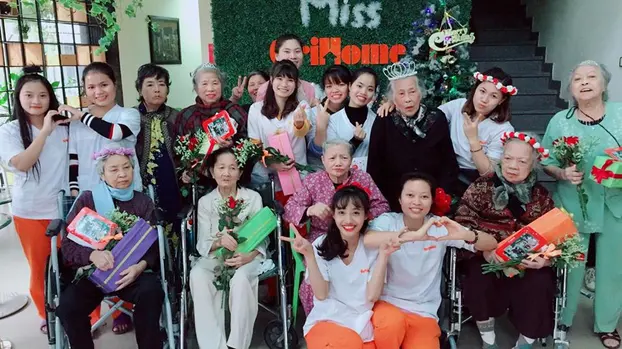
At Orihome, the first nursing care facility we visited, relatively high-need residents live there. The facility also accepts residents with dementia and bedridden residents, and the staff struck us as experienced.
This facility handles everything from 24-hour residential nursing care to day care and home visits. With cable TV and free Wi-Fi, residents can spend the day without getting bored. There are 72 beds, making it a fairly large facility, but with about 40 staff members, employees can provide care at a comfortable pace, and staff break times are quite generous.
The average age of the staff is in their 20s, and young people take a strong interest in nursing care. The atmosphere is bright, and residents chat with staff and seem to dote on them like grandchildren.
Staff and residents get along well We were also welcomed Dien Hong, a clean facility in a quiet residential area on the outskirts of Hanoi
Established: 2014
Name: Diên Hồng Nursing Home
Location: Outskirts of Hanoi, Vietnam
Number of residents: 77
Number of staff: 49
URL: https://duonglaodienhong.vn/
The other facility we visited, Dien Hong, was established in 2014 and is still relatively new, with clean facilities. It is located in the suburbs about 4 km from Hanoi, surrounded by nature, with shopping centers nearby—an excellent location. The building has five floors, with floors 2 through 5 used as residential space for residents. It is a residential nursing care facility with 24-hour occupancy.
Located in a residential area with shopping centers and plenty of greenery. Mealtime in a large dining room. Meals are Vietnamese-style cuisine. They are somewhat high in carbohydrates—will that be all right...? A nursing care facility operated solely with private capital
At Dien Hong, of the 49 employees, 19 hold nursing qualifications and actually provide nursing care. Another 30 staff handle administration, cleaning, and similar work. Because it is run entirely as a private operation, accounting, general affairs, sales, and marketing are also needed, so there are quite a few back-office staff.
At both nursing care facilities, monthly occupancy fees convert to about 30,000 to 40,000 yen, and are tiered according to care needs similar to Japan’s care-need levels. There is no unified standard like Japan’s care-need levels, but fees appear to be set according to care-need levels the facilities have developed on their own. In Vietnam, staff salaries are about 40,000 yen per month, so occupancy fees are quite high, but it is common for children and siblings to split the cost.
In recent years, dual-income households have become common in Vietnam as well, and there are cases where family caregiving is simply difficult, so more people are moving into facilities like these.
Actively running international internships Internship scenes are on display
Through international internships, there are many cases of sending Vietnamese staff overseas, or accepting overseas staff for internships. The countries with particularly strong ties in the nursing care and nursing fields right now are Germany and Taiwan, and personnel exchange with both countries is active. There have not yet been internship cases from Japan, but they said they would gladly consider any proposals.
Japan has many nursing care facilities, and many are well equipped, but personnel exchange has not progressed much yet. Going forward, it will be important for Japanese nursing care providers to look overseas, pursue internships and capital partnerships, and share the strengths of Japanese nursing care with the world.
Vietnam’s demographics. The wave of declining birthrates is here too
Going forward, declining birthrates and aging populations will advance worldwide. Vietnam is no exception. Already, many Vietnamese families have only one or two children, and in ten years the elderly population will be even larger than it is today.
Both nursing care facilities appear open to exchanges such as internships. Nursing care providers considering accepting foreign workers or expanding overseas should contact YourBright.
 Written by

ヤマシタハヤト
Share this article


