CULTURE & LIVING ABROAD
Germany's Unskilled Workers: Turkish Immigrants and Gastarbeiter
Germany is an immigration country that actively accepts immigrants and refugees.
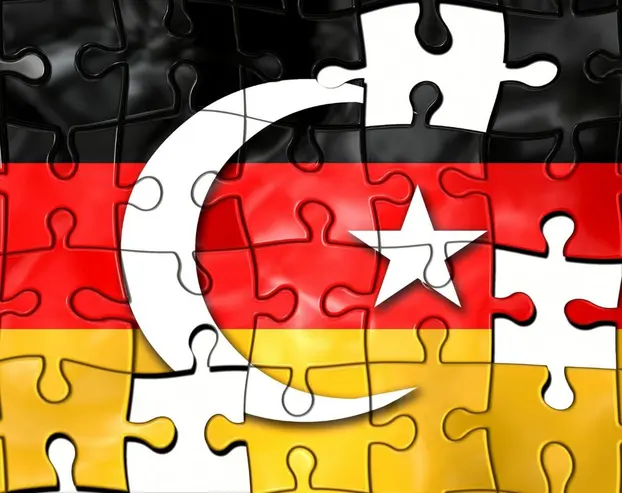
Among them, Turkish immigrants who moved to Germany in large numbers as unskilled workers in the 1960s have a long history with German society.
Turkish workers in Germany were called Gastarbeiter and were received in the position of guest workers; German society did not have a system for actively accepting Turks as immigrants.
Compared with the era when Germany began accepting Gastarbeiter, its immigration policy has since revised its acceptance systems, and with changes in the German government's support for immigrants and its humanitarian response, the circumstances and social security systems facing Turkish immigrants then and now also differ.
The children and grandchildren of the first-generation Gastarbeiter who entered as immigrants at that time are second- and third-generation young people of Turkish origin born in Germany.
Young people of Turkish immigrant origin who were born and raised in Germany continue to hold feelings toward their home country of Turkey and the principles of Islam, maintaining their identity while living in coexistence with German society.
The Flow of Turkish Immigration to Germany and Settlement
In 1960, Germany, like Japan today, began accepting immigrants as a measure to address labor shortages.
In 1961, Germany and Turkey concluded a bilateral agreement; at that time agreements were also signed with seven countries including Italy, Spain, Portugal, and Yugoslavia in addition to Turkey, but acceptance was particularly active for Turkish workers.
Initially, when Turks began moving to Germany as workers, the acceptance policy was structured with a three-year period of stay limit, similar to Japan's Technical Intern Training program.
This policy was called the “rotation system” and did not allow family accompaniment, but to accommodate companies that wanted to extend periods of stay for longer-term employment, the Employment Promotion Act enacted in 1969 granted work permits extending the three-year stay limit, and the system was revised to also allow family accompaniment.
Entering the 1970s, as Turkish workers who had entered as laborers became able to secure jobs, cases of bringing over family members and of marriage and childbirth gradually increased, and a flow of Turkish immigrants settling permanently gradually took shape.
In 1973, due to the oil shock, agreements with the partner countries were suspended and immigrant acceptance was temporarily ended, but acceptance of short-term workers continued, and movements among Turkish immigrants toward settling in Germany, including bringing over family members, continued to increase steadily.
The Divide Between Turkish Immigrants and German Citizens
In Germany, the administration of Chancellor Helmut Kohl, who led the reunification of East and West Germany, continued for 16 years from the 1980s.
The German government of the time long maintained the position that Germany was not an immigration country, and for Turks who had in practice come to Germany as immigrants and begun living there after bringing over their families, immigrant life continued for a long time without a social foundation that would allow them to live as German citizens amid harsh working conditions.
In residential areas allocated by Germany to Turkish immigrants, Turks concentrated, and the dense clustering of people of the same nationality began to produce situations that ran counter to the social integration promoted by the German government.
Regarding educational support, which is a particular issue in countries that accept immigrants, Turks had low rates of German language acquisition, which tended to make subsequent employment within Germany difficult and created a risk of being unable to adapt to German society.
It is said that the German government's failure at the time to implement adequate integration policies for Turkish immigrants became a factor creating a divide between Germany and Turkish immigrants.
Even After Immigration Law Reform…
In 1990, revision of the Foreigners Act made acquisition of nationality through naturalization possible; in 1998 the Gerhard Schröder administration was established, and from 2000 Germany replaced the principle of jus sanguinis it had followed until then with a nationality law introducing jus soli, granting children of foreign workers born in Germany the right to choose German nationality from age 18.
In 2005 an Immigration Act was enacted, regulations for foreigners working in Germany were eased, and a framework for accepting immigrants began to be clearly communicated as a social integration policy.
Immigration policy has strengthened support in areas such as German language acquisition, voting rights, and medical care and education.
However, among Turks who had lived in Germany as immigrants without adequate support until then, many people still do not feel a need to follow the German government's policies.
Parallel Societies and Turks
A parallel society is a social phenomenon within Germany in which Turks who cannot penetrate or fit into German society form their own communities and create another closed, small society.
It is said that various factors—differences in religious outlook among Muslim Turkish immigrants within German society, backgrounds in which they could not receive education as hoped within German society, their positioning as immigrants within German society, and problems of poverty—accelerated the isolation of Turkish immigrants.
Conclusion
It takes time for social integration to yield results, and in the meantime outcomes arise that shape the futures of foreigners who have come as immigrants.
More than 60 years have passed since Germany began accepting foreign workers, yet just as coexistence with foreigners is still being explored, accepting immigrants appears to present major challenges for the structure of the receiving social system.
It is hoped that as many experiences and lessons from overseas as possible will become improvement measures for social integration in Japan with respect to the foreigner acceptance policies already underway in Japan.
 Written by
Share this article


